
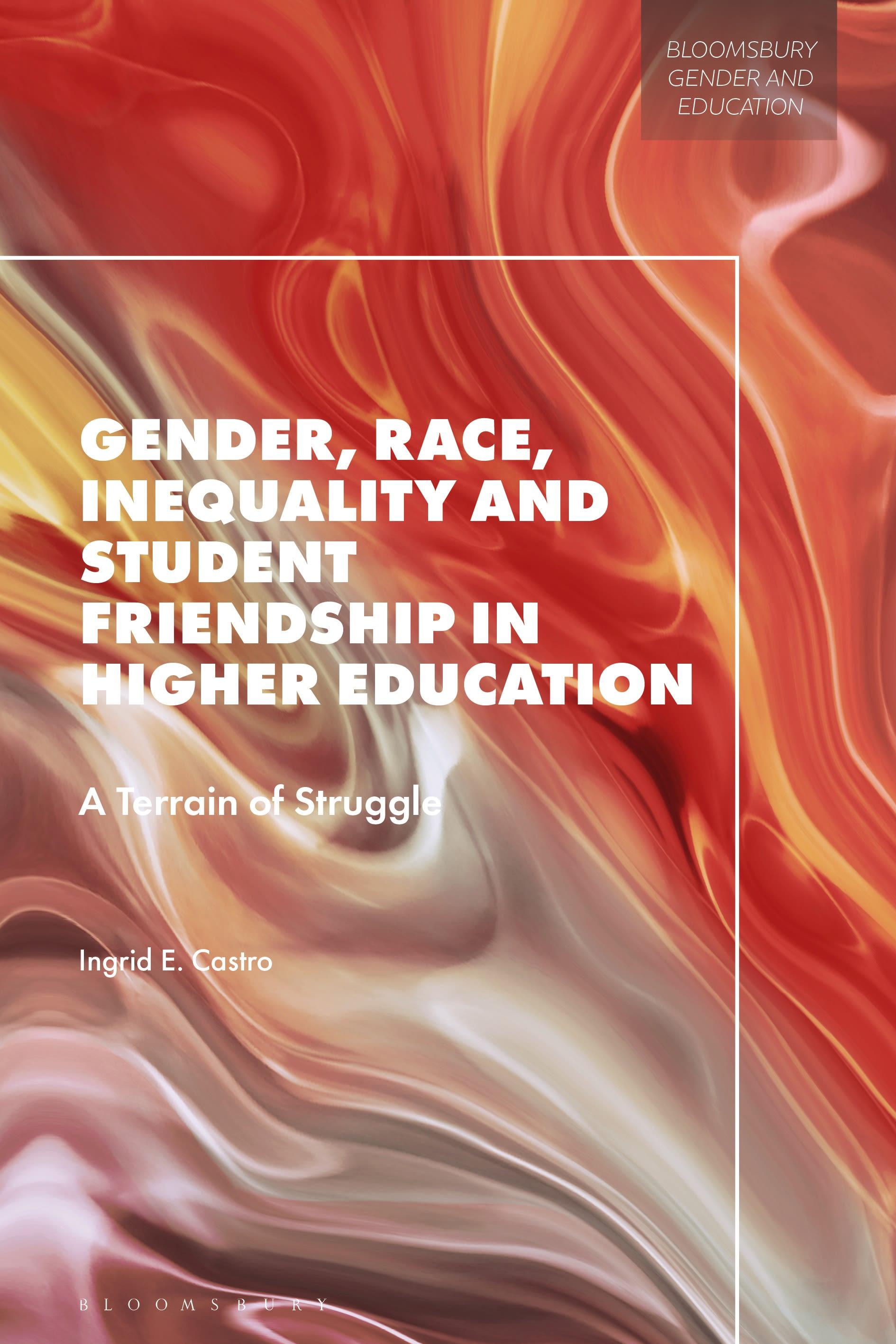
With a qualitative case study of two university campuses in the United States, Ingrid E. Castro examines experiences of students in forming and sustaining close interracial friendships.
The data in this book are comprised of interviews with students conducted at two predominantly white institutions in the early 2000s, illuminating how women of various races struggled to find commonality across difference, particularly in relation to racism, white privilege and experiences with stereotyping, microaggressions and segregation on campuses. Taking a feminist approach attending to gender, race and class inequality, Castro contributes autoethnographic recollections of her experiences as a multiethnic Latina college student in the early 1990s. She then analyses Xennial women's experiences with the benefit of contemporary frameworks and theories on gendered friendships, parental protectionism, campus climate and race relations, and explores the social and academic spaces of campus, which include interest groups, classrooms, majors, and dorms as sites of interaction. The conclusion reflects on the ideology of meritocracy and current DEI efforts on campuses in the U.S., suggesting institutional and policy changes to better campus climate and increase the potential for interracial friendship formation for students. A rich, honest and detailed account of relationships emerges with significant implications for the field of friendship studies and the sociology of higher education.
Gender, Race, Inequality and Student Friendship in Higher Education is essential reading for those interested in how universities must move forward in addressing gender, race and class relations on university campuses.
The data in this book are comprised of interviews with students conducted at two predominantly white institutions in the early 2000s, illuminating how women of various races struggled to find commonality across difference, particularly in relation to racism, white privilege and experiences with stereotyping, microaggressions and segregation on campuses. Taking a feminist approach attending to gender, race and class inequality, Castro contributes autoethnographic recollections of her experiences as a multiethnic Latina college student in the early 1990s. She then analyses Xennial women's experiences with the benefit of contemporary frameworks and theories on gendered friendships, parental protectionism, campus climate and race relations, and explores the social and academic spaces of campus, which include interest groups, classrooms, majors, and dorms as sites of interaction. The conclusion reflects on the ideology of meritocracy and current DEI efforts on campuses in the U.S., suggesting institutional and policy changes to better campus climate and increase the potential for interracial friendship formation for students. A rich, honest and detailed account of relationships emerges with significant implications for the field of friendship studies and the sociology of higher education.
Gender, Race, Inequality and Student Friendship in Higher Education is essential reading for those interested in how universities must move forward in addressing gender, race and class relations on university campuses.
Pagina's: 312
Categorie: Kultur-, Genus- & Postkoloniala studier
e-ISBN: 9781350540736
Verzendgewicht: 1.2 kg
Verzending binnen: 1-2 dagen
Betaal eenvoudig met kaart, Klarna, Apple Pay of Google Pay. Niet tevreden? Je hebt altijd 14 dagen bedenktijd. Lees meer in onze voorwaarden. Heb je vragen, mail ons dan via hello@memmo.org.
Memmo maakt studeren makkelijker – waar je ook bent ter wereld. Wij brengen je cursusboeken en slimme studietools samen op één plek: samenvattingen, quizzen, podcasts en flashcards. En Ted, je studievriend die antwoord geeft op alles wat je je afvraagt. Meer dan 50.000 studenten studeren hier al – gebouwd om je sneller te laten leren en minder stress te geven.