
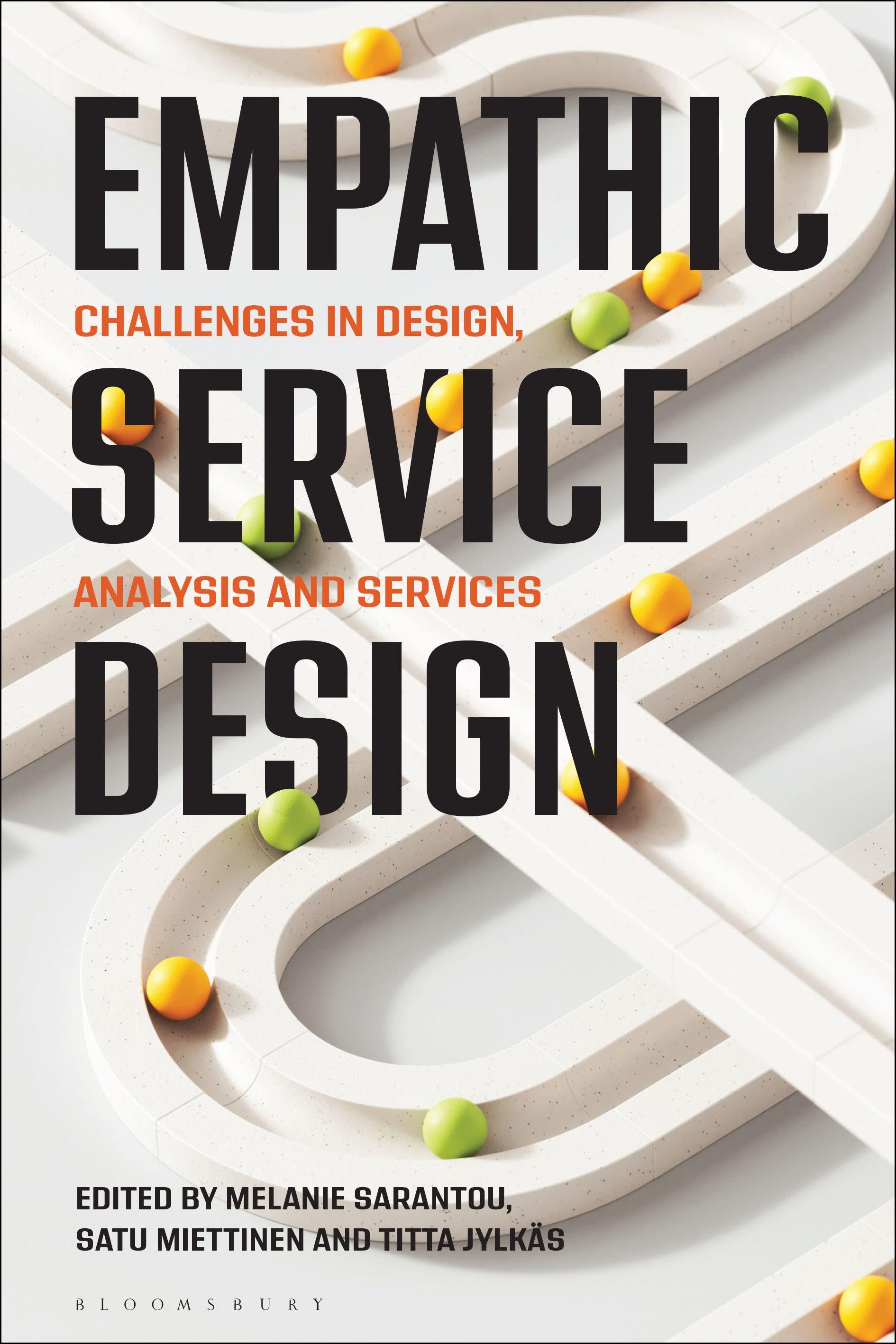
Through case studies from across the globe, this book helps designers understand how forward-looking service prototyping, analysis and tools can promote and create empathic, emotion-oriented and relevant services.
Despite services being at the core of organisations, to create service flows, designers, groups and their diverse stakeholders must negotiate ever more complex and hybrid interactions between human and more-than-human role players in service delivery. The challenge lies in delivering empathic, relevant and desirable services, despite these complexities. New knowledge is needed to bridge the gaps, uncertainties and even anxieties that organisations face in making their service delivery empathic and keeping them purposeful to users.
Addressing problems within service delivery like empathy fatigue, poor collaboration, and siloed work experiences that lead to poorly-functioning systems, the authors suggest concrete solutions for developing empathetic approaches and tools with consideration for the needs of participants. The book critically examines the role of empathy, and explores how compassionate understanding of the end-user is key to success.
Case studies include mapping of children's services, wearable technologies for pandemics, understanding cultural sensitivity, emojis and chat bots, and AI used in care settings.
Despite services being at the core of organisations, to create service flows, designers, groups and their diverse stakeholders must negotiate ever more complex and hybrid interactions between human and more-than-human role players in service delivery. The challenge lies in delivering empathic, relevant and desirable services, despite these complexities. New knowledge is needed to bridge the gaps, uncertainties and even anxieties that organisations face in making their service delivery empathic and keeping them purposeful to users.
Addressing problems within service delivery like empathy fatigue, poor collaboration, and siloed work experiences that lead to poorly-functioning systems, the authors suggest concrete solutions for developing empathetic approaches and tools with consideration for the needs of participants. The book critically examines the role of empathy, and explores how compassionate understanding of the end-user is key to success.
Case studies include mapping of children's services, wearable technologies for pandemics, understanding cultural sensitivity, emojis and chat bots, and AI used in care settings.
Betaal eenvoudig met kaart, Klarna, Apple Pay of Google Pay. Niet tevreden? Je hebt altijd 14 dagen bedenktijd. Lees meer in onze voorwaarden. Heb je vragen, mail ons dan via hello@memmo.org.
Memmo maakt studeren makkelijker – waar je ook bent ter wereld. Wij brengen je cursusboeken en slimme studietools samen op één plek: samenvattingen, quizzen, podcasts en flashcards. En Ted, je studievriend die antwoord geeft op alles wat je je afvraagt. Meer dan 50.000 studenten studeren hier al – gebouwd om je sneller te laten leren en minder stress te geven.