
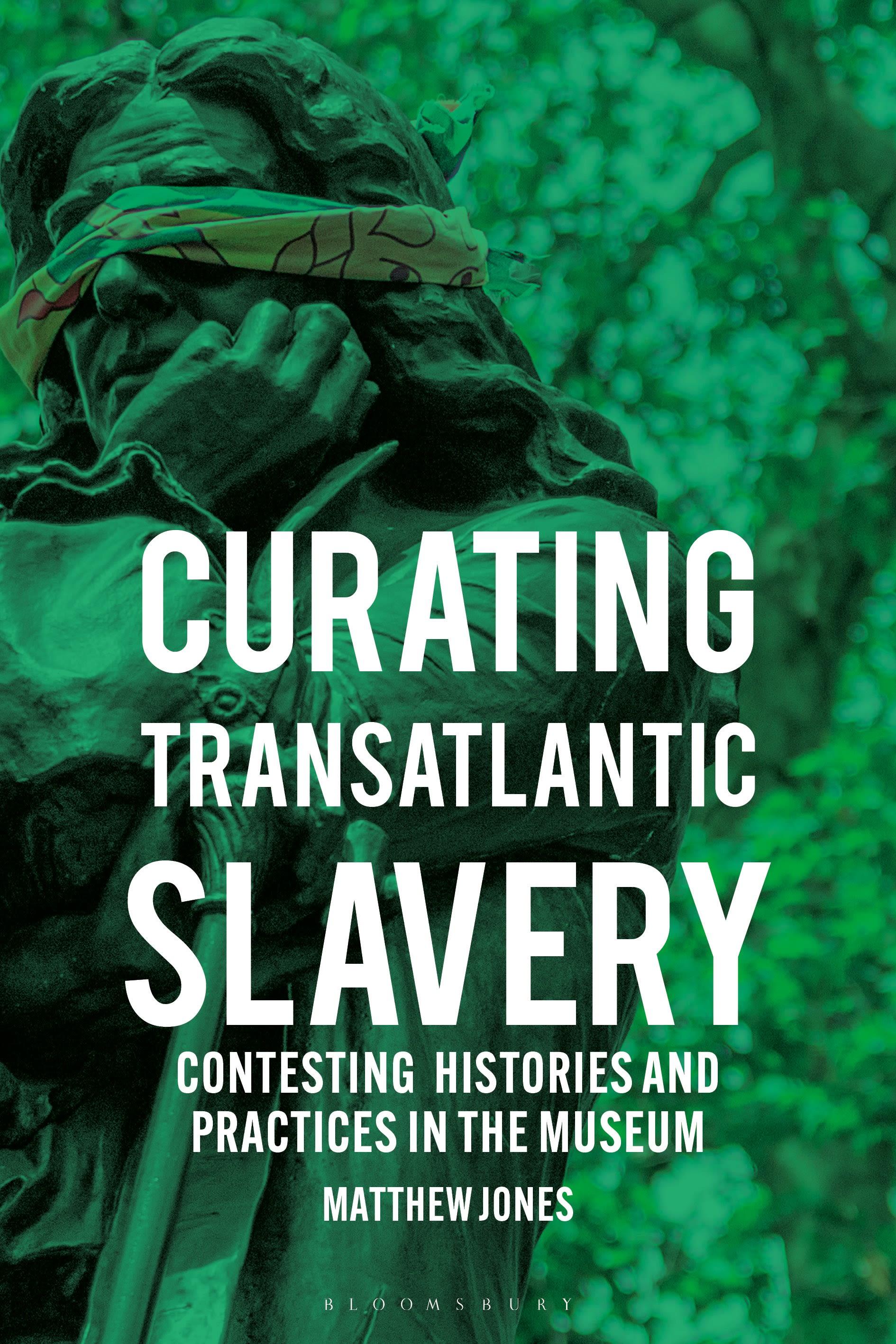
Following the watershed Black Lives Matter protests in 2020, and the wider public awareness of the legacies of the British Empire that has followed, how have museums developed anti-racist and decolonial practices that engage more directly with slavery's ongoing legacies?
Curating Transatlantic Slavery presents a timely intervention into this important work, examining the curating and decision-making processes that underpin the memorialization and display of Transatlantic Slave Trade histories. Questioning how contemporary curatorial practice has been shaped by wider processes of race and racialization, and how it can engage further with these issues, Matthew Jones argues that museums must be self-reflective: scrutinizing the ways in which they racialize those they collaborate with, be that artists or communities, and how their own histories are linked with historical structures of racialization.
Each chapter focuses on a distinctive aspect of contemporary museum practice in relation to colonial history and race, covering the varying approaches of museums in the UK and Europe. Museums discussed include the: Tropenmuseum in the Netherlands, Royal Museum for Central Africa in Belgium, and the Victoria & Albert Museum, British Museum, National Portrait Gallery, Bristol Museums and National Maritime Museum, all in the UK. Driven by comparative analysis, the chapters are grouped under the following themes, representing the core issues related to engaging with the Transatlantic Slave Trade and colonial histories on a curatorial basis: institutional history and memory; collaborative curatorial practice with communities, artists and academics; affect and the communication of trauma; and finally the impact of contemporary anti-racist movements on the displaying of slavery and anti-slavery resistance.
In deconstructing these processes and histories in modern museum practice, Curating Transatlantic Slavery challenges the role of museums across the world, in the formation of racial representations and provides alternative paths towards instituting anti-racist practices.
Curating Transatlantic Slavery presents a timely intervention into this important work, examining the curating and decision-making processes that underpin the memorialization and display of Transatlantic Slave Trade histories. Questioning how contemporary curatorial practice has been shaped by wider processes of race and racialization, and how it can engage further with these issues, Matthew Jones argues that museums must be self-reflective: scrutinizing the ways in which they racialize those they collaborate with, be that artists or communities, and how their own histories are linked with historical structures of racialization.
Each chapter focuses on a distinctive aspect of contemporary museum practice in relation to colonial history and race, covering the varying approaches of museums in the UK and Europe. Museums discussed include the: Tropenmuseum in the Netherlands, Royal Museum for Central Africa in Belgium, and the Victoria & Albert Museum, British Museum, National Portrait Gallery, Bristol Museums and National Maritime Museum, all in the UK. Driven by comparative analysis, the chapters are grouped under the following themes, representing the core issues related to engaging with the Transatlantic Slave Trade and colonial histories on a curatorial basis: institutional history and memory; collaborative curatorial practice with communities, artists and academics; affect and the communication of trauma; and finally the impact of contemporary anti-racist movements on the displaying of slavery and anti-slavery resistance.
In deconstructing these processes and histories in modern museum practice, Curating Transatlantic Slavery challenges the role of museums across the world, in the formation of racial representations and provides alternative paths towards instituting anti-racist practices.
Pagina's: 192
Categorie: Kultur-, Genus- & Postkoloniala studier
e-ISBN: 9781350444133
Verzendgewicht: 1.2 kg
Verzending binnen: 1-2 dagen
Betaal eenvoudig met kaart, Klarna, Apple Pay of Google Pay. Niet tevreden? Je hebt altijd 14 dagen bedenktijd. Lees meer in onze voorwaarden. Heb je vragen, mail ons dan via hello@memmo.org.
Memmo maakt studeren makkelijker – waar je ook bent ter wereld. Wij brengen je cursusboeken en slimme studietools samen op één plek: samenvattingen, quizzen, podcasts en flashcards. En Ted, je studievriend die antwoord geeft op alles wat je je afvraagt. Meer dan 50.000 studenten studeren hier al – gebouwd om je sneller te laten leren en minder stress te geven.