
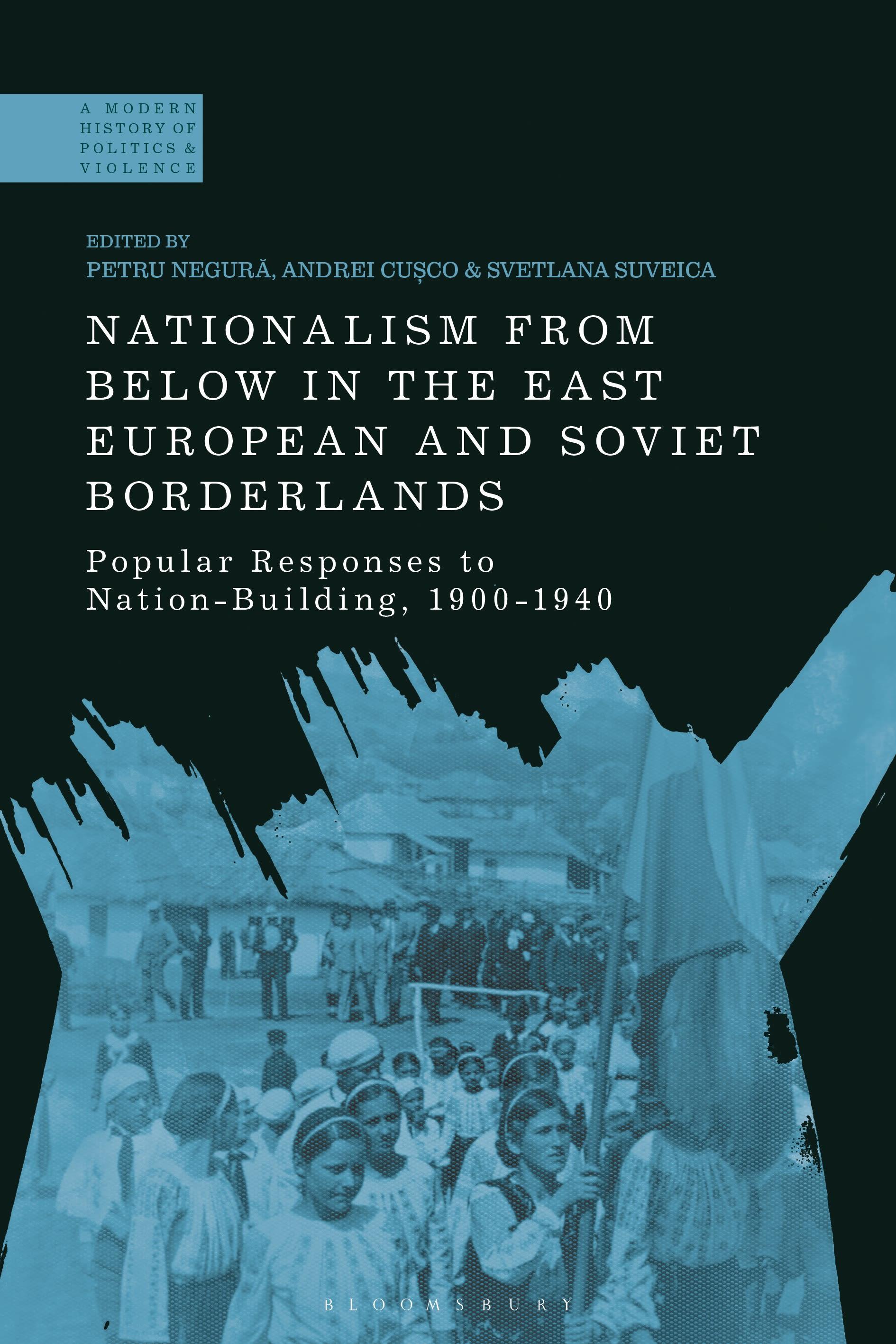
This book features contributions that examine the responses of local populations to nationalizing and state-building projects in the first half of the twentieth century. Focusing on bottom-up, peripheral, and marginal reactions to top-down nation-building efforts, the volume covers border regions of Romania, Austria-Hungary (before 1918), Poland, Finland, the Russian Empire, and the USSR between 1900 and 1940.
Historiography continues to privilege top-down approaches, focused on elites, institutions, and official policies. Despite previous notable works on this topic, in-depth studies of bottom-up perspectives on these regions remain rare. This volume seeks to redress the imbalance by emphasizing the perceptions, discourses, and everyday practices of ordinary people confronted with (often repressive) nation- and state-building agendas. It also addresses multiple levels of social interaction (combining perspectives from above, from below, and from the middle), involving several categories of actors and navigating through different scales of analysis. Individual and comparative case studies explore the social and political peculiarities of various local communities, particularly their evolving forms of national identification across neighboring regions.
This volume contributes to both nationalism studies, by critically engaging with the concepts of everyday ethnicity and “national indifference,” and borderland studies, through a trans-sectional approach focusing on the agency of various marginalized communities.
Historiography continues to privilege top-down approaches, focused on elites, institutions, and official policies. Despite previous notable works on this topic, in-depth studies of bottom-up perspectives on these regions remain rare. This volume seeks to redress the imbalance by emphasizing the perceptions, discourses, and everyday practices of ordinary people confronted with (often repressive) nation- and state-building agendas. It also addresses multiple levels of social interaction (combining perspectives from above, from below, and from the middle), involving several categories of actors and navigating through different scales of analysis. Individual and comparative case studies explore the social and political peculiarities of various local communities, particularly their evolving forms of national identification across neighboring regions.
This volume contributes to both nationalism studies, by critically engaging with the concepts of everyday ethnicity and “national indifference,” and borderland studies, through a trans-sectional approach focusing on the agency of various marginalized communities.
Pagina's: 320
Categorie: Historia
e-ISBN: 9781350443747
Verzendgewicht: 1.2 kg
Verzending binnen: 1-2 dagen
Betaal eenvoudig met kaart, Klarna, Apple Pay of Google Pay. Niet tevreden? Je hebt altijd 14 dagen bedenktijd. Lees meer in onze voorwaarden. Heb je vragen, mail ons dan via hello@memmo.org.
Memmo maakt studeren makkelijker – waar je ook bent ter wereld. Wij brengen je cursusboeken en slimme studietools samen op één plek: samenvattingen, quizzen, podcasts en flashcards. En Ted, je studievriend die antwoord geeft op alles wat je je afvraagt. Meer dan 50.000 studenten studeren hier al – gebouwd om je sneller te laten leren en minder stress te geven.