
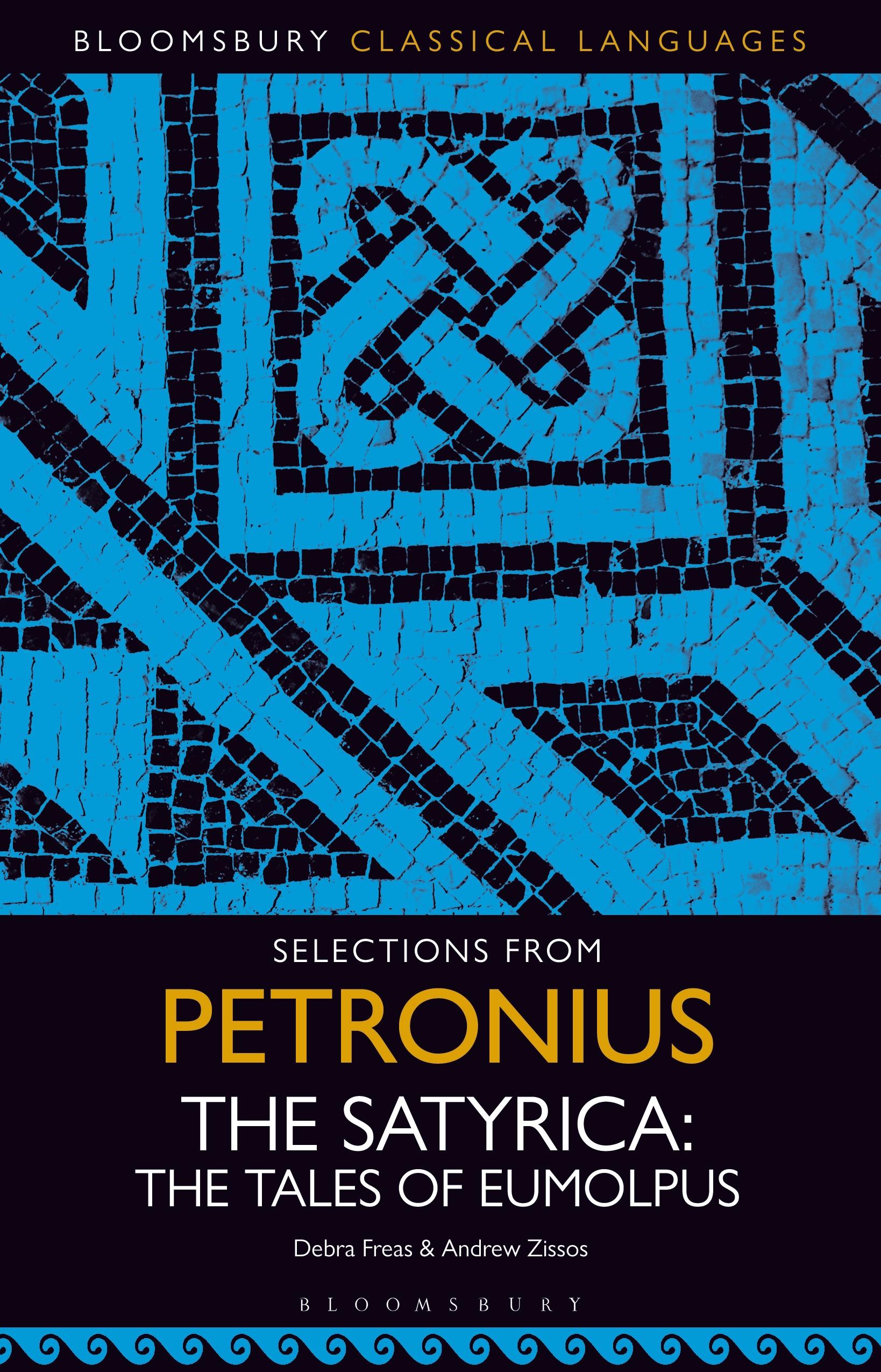
Taking the reader through the fragmentary text of Petronius' Satyrica in a coherent sequence, this book gives a deeper understanding of the fascinating aesthetic, literary and social issues raised within the text. Petronius' Satyrica has long been popular with readers of Latin: it is one of the few texts that offers a glimpse into non-elite society in the early Roman imperial period. It is also one of only a handful of ancient novels to survive in any form, and certainly the most racy and controversial. Supported by a detailed contextualising introduction and companion website resources, these selections from the Latin text are carefully annotated for students and a full vocabulary can be found at the end of the book.
The selections in this edition put at centre stage the figure of Eumolpus: poet, storyteller and would-be critic, as well as charlatan, swindler and lecher. He is one of the major characters in what survives of the Satyrica; he serves as an internal narrator for many of the longer embedded poems and stories; and he meditates on topics of great interest, not the least being the perceived decline of art, science and culture in the contemporary Graeco-Roman world. In this way,students are introduced to some of the best-known myths and tales of antiquity, including the Capture of Troy and the Widow of Ephesus, while affording the opportunity to translate both prose and verse passages, and to consider and evaluate the Satyrica's relationship to the literary tradition.
The selections in this edition put at centre stage the figure of Eumolpus: poet, storyteller and would-be critic, as well as charlatan, swindler and lecher. He is one of the major characters in what survives of the Satyrica; he serves as an internal narrator for many of the longer embedded poems and stories; and he meditates on topics of great interest, not the least being the perceived decline of art, science and culture in the contemporary Graeco-Roman world. In this way,students are introduced to some of the best-known myths and tales of antiquity, including the Capture of Troy and the Widow of Ephesus, while affording the opportunity to translate both prose and verse passages, and to consider and evaluate the Satyrica's relationship to the literary tradition.
Betaal eenvoudig met kaart, Klarna, Apple Pay of Google Pay. Niet tevreden? Je hebt altijd 14 dagen bedenktijd. Lees meer in onze voorwaarden. Heb je vragen, mail ons dan via hello@memmo.org.
Memmo maakt studeren makkelijker – waar je ook bent ter wereld. Wij brengen je cursusboeken en slimme studietools samen op één plek: samenvattingen, quizzen, podcasts en flashcards. En Ted, je studievriend die antwoord geeft op alles wat je je afvraagt. Meer dan 50.000 studenten studeren hier al – gebouwd om je sneller te laten leren en minder stress te geven.