
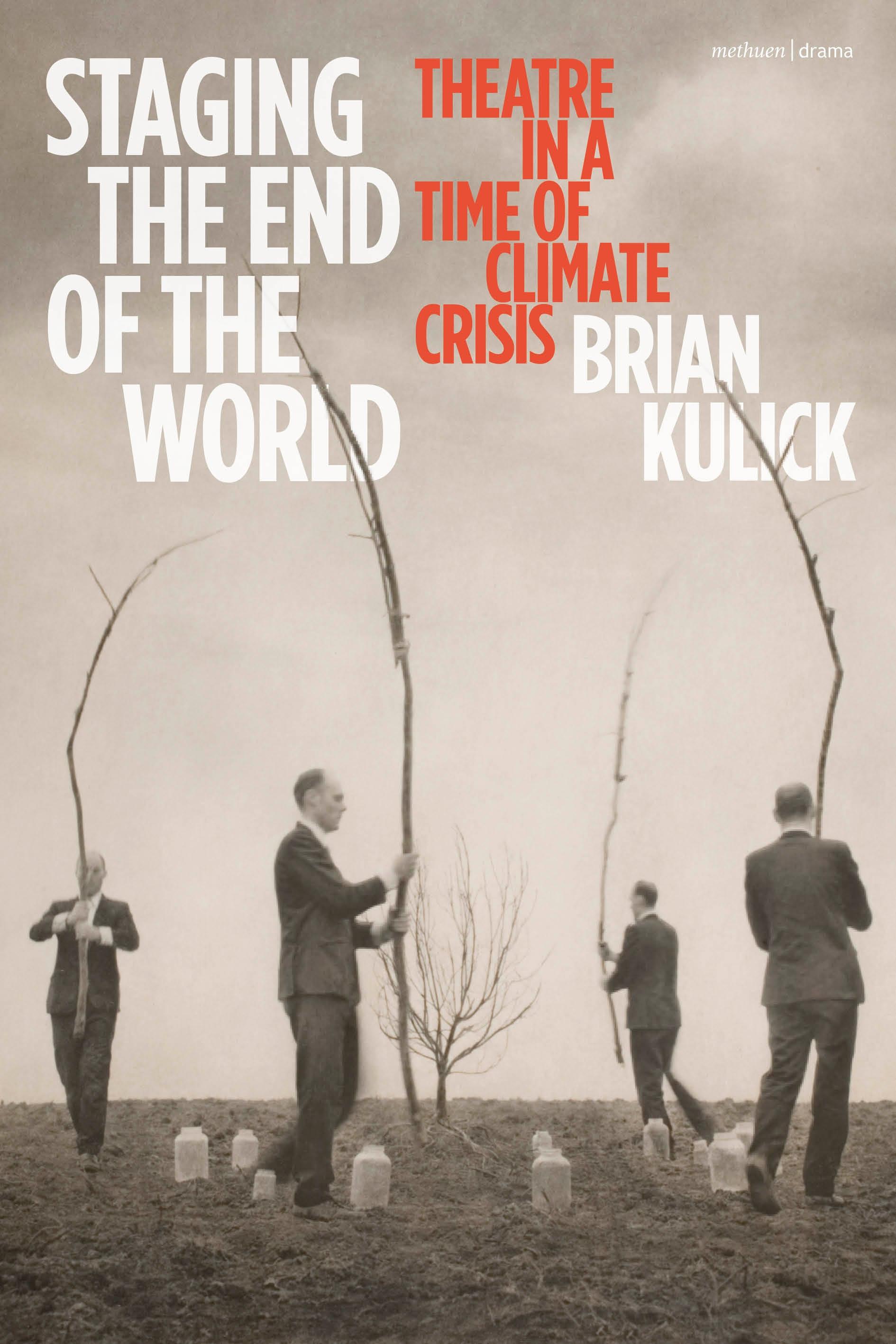
This book is a brief history of the end of the world as seen through the eyes of theatre. Since its inception, theatre has staged the fall of empires, floods, doomsdays, shipwrecks, earthquakes, plagues, environmental degradations, warfare, nuclear annihilation, and the catastrophic effects of climate change. Using a wide range of plays alongside contemporary thinkers, this study helps guide and galvanize the reader in grappling with the climate crisis.
Kulick divides this litany of theatrical cataclysms into four distinct historical phases: the Ancients, including Euripides and Bhasa, the legendary Sanskrit dramatist; the Age of Belief, with the anonymous authors of the medieval mystery cycles, Shakespeare, and Pushkin; the Moderns, with Ibsen, Chekhov, Brecht, Beckett, and Bond; and, finally, the way the world might end now, encompassing Caryl Churchill, Tony Kushner, and Anne Washburn. In tandem with the insights gleaned from these playwrights, the book draws upon the work of contemporary scientists, ecologists, and ethicists to further tease out the philosophical implications of such plays and their relevance to our own troubled times. In the end, Kulick shows how each of these ages and their respective authors have something essential to say, not only about humanity's potential end, but, more importantly, about the possibility for our collective continuance.
Kulick divides this litany of theatrical cataclysms into four distinct historical phases: the Ancients, including Euripides and Bhasa, the legendary Sanskrit dramatist; the Age of Belief, with the anonymous authors of the medieval mystery cycles, Shakespeare, and Pushkin; the Moderns, with Ibsen, Chekhov, Brecht, Beckett, and Bond; and, finally, the way the world might end now, encompassing Caryl Churchill, Tony Kushner, and Anne Washburn. In tandem with the insights gleaned from these playwrights, the book draws upon the work of contemporary scientists, ecologists, and ethicists to further tease out the philosophical implications of such plays and their relevance to our own troubled times. In the end, Kulick shows how each of these ages and their respective authors have something essential to say, not only about humanity's potential end, but, more importantly, about the possibility for our collective continuance.
Betaal eenvoudig met kaart, Klarna, Apple Pay of Google Pay. Niet tevreden? Je hebt altijd 14 dagen bedenktijd. Lees meer in onze voorwaarden. Heb je vragen, mail ons dan via hello@memmo.org.
Memmo maakt studeren makkelijker – waar je ook bent ter wereld. Wij brengen je cursusboeken en slimme studietools samen op één plek: samenvattingen, quizzen, podcasts en flashcards. En Ted, je studievriend die antwoord geeft op alles wat je je afvraagt. Meer dan 50.000 studenten studeren hier al – gebouwd om je sneller te laten leren en minder stress te geven.