
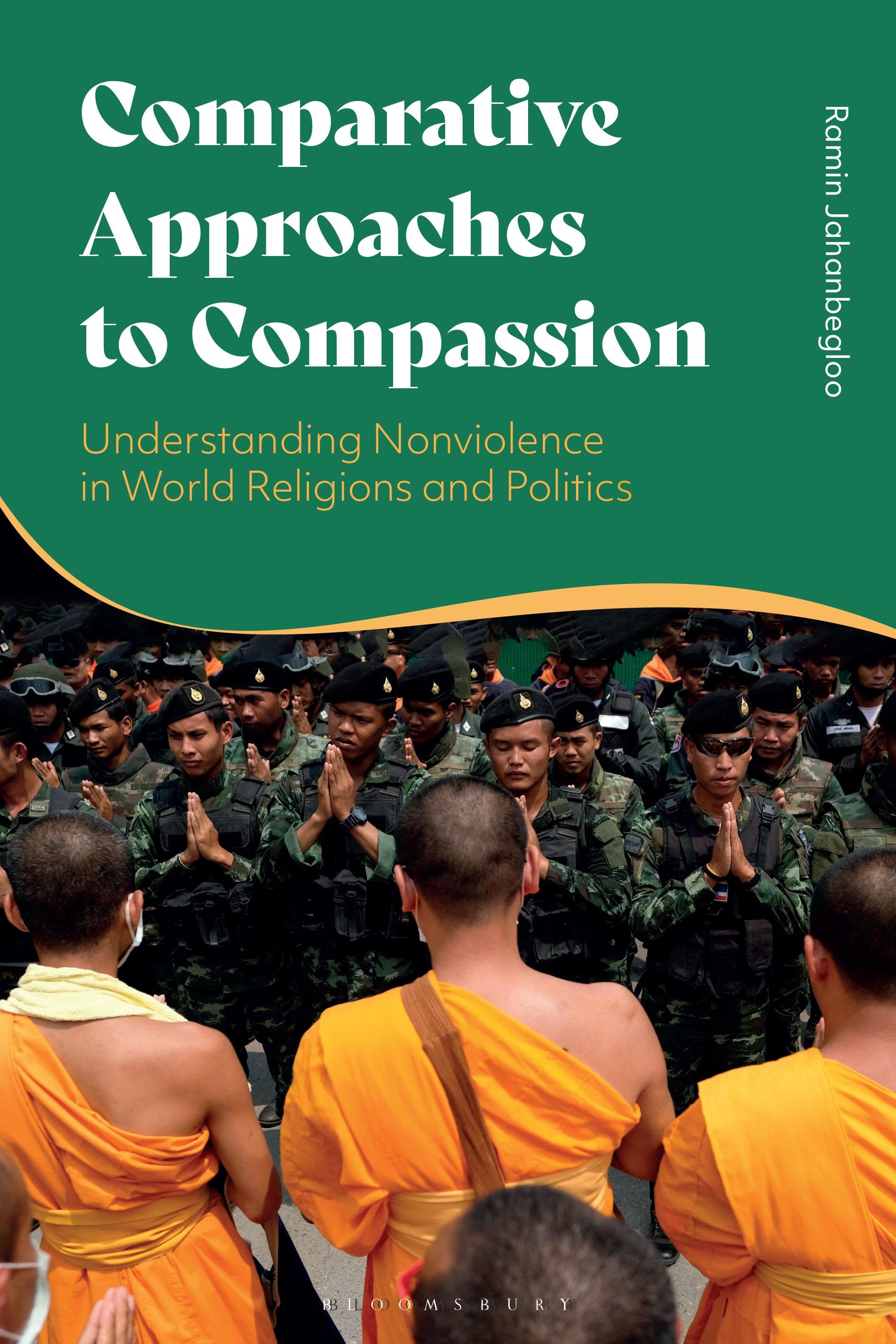
Ramin Jahanbegloo develops the concept of compassion as a practical and ethical response to the problems of today's world. Examining the power of compassion through the lens of multiple world religions, he explores ahimsa in Buddhism, Jainism and Hinduism and neighbourly love in Christianity, before synthesizing the two concepts in the Gandhian theory of non-violence and its impact on Muslim and Christian thinkers such as Abdul Ghaffar Khan and Martin Luther King, Jr. Jahanbegloo considers the idea of a compassionate civilization based on the nonviolent democratic theory put forward by Gandhi with Swaraj, and completed by Martin Luther King, Jr. with the Beloved Community.
By scrutinizing compassion in various religious and ethical traditions and exploring the relevance of homo fragilis, Jahanbegloo's comparative approach enriches our understanding of nonviolence as a universal philosophy and practice for the 21st century. He shows that nonviolence is not only a mode of thinking and a way of life, but also a powerful strategy of social and political transformation.
By scrutinizing compassion in various religious and ethical traditions and exploring the relevance of homo fragilis, Jahanbegloo's comparative approach enriches our understanding of nonviolence as a universal philosophy and practice for the 21st century. He shows that nonviolence is not only a mode of thinking and a way of life, but also a powerful strategy of social and political transformation.
Betaal eenvoudig met kaart, Klarna, Apple Pay of Google Pay. Niet tevreden? Je hebt altijd 14 dagen bedenktijd. Lees meer in onze voorwaarden. Heb je vragen, mail ons dan via hello@memmo.org.
Memmo maakt studeren makkelijker – waar je ook bent ter wereld. Wij brengen je cursusboeken en slimme studietools samen op één plek: samenvattingen, quizzen, podcasts en flashcards. En Ted, je studievriend die antwoord geeft op alles wat je je afvraagt. Meer dan 50.000 studenten studeren hier al – gebouwd om je sneller te laten leren en minder stress te geven.