
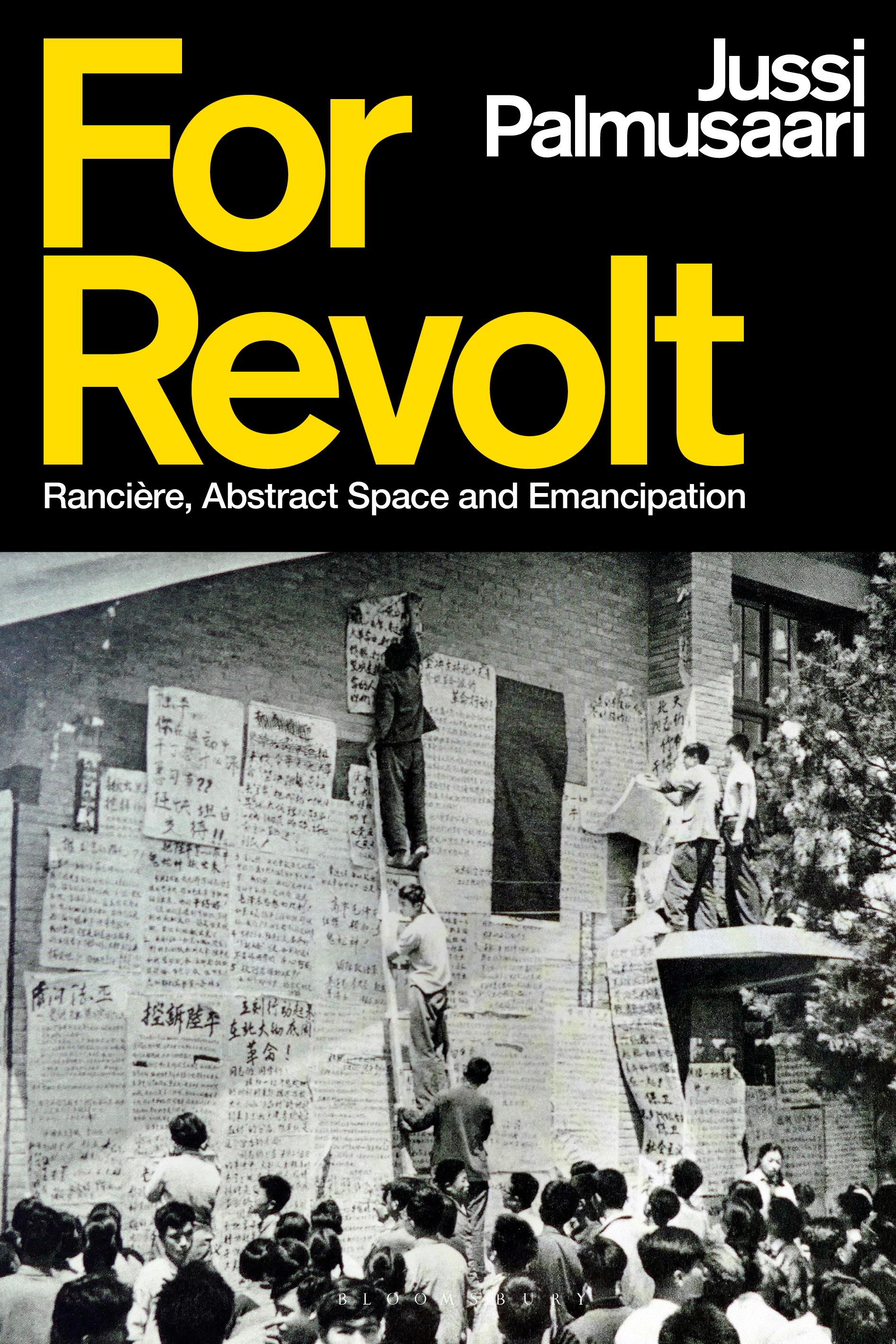
This striking interpretation of Rancière's uncompromising view of emancipation draws on his Maoist commitments and invariably rational and Kantian-moralist basis. Tracing the logic of abstract and atemporal space in all of Rancière's work, it stands in contrast to the prevailing tendency to emphasise his sensitivity to evolving historical forms and changing regimes of sensibility. Overturning the meaning of Rancière's interest in the sensible makes the object of his thinking clear: a revolt against a reality structured according to ordered temporalities and forms of appearance.
In making its case, For Revolt reconstructs Rancière's relations to some of the crucial, yet unexplored, politico-historical frameworks of his thought, such as the Cultural-Revolutionary Maoism and the French Revolution, offering a fresh perspective on these revolutionary paradigms. Going against dominant views, this book argues for a fundamentally positive influence of Louis Althusser's philosophy on Rancière's thought and analyses his relation to Marx and Kant based on previously undiscussed early student work. Through a critical discussion of Rancière, For Revolt sheds light on the present predicament of emancipatory politics – its emphasis on the actualities of here and now and its difficulties in envisaging programmatic realisations of radically alternative futures.
In making its case, For Revolt reconstructs Rancière's relations to some of the crucial, yet unexplored, politico-historical frameworks of his thought, such as the Cultural-Revolutionary Maoism and the French Revolution, offering a fresh perspective on these revolutionary paradigms. Going against dominant views, this book argues for a fundamentally positive influence of Louis Althusser's philosophy on Rancière's thought and analyses his relation to Marx and Kant based on previously undiscussed early student work. Through a critical discussion of Rancière, For Revolt sheds light on the present predicament of emancipatory politics – its emphasis on the actualities of here and now and its difficulties in envisaging programmatic realisations of radically alternative futures.
Betaal eenvoudig met kaart, Klarna, Apple Pay of Google Pay. Niet tevreden? Je hebt altijd 14 dagen bedenktijd. Lees meer in onze voorwaarden. Heb je vragen, mail ons dan via hello@memmo.org.
Memmo maakt studeren makkelijker – waar je ook bent ter wereld. Wij brengen je cursusboeken en slimme studietools samen op één plek: samenvattingen, quizzen, podcasts en flashcards. En Ted, je studievriend die antwoord geeft op alles wat je je afvraagt. Meer dan 50.000 studenten studeren hier al – gebouwd om je sneller te laten leren en minder stress te geven.