
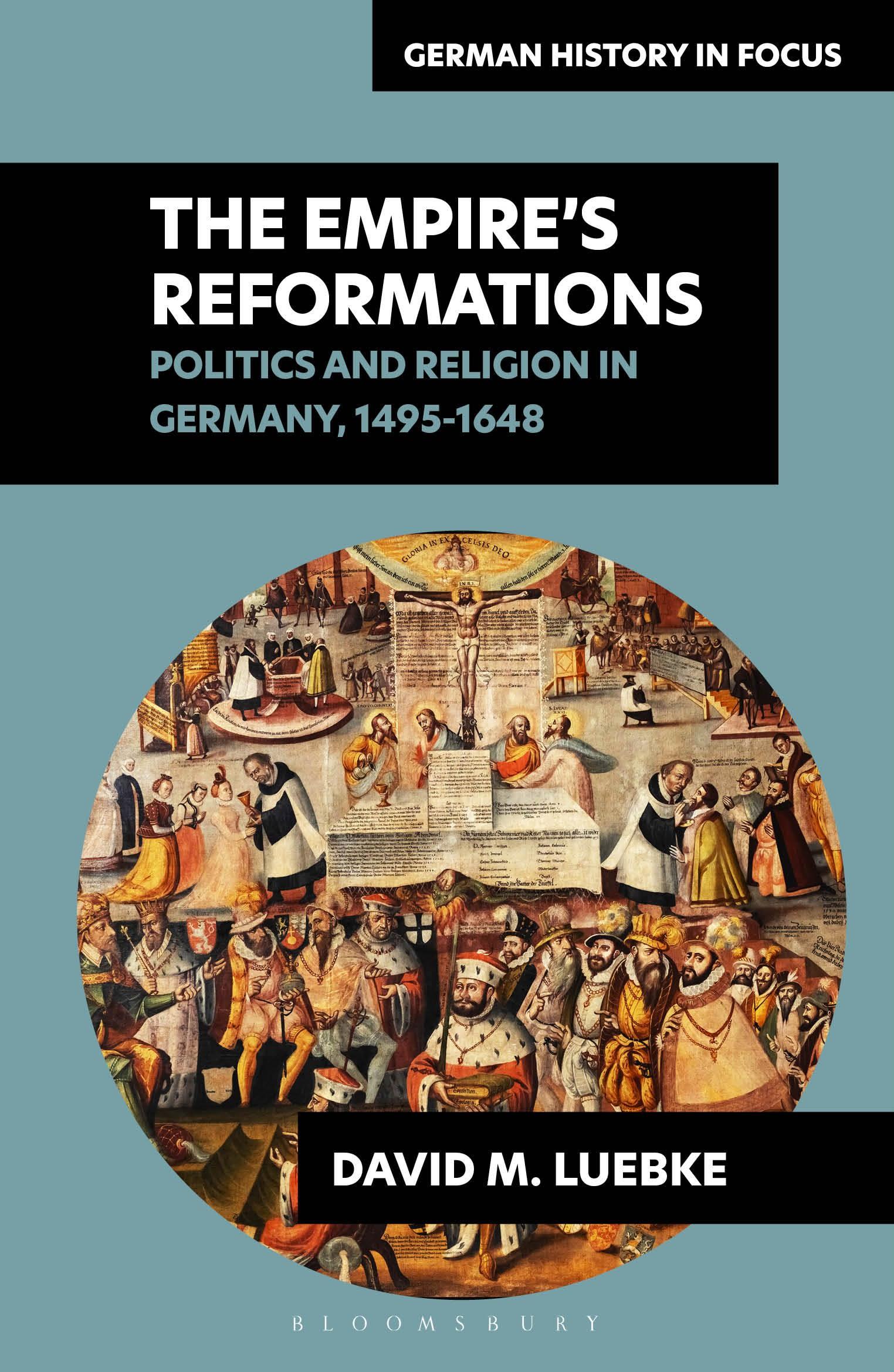
The Empire's Reformations provides a concise overview of reform movements in 16th-century Germany that gave birth to the modern division of western Christianity into multiple denominations – Roman Catholic, Lutheran, Calvinist, and more. It exposes the origins of modern religious pluralism, both in battle for souls among these emerging camps and in the struggles of political leaders at every level to manage the threat that religious diversity posed to tranquillity and order in a rigidly hierarchical society. As such, it offers a prehistory of religious toleration, not as a positive value – few regarded toleration as inherently good – but as a strategy for keeping the peace.
David M. Luebke considers the reformations of religion in the context of concurrent transformations in the political and judicial structures of the Holy Roman Empire, that sprawling confederation of principalities and city-states that embraced most regions where German was spoken. This allows Luebke to view the religious reforms through the lens of imperial politics, showing how the Empire differed from the Atlantic monarchies, Eastern Europe, Scandinavia, and the Mediterranean. On a different and equally significant level, he examines how ordinary people of all backgrounds experienced the controversy over religion and responded to reforms of doctrine and observance. The inclusion of both the imperial and local perspectives moves the Reformation beyond the familiar story of theological combat and reimagines it as something that had resonance throughout the world, impacting people's lives in the process.
David M. Luebke considers the reformations of religion in the context of concurrent transformations in the political and judicial structures of the Holy Roman Empire, that sprawling confederation of principalities and city-states that embraced most regions where German was spoken. This allows Luebke to view the religious reforms through the lens of imperial politics, showing how the Empire differed from the Atlantic monarchies, Eastern Europe, Scandinavia, and the Mediterranean. On a different and equally significant level, he examines how ordinary people of all backgrounds experienced the controversy over religion and responded to reforms of doctrine and observance. The inclusion of both the imperial and local perspectives moves the Reformation beyond the familiar story of theological combat and reimagines it as something that had resonance throughout the world, impacting people's lives in the process.
Betaal eenvoudig met kaart, Klarna, Apple Pay of Google Pay. Niet tevreden? Je hebt altijd 14 dagen bedenktijd. Lees meer in onze voorwaarden. Heb je vragen, mail ons dan via hello@memmo.org.
Memmo maakt studeren makkelijker – waar je ook bent ter wereld. Wij brengen je cursusboeken en slimme studietools samen op één plek: samenvattingen, quizzen, podcasts en flashcards. En Ted, je studievriend die antwoord geeft op alles wat je je afvraagt. Meer dan 50.000 studenten studeren hier al – gebouwd om je sneller te laten leren en minder stress te geven.