
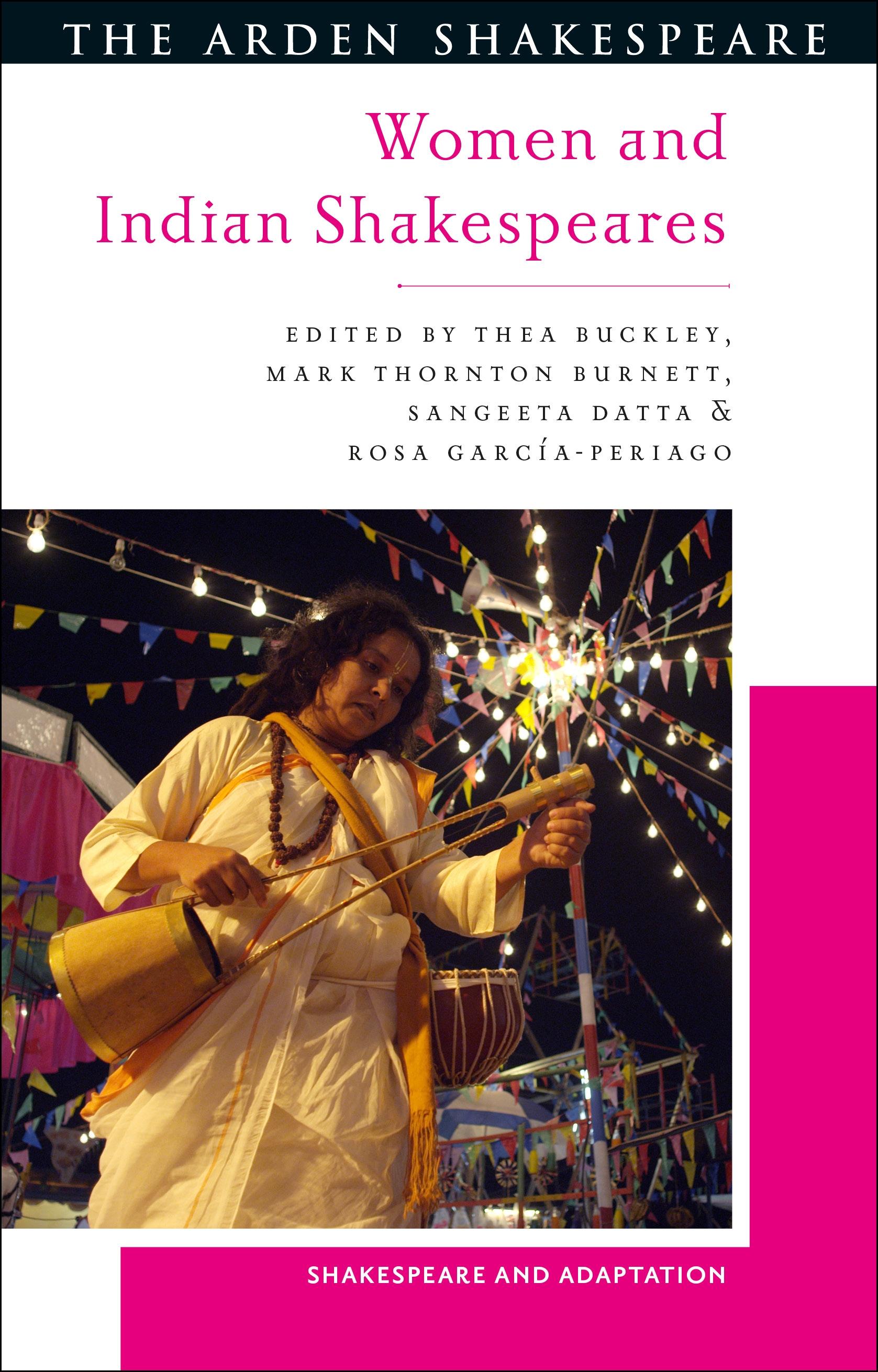
Women and Indian Shakespeares explores the multiple ways in which women are, and have been, engaged with Shakespeare in India. Women's engagements encompass the full range of media, from translation to cinematic adaptation and from early colonial performance to contemporary theatrical experiment. Simultaneously, Women and Indian Shakespeares makes visible the ways in which women are figured in various representational registers as resistant agents, martial seductresses, redemptive daughters, victims of caste discrimination, conflicted spaces and global citizens. In so doing, the collection reorients existing lines of investigation, extends the disciplinary field, brings into visibility still occluded subjects and opens up radical readings. More broadly, the collection identifies how, in Indian Shakespeares on page, stage and screen, women increasingly possess the ability to shape alternative futures across patriarchal and societal barriers of race, caste, religion and class.
In repeated iterations, the collection turns our attention to localized modes of adaptation that enable opportunities for women while celebrating Shakespeare's gendered interactions in India's rapidly changing, and increasingly globalized, cultural, economic and political environment. In the contributions, we see a transformed Shakespeare, a playwright who appears differently when seen through the gendered eyes of a new Indian, diasporic and global generation of critics, historians, archivists, practitioners and directors. Radically imagining Indian Shakespeares with women at the centre, Women and Indian Shakespeares interweaves history, regional geography/regionality, language and the present day to establish a record of women as creators and adapters of Shakespeare in Indian contexts.
In repeated iterations, the collection turns our attention to localized modes of adaptation that enable opportunities for women while celebrating Shakespeare's gendered interactions in India's rapidly changing, and increasingly globalized, cultural, economic and political environment. In the contributions, we see a transformed Shakespeare, a playwright who appears differently when seen through the gendered eyes of a new Indian, diasporic and global generation of critics, historians, archivists, practitioners and directors. Radically imagining Indian Shakespeares with women at the centre, Women and Indian Shakespeares interweaves history, regional geography/regionality, language and the present day to establish a record of women as creators and adapters of Shakespeare in Indian contexts.
Betaal eenvoudig met kaart, Klarna, Apple Pay of Google Pay. Niet tevreden? Je hebt altijd 14 dagen bedenktijd. Lees meer in onze voorwaarden. Heb je vragen, mail ons dan via hello@memmo.org.
Memmo maakt studeren makkelijker – waar je ook bent ter wereld. Wij brengen je cursusboeken en slimme studietools samen op één plek: samenvattingen, quizzen, podcasts en flashcards. En Ted, je studievriend die antwoord geeft op alles wat je je afvraagt. Meer dan 50.000 studenten studeren hier al – gebouwd om je sneller te laten leren en minder stress te geven.