
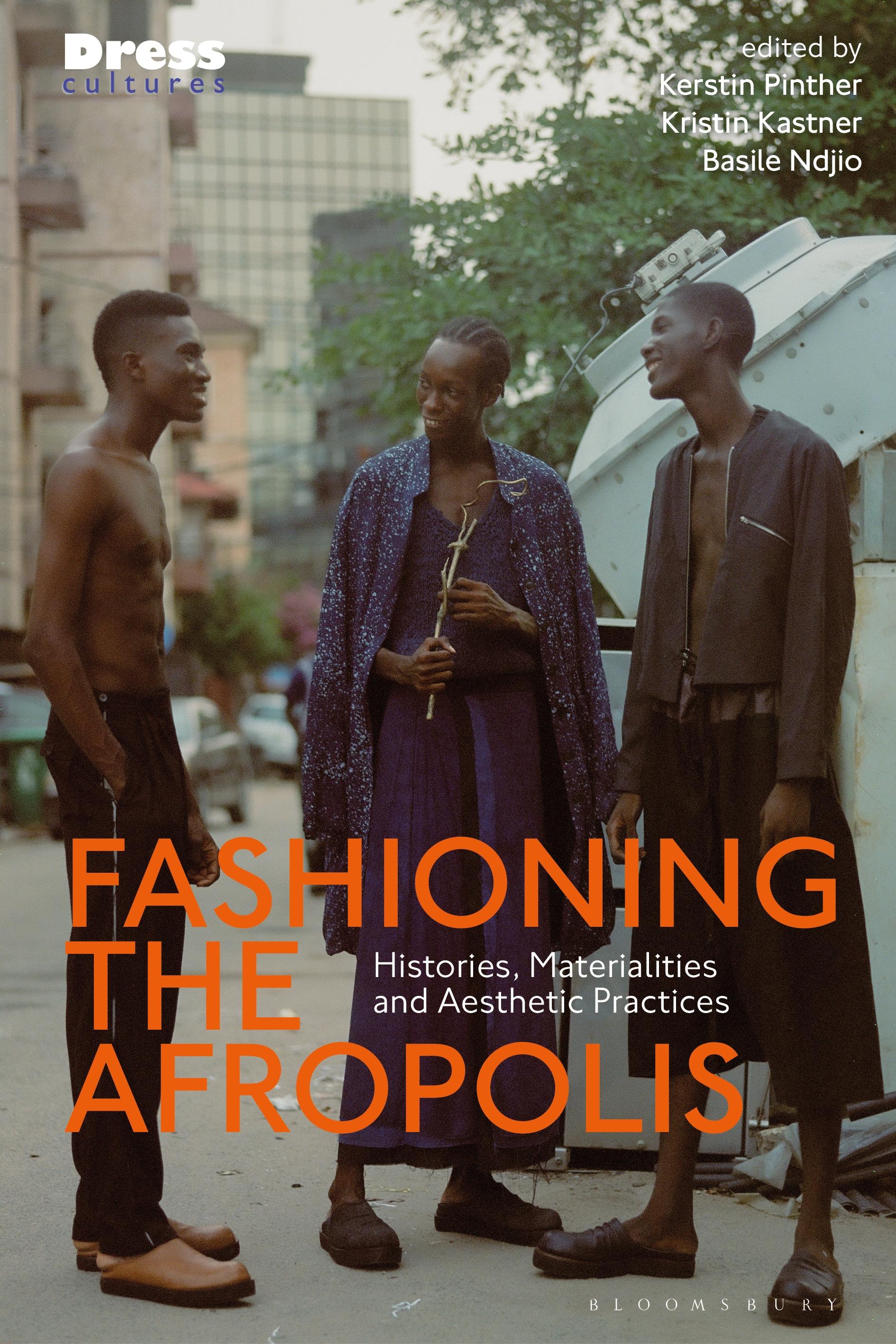
“A revelation. Reclaiming fashion from its European history.” – Shane White
With a focus on sub-Saharan Africa, Fashioning the Afropolis provides a range of innovative perspectives on global fashion, design, dress, photography, and the body in some of the major cities, with a focus on Lagos, Johannesburg, Dakar, and Douala. It contributes to the ongoing debates around the globalization of fashion and fashion theory by exploring fashion as a genuine urban phenomenon on the continent and among its diasporas.
To date, “fashion” and “city” have not been systematically related to each other in the African context and, for too long, a western-centric gaze has dominated scholarship, resulting in the perception of Africa as provincial and its visual arts and textile cultures as static and folkloristic. This perspective is all the more distorted, given Africa's rich sartorial past. With a huge number of tailors ready to adapt and renew clothing, reshaping garments into contemporary styles, and many cities in Africa becoming hot-spots for a steadily growing and well-connected scene of fashion designers in the past 20 years, the time is ripe for a reevaluation and reconsideration of the fashionscapes of Africa. Leading scholars offer an updated empirical and theoretical foundation on which to base new and exciting research on sub-Saharan fashion, challenging perceptions and offering new insights.
With a focus on sub-Saharan Africa, Fashioning the Afropolis provides a range of innovative perspectives on global fashion, design, dress, photography, and the body in some of the major cities, with a focus on Lagos, Johannesburg, Dakar, and Douala. It contributes to the ongoing debates around the globalization of fashion and fashion theory by exploring fashion as a genuine urban phenomenon on the continent and among its diasporas.
To date, “fashion” and “city” have not been systematically related to each other in the African context and, for too long, a western-centric gaze has dominated scholarship, resulting in the perception of Africa as provincial and its visual arts and textile cultures as static and folkloristic. This perspective is all the more distorted, given Africa's rich sartorial past. With a huge number of tailors ready to adapt and renew clothing, reshaping garments into contemporary styles, and many cities in Africa becoming hot-spots for a steadily growing and well-connected scene of fashion designers in the past 20 years, the time is ripe for a reevaluation and reconsideration of the fashionscapes of Africa. Leading scholars offer an updated empirical and theoretical foundation on which to base new and exciting research on sub-Saharan fashion, challenging perceptions and offering new insights.
Betaal eenvoudig met kaart, Klarna, Apple Pay of Google Pay. Niet tevreden? Je hebt altijd 14 dagen bedenktijd. Lees meer in onze voorwaarden. Heb je vragen, mail ons dan via hello@memmo.org.
Memmo maakt studeren makkelijker – waar je ook bent ter wereld. Wij brengen je cursusboeken en slimme studietools samen op één plek: samenvattingen, quizzen, podcasts en flashcards. En Ted, je studievriend die antwoord geeft op alles wat je je afvraagt. Meer dan 50.000 studenten studeren hier al – gebouwd om je sneller te laten leren en minder stress te geven.