
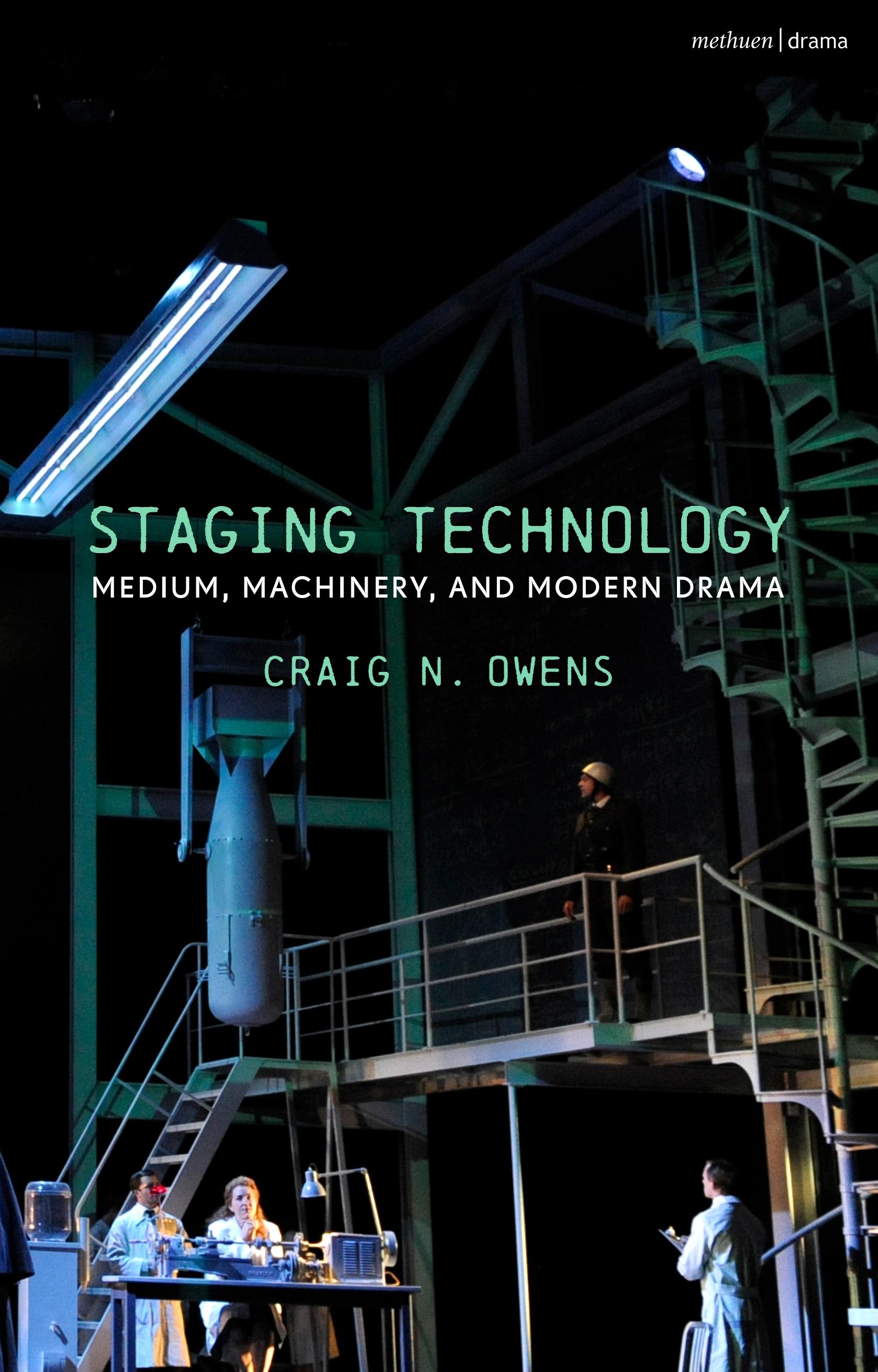
Through an examination of a range of performance works ranging from Jean Cocteau's ballet The Eiffel Tower Wedding Party (1921) to Julie Taymor's monumental production of Spider-Man: Turn off the Dark (2010) and Mexican playwright Isaac Gomez's La Ruta(2018), Staging Technology asks what becomes visible when we encounter plays, operas, and musicals that are themselves about fraught human/machine interfaces. What can theatrical production tell us about the way technology functions as an element of ideology and power in narrative drama? About the limits of the human?
Staging Technology bridges the divide between the technical practices of theatre production and critical, theoretical approaches to interpreting drama to examine the way dramatic theatre's technologies are shaped by larger historical, ideological, and economic forces. At the same time, it examines how those technologies themselves have influenced 20th and 21st-century playwrights', composers', and librettists' choice of subject matter for staged representation.
Examining performance works from the modernist and post-modern European and American canon of drama, opera, and performance art including works by Eugène Ionesco, Samuel Beckett, Heiner Müller, Sophie Treadwell, Harold Pinter, Tristan Tzara, Jean Cocteau, Arthur Miller, Robert Pinsky, John Adams and Alice Goodman, Staging Technology transforms how we think about the interrelationship between theatre practice, performance, narrative drama, and text. In it Craig N. Owens synthesizes approaches to interpretation and practice from disparate realms, offering insights into over-arching ways of making meaning that are illustrated through focused and innovative readings of individual works for the dramatic stage. Staging Technology provides a new and transformative paradigm for thinking about dramatic literature, the practices of representational theatre production, and the historical and social contexts they inhabit.
Staging Technology bridges the divide between the technical practices of theatre production and critical, theoretical approaches to interpreting drama to examine the way dramatic theatre's technologies are shaped by larger historical, ideological, and economic forces. At the same time, it examines how those technologies themselves have influenced 20th and 21st-century playwrights', composers', and librettists' choice of subject matter for staged representation.
Examining performance works from the modernist and post-modern European and American canon of drama, opera, and performance art including works by Eugène Ionesco, Samuel Beckett, Heiner Müller, Sophie Treadwell, Harold Pinter, Tristan Tzara, Jean Cocteau, Arthur Miller, Robert Pinsky, John Adams and Alice Goodman, Staging Technology transforms how we think about the interrelationship between theatre practice, performance, narrative drama, and text. In it Craig N. Owens synthesizes approaches to interpretation and practice from disparate realms, offering insights into over-arching ways of making meaning that are illustrated through focused and innovative readings of individual works for the dramatic stage. Staging Technology provides a new and transformative paradigm for thinking about dramatic literature, the practices of representational theatre production, and the historical and social contexts they inhabit.
Pagina's: 296
Categorie: Drama, Teater & Scenkonst
e-ISBN: 9781350168589
Verzendgewicht: 1.2 kg
Verzending binnen: 1-2 dagen
Betaal eenvoudig met kaart, Klarna, Apple Pay of Google Pay. Niet tevreden? Je hebt altijd 14 dagen bedenktijd. Lees meer in onze voorwaarden. Heb je vragen, mail ons dan via hello@memmo.org.
Memmo maakt studeren makkelijker – waar je ook bent ter wereld. Wij brengen je cursusboeken en slimme studietools samen op één plek: samenvattingen, quizzen, podcasts en flashcards. En Ted, je studievriend die antwoord geeft op alles wat je je afvraagt. Meer dan 50.000 studenten studeren hier al – gebouwd om je sneller te laten leren en minder stress te geven.