
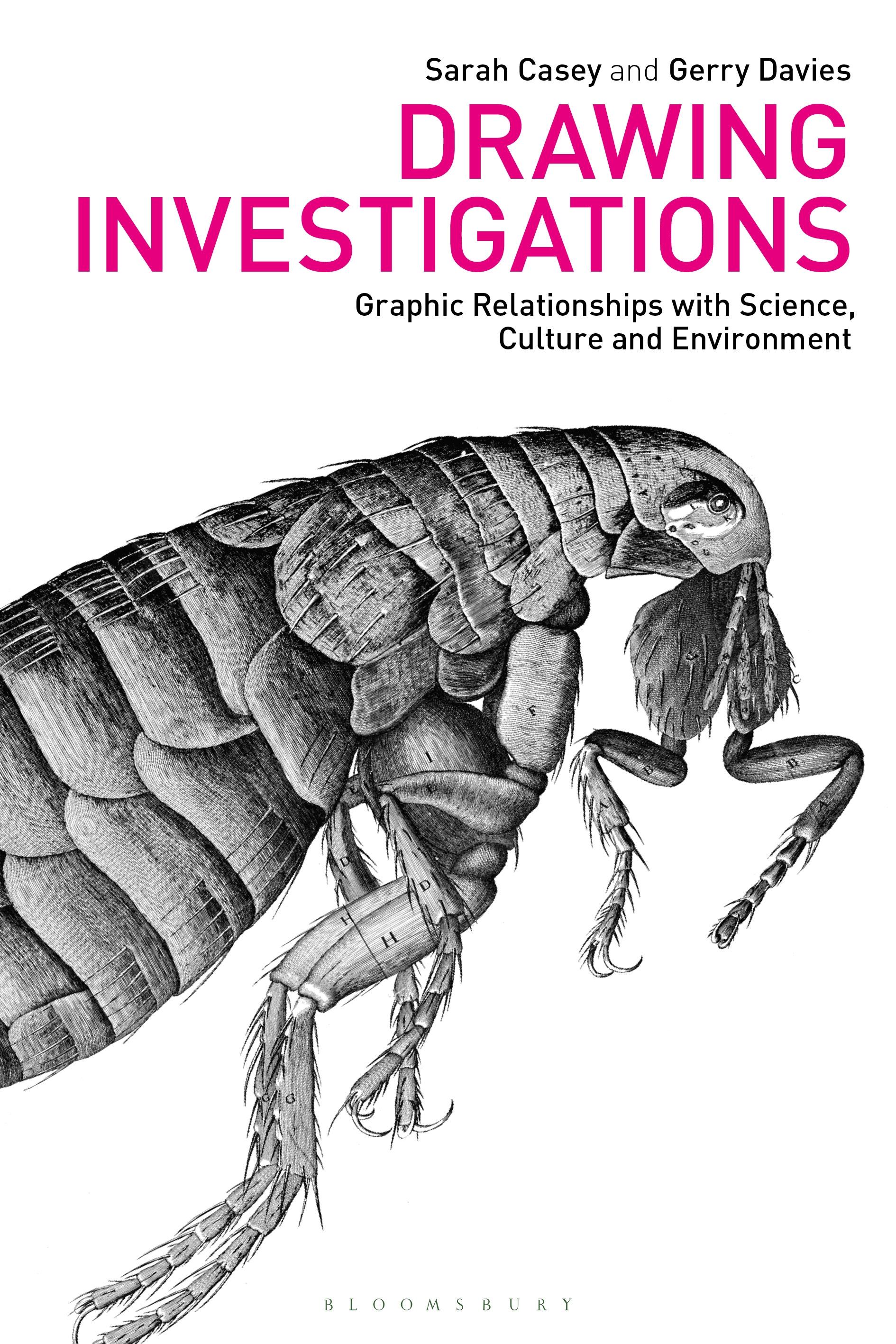
Using close visual analysis of drawings, artist interviews, critical analysis and exegesis, Drawing Investigations examines how artists use drawing as an investigative tool to reveal information that would otherwise remain unseen and unnoticed.
How does drawing add shape to ideas? How does the artist accommodate to challenges and restraints of a particular environment? To what extent is a drawing complementary and continuous with its subject and where is it disruptive and provocative? Casey and Davies address these questions while focusing on artists working collaboratively and the use of drawing in challenging or unexpected environments.
Drawing Investigations evaluates the emergence of a way of thinking among an otherwise disconnected group of artists by exploring commonalities in the application of analytical drawing to the natural world, urban environment, social forces and lived experience. Examples represent a spectrum of research in international contexts: an oceanographic Institute in California, the archives of Amsterdam's Rijksmuseum, the Antarctic Survey, geothermal research in Japan and the Kurdish diaspora in Iraq. Issues are situated in the contemporary theory and practice of drawing including relationships to historical precedents.
By exploring drawing's capacity to capture and describe experience, to sharpen visual faculties and to bridge embodied and conceptual knowledge, Drawing Investigations offers a fresh critical perspective on contemporary drawing practice.
How does drawing add shape to ideas? How does the artist accommodate to challenges and restraints of a particular environment? To what extent is a drawing complementary and continuous with its subject and where is it disruptive and provocative? Casey and Davies address these questions while focusing on artists working collaboratively and the use of drawing in challenging or unexpected environments.
Drawing Investigations evaluates the emergence of a way of thinking among an otherwise disconnected group of artists by exploring commonalities in the application of analytical drawing to the natural world, urban environment, social forces and lived experience. Examples represent a spectrum of research in international contexts: an oceanographic Institute in California, the archives of Amsterdam's Rijksmuseum, the Antarctic Survey, geothermal research in Japan and the Kurdish diaspora in Iraq. Issues are situated in the contemporary theory and practice of drawing including relationships to historical precedents.
By exploring drawing's capacity to capture and describe experience, to sharpen visual faculties and to bridge embodied and conceptual knowledge, Drawing Investigations offers a fresh critical perspective on contemporary drawing practice.
Betaal eenvoudig met kaart, Klarna, Apple Pay of Google Pay. Niet tevreden? Je hebt altijd 14 dagen bedenktijd. Lees meer in onze voorwaarden. Heb je vragen, mail ons dan via hello@memmo.org.
Memmo maakt studeren makkelijker – waar je ook bent ter wereld. Wij brengen je cursusboeken en slimme studietools samen op één plek: samenvattingen, quizzen, podcasts en flashcards. En Ted, je studievriend die antwoord geeft op alles wat je je afvraagt. Meer dan 50.000 studenten studeren hier al – gebouwd om je sneller te laten leren en minder stress te geven.