
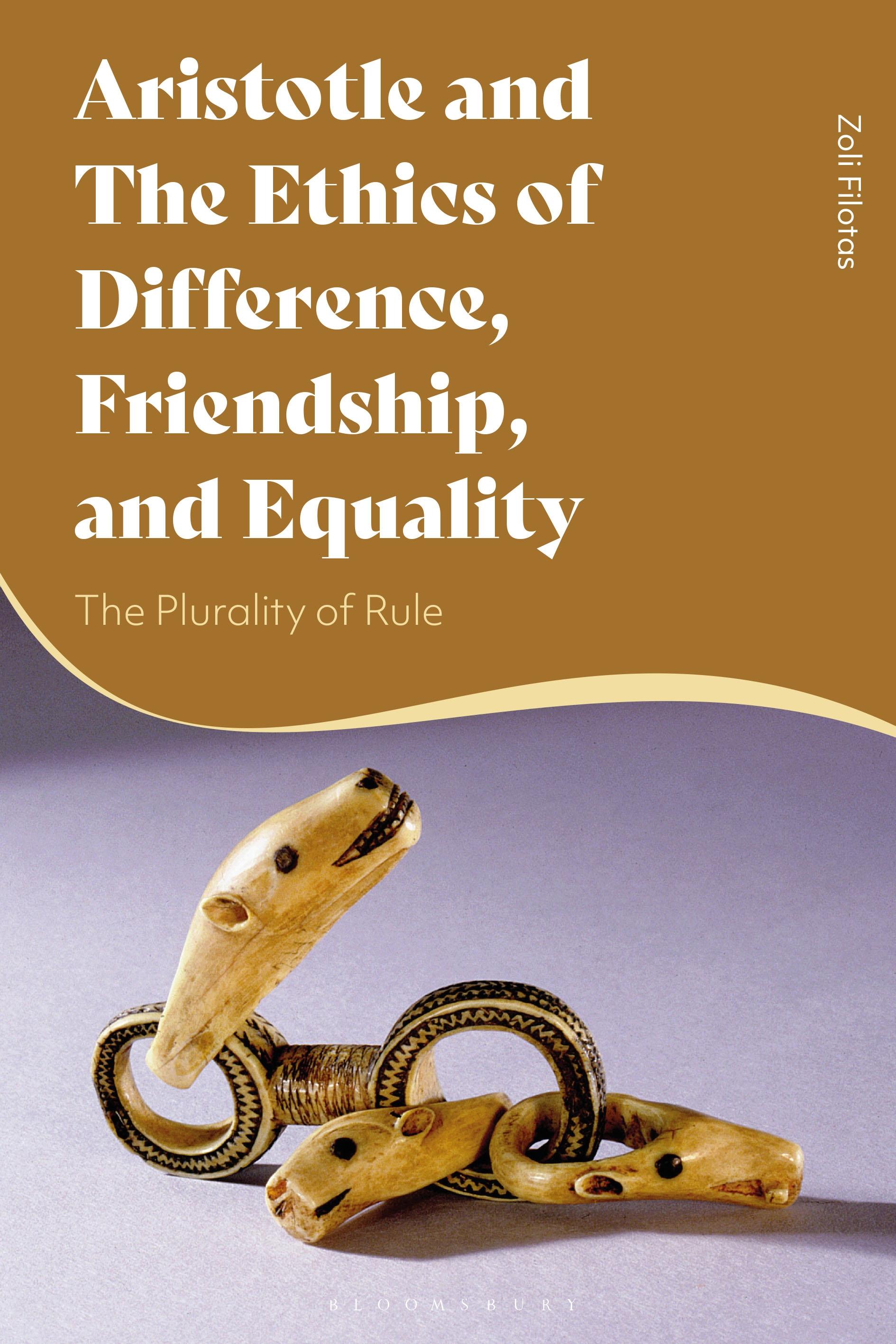
Connecting several strands of Aristotle's thought, Zoli Filotas sheds light on one of the axioms of Aristotle's ethics and political philosophy – that every community has a ruler – and demonstrates its relevance to his ideas on personal relationships.
Aristotle and the Ethics of Difference, Friendship, and Equality reveals a pluralistic theory of rule in Aristotle's thought, tracing it through his corpus and situating it in a discussion among such figures as Gorgias, Xenophon, and Plato. Considering the similarities and differences among various forms of rule, Filotas shows that for Aristotle even virtuous friends must exercise a version of rule akin to that of slaveholders. He also explores why Aristotle distinguishes the hierarchical rule over women from both the mastery of slaves and the political rule exercised by free and equal citizens. In doing so, he argues that natural and social differences among human beings play a complex, and troubling, role in Aristotle's reasoning. Illuminating and thought-provoking, this book reveals Aristotle's ambivalence about political relations and the equal treatment they involve and offers an engaging inquiry into how he understood the common structures of human relationships.
Aristotle and the Ethics of Difference, Friendship, and Equality reveals a pluralistic theory of rule in Aristotle's thought, tracing it through his corpus and situating it in a discussion among such figures as Gorgias, Xenophon, and Plato. Considering the similarities and differences among various forms of rule, Filotas shows that for Aristotle even virtuous friends must exercise a version of rule akin to that of slaveholders. He also explores why Aristotle distinguishes the hierarchical rule over women from both the mastery of slaves and the political rule exercised by free and equal citizens. In doing so, he argues that natural and social differences among human beings play a complex, and troubling, role in Aristotle's reasoning. Illuminating and thought-provoking, this book reveals Aristotle's ambivalence about political relations and the equal treatment they involve and offers an engaging inquiry into how he understood the common structures of human relationships.
Betaal eenvoudig met kaart, Klarna, Apple Pay of Google Pay. Niet tevreden? Je hebt altijd 14 dagen bedenktijd. Lees meer in onze voorwaarden. Heb je vragen, mail ons dan via hello@memmo.org.
Memmo maakt studeren makkelijker – waar je ook bent ter wereld. Wij brengen je cursusboeken en slimme studietools samen op één plek: samenvattingen, quizzen, podcasts en flashcards. En Ted, je studievriend die antwoord geeft op alles wat je je afvraagt. Meer dan 50.000 studenten studeren hier al – gebouwd om je sneller te laten leren en minder stress te geven.