
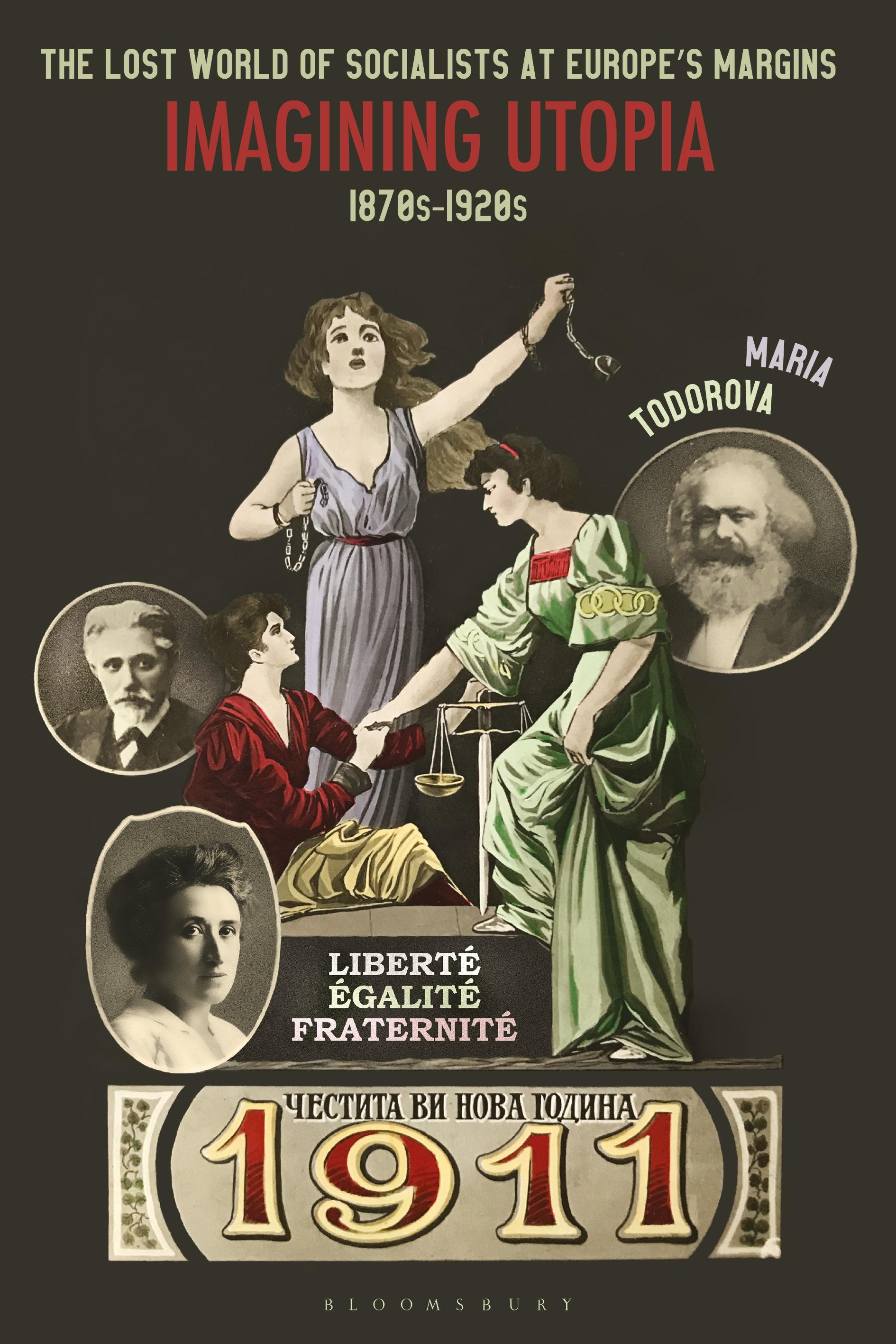
Maria Todorova's book is devoted to the 'golden age' of the socialist idea, broadly surveying the period in and around the time of the Second International. It critically examines the promise for an alternative socialist utopia from 1870 to the 1920s. Todorova brings in the experience of the periphery in a comparative context in the belief that the margins can often elucidate better the character of a phenomenon, and de-provincialize it from essentialist notions. In doing so, The Lost World of Socialists at Europe's Margins moves beyond the traditional historiographical emphasis on ideology by looking at different intersections or entanglements of spaces, generations, genders, ideas and feelings, and different flows of historical time.
The study provides a social and cultural history of early socialism in Eastern Europe with an emphasis on Bulgaria, arguably the country with the earliest and strongest socialist movement in Southeast Europe, and one that had a unique relationship to both German and Russian social democracy. Based on a rich prosopographical database of around 3500 biographies of people born in the 19th century, the book addresses the interplay of several generations of leftists, looking at the specifics of how ideas were generated, received, transferred and transformed. Finally, the work investigates the intersection between subjectivity and memory as reflected in a unique cache of archival materials containing over 4000 documentary sources including diaries, oral interviews, and unpublished memoirs. A microhistorical approach to this material allows the reconstruction of 'structures of feeling' that inspired an exceptional group of individuals.
The study provides a social and cultural history of early socialism in Eastern Europe with an emphasis on Bulgaria, arguably the country with the earliest and strongest socialist movement in Southeast Europe, and one that had a unique relationship to both German and Russian social democracy. Based on a rich prosopographical database of around 3500 biographies of people born in the 19th century, the book addresses the interplay of several generations of leftists, looking at the specifics of how ideas were generated, received, transferred and transformed. Finally, the work investigates the intersection between subjectivity and memory as reflected in a unique cache of archival materials containing over 4000 documentary sources including diaries, oral interviews, and unpublished memoirs. A microhistorical approach to this material allows the reconstruction of 'structures of feeling' that inspired an exceptional group of individuals.
Betaal eenvoudig met kaart, Klarna, Apple Pay of Google Pay. Niet tevreden? Je hebt altijd 14 dagen bedenktijd. Lees meer in onze voorwaarden. Heb je vragen, mail ons dan via hello@memmo.org.
Memmo maakt studeren makkelijker – waar je ook bent ter wereld. Wij brengen je cursusboeken en slimme studietools samen op één plek: samenvattingen, quizzen, podcasts en flashcards. En Ted, je studievriend die antwoord geeft op alles wat je je afvraagt. Meer dan 50.000 studenten studeren hier al – gebouwd om je sneller te laten leren en minder stress te geven.