
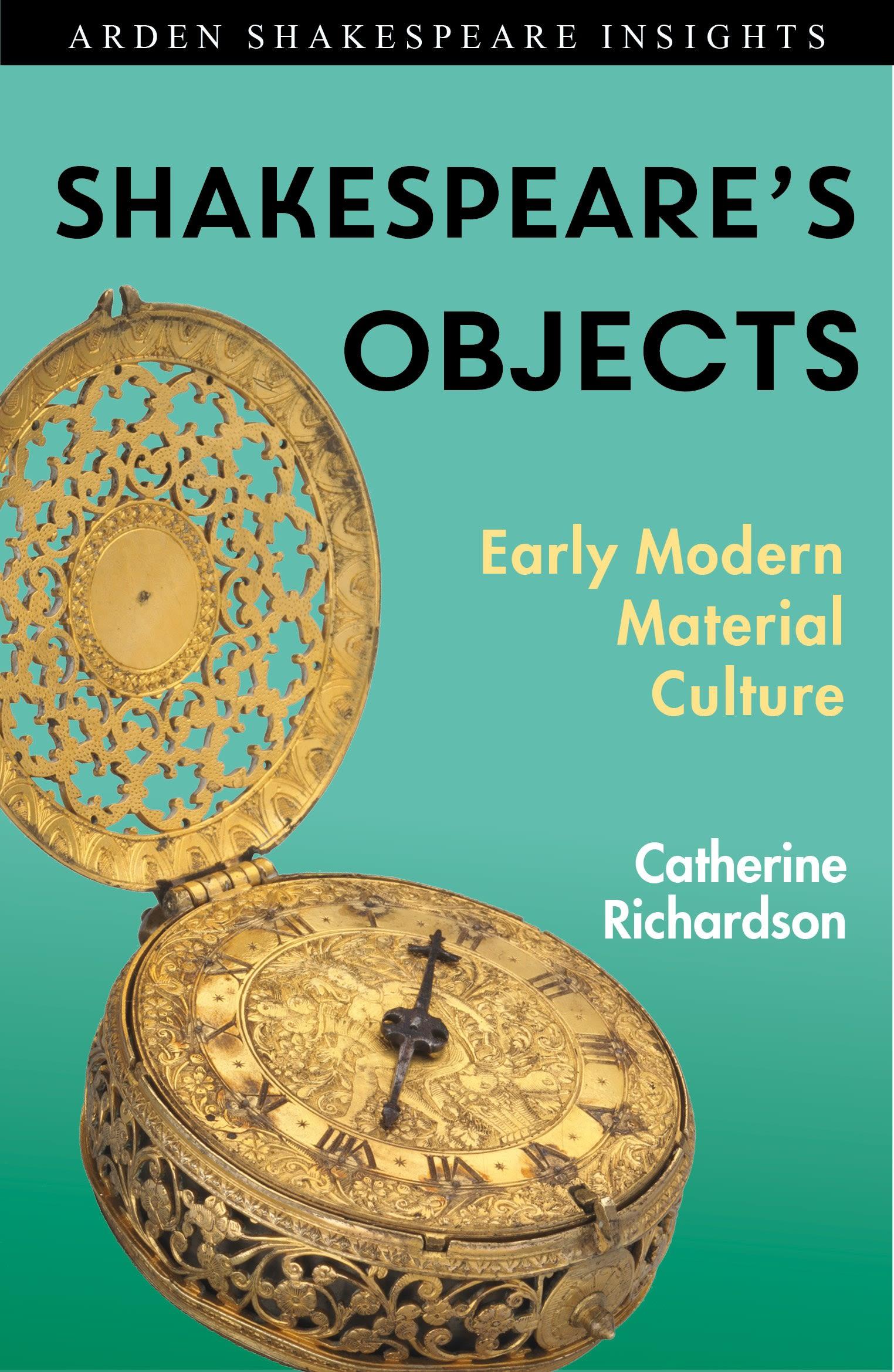
The world in which Shakespeare lived and wrote was a material one before it was a textual one – made up of people's interactions with a wide variety of things. Shakespeare's plays were first experienced as a rich mixture of objects, language, spaces and actors' bodies. This accessible and fascinating book delves into the lives of 33 significant things through full-colour images and an easy-to-read analysis of their significance.
Objects include beds and perfumes, doublets and torches, lutes, spurs, clocks and handkerchiefs, all explored in relation to social status, gender, race, economics and manufacture. Individually and together, they reveal the rich cultural and physical geography within which the playwright, his characters and audiences lived their lives. Shakespeare's Objects asks who owned these things and how were they used? It considers the diverse reality of trade, exchange and conquest which meant some individuals in early modern England could encounter carpets from Turkey and China, dyes from the Americas and paper from Venice, alongside woods and fabrics from their local communities.
Whether you are an actor thinking about how to use props, a student wanting to understand early modern drama, a theatrical designer considering a period setting, a museum professional wanting to understand the significance of objects in your care, or someone curious about objects from the past which are unfamiliar, you will find something useful in this essential guide to early modern things.
Objects include beds and perfumes, doublets and torches, lutes, spurs, clocks and handkerchiefs, all explored in relation to social status, gender, race, economics and manufacture. Individually and together, they reveal the rich cultural and physical geography within which the playwright, his characters and audiences lived their lives. Shakespeare's Objects asks who owned these things and how were they used? It considers the diverse reality of trade, exchange and conquest which meant some individuals in early modern England could encounter carpets from Turkey and China, dyes from the Americas and paper from Venice, alongside woods and fabrics from their local communities.
Whether you are an actor thinking about how to use props, a student wanting to understand early modern drama, a theatrical designer considering a period setting, a museum professional wanting to understand the significance of objects in your care, or someone curious about objects from the past which are unfamiliar, you will find something useful in this essential guide to early modern things.
Betaal eenvoudig met kaart, Klarna, Apple Pay of Google Pay. Niet tevreden? Je hebt altijd 14 dagen bedenktijd. Lees meer in onze voorwaarden. Heb je vragen, mail ons dan via hello@memmo.org.
Memmo maakt studeren makkelijker – waar je ook bent ter wereld. Wij brengen je cursusboeken en slimme studietools samen op één plek: samenvattingen, quizzen, podcasts en flashcards. En Ted, je studievriend die antwoord geeft op alles wat je je afvraagt. Meer dan 50.000 studenten studeren hier al – gebouwd om je sneller te laten leren en minder stress te geven.