
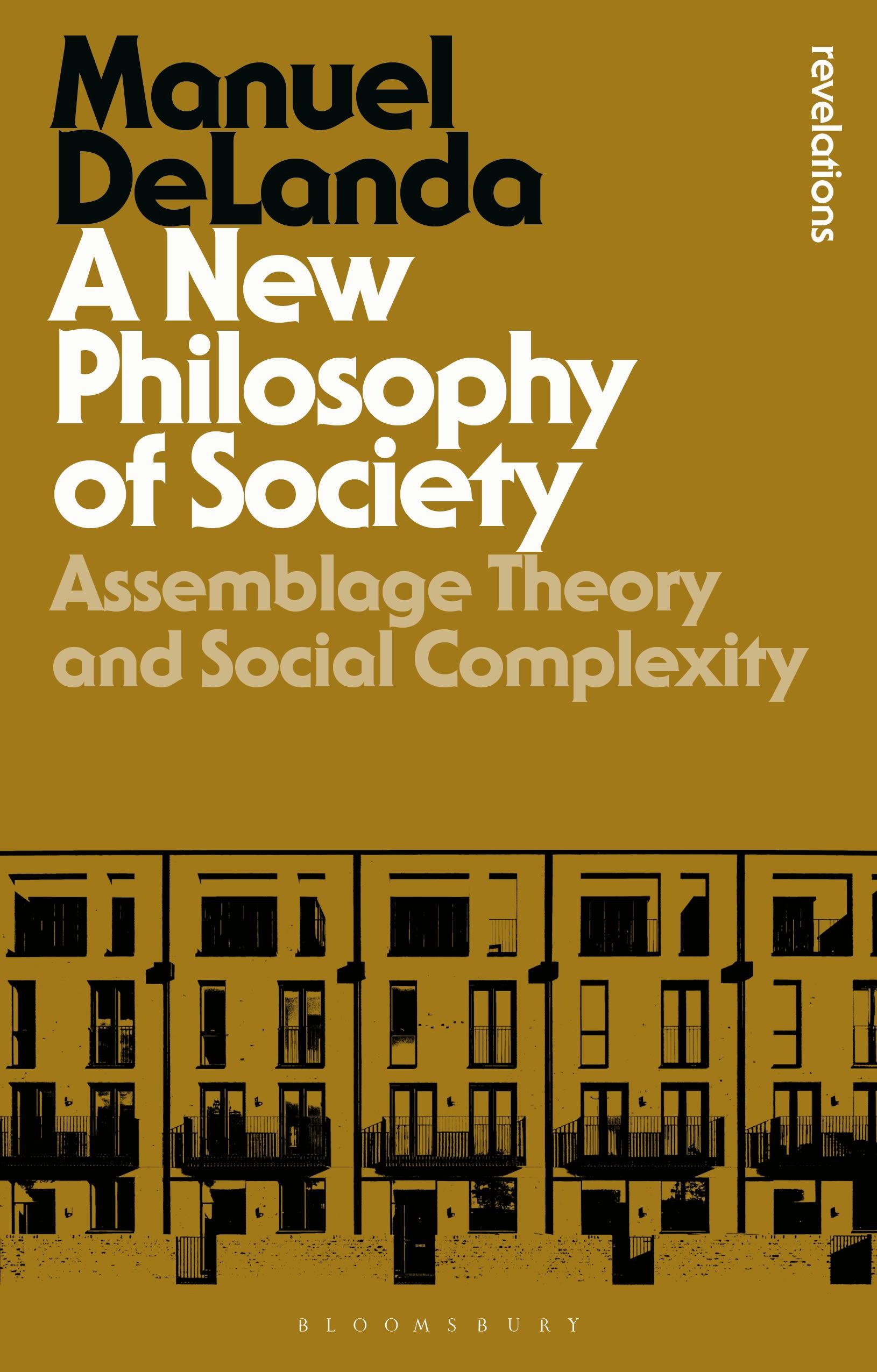
In A New Philosophy of Society Manuel DeLanda offers a fascinating look at how the contemporary world is characterized by an extraordinary social complexity. Since most social entities, from small communities to large nation-states would disappear altogether if our cognitive abilities ceased to exist, DeLanda proposes a novel approach to social ontology that asserts the autonomy of social entities from the conceptions we have of them.
He argues that Gilles Deleuze's theory of assemblages provides a framework in which sociologists and geographers studying social networks and regions can properly locate their work and fully elucidate the connections between them. Indeed, assemblage theory, as DeLanda argues, can be used to model any community, from interpersonal networks and institutional organizations, to central governments, cities and nation states.
He argues that Gilles Deleuze's theory of assemblages provides a framework in which sociologists and geographers studying social networks and regions can properly locate their work and fully elucidate the connections between them. Indeed, assemblage theory, as DeLanda argues, can be used to model any community, from interpersonal networks and institutional organizations, to central governments, cities and nation states.
Betaal eenvoudig met kaart, Klarna, Apple Pay of Google Pay. Niet tevreden? Je hebt altijd 14 dagen bedenktijd. Lees meer in onze voorwaarden. Heb je vragen, mail ons dan via hello@memmo.org.
Memmo maakt studeren makkelijker – waar je ook bent ter wereld. Wij brengen je cursusboeken en slimme studietools samen op één plek: samenvattingen, quizzen, podcasts en flashcards. En Ted, je studievriend die antwoord geeft op alles wat je je afvraagt. Meer dan 50.000 studenten studeren hier al – gebouwd om je sneller te laten leren en minder stress te geven.