
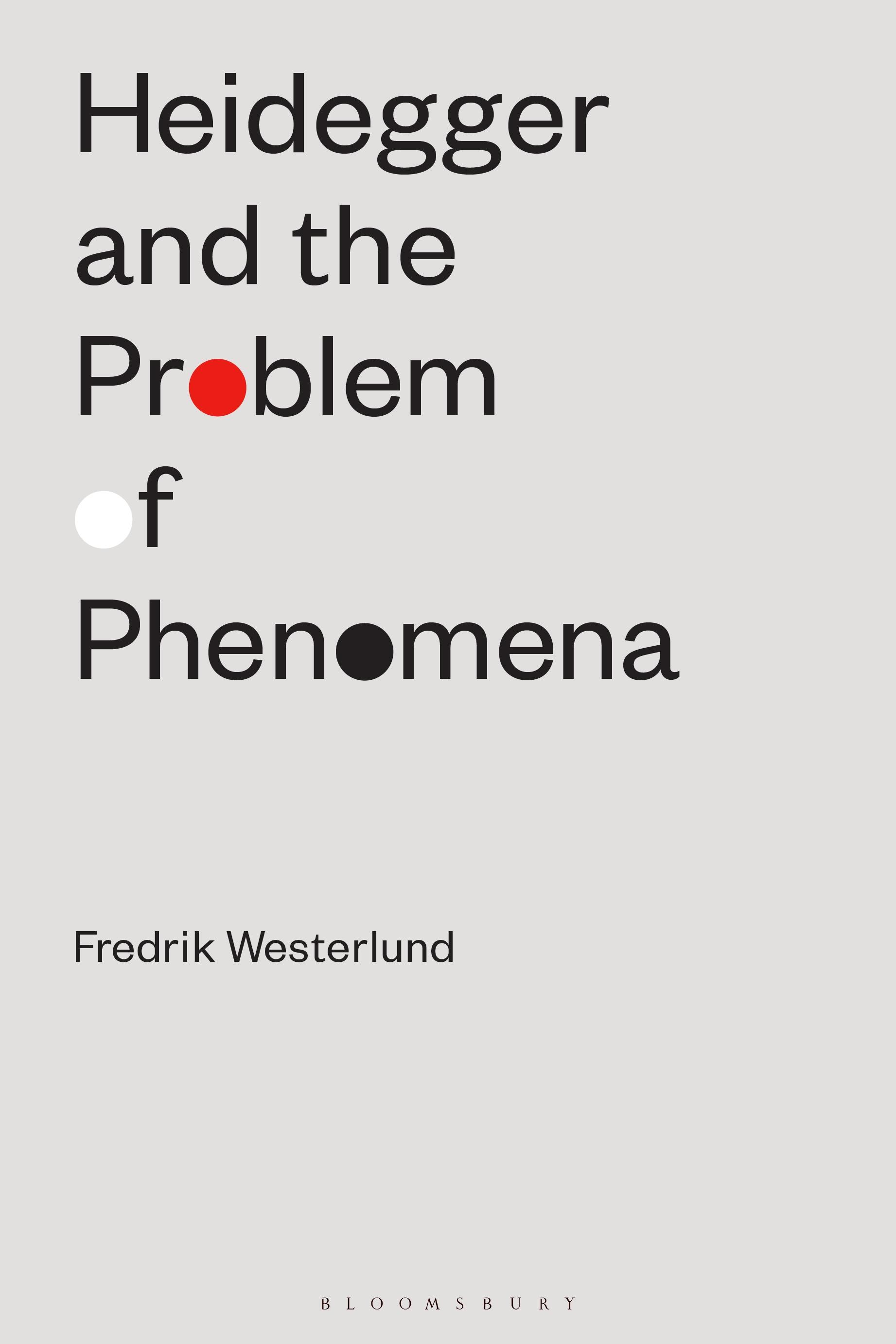
This book offers a broad critical study of Heidegger's lifelong effort to come to terms with the problem of phenomena and the nature of phenomenology: How do we experience beings as meaningful phenomena? What does it mean to phenomenologically describe and explicate our experience of phenomena?
The book is a chronological investigation of how Heidegger's struggle with the problem of phenomena unfolds during the main stages of his philosophical development: from the early Freiburg lecture courses 1919-1923, over the Marburg-period and the publication of Being and Time in 1927, up to his later thinking stretching from the 1930s to the early 1970s. A central theme of the book is the tension between, on the one hand, Heidegger's effort to elaborate Husserl's phenomenological approach by applying it to our pre-theoretical experience of existentially charged phenomena, and, on the other hand, his drive towards a radically historicist form of thinking. Heidegger's main critical engagements with Husserl are examined and assessed along the way.
Besides offering a new comprehensive interpretation of Heidegger's philosophical development, the book critically examines the philosophical power and problems of Heidegger's successive attempts to account for the structure of phenomena and the possibility of phenomenology. In particular, it develops a critique of Heidegger's radical historicism, arguing that it ultimately makes Heidegger unable to account either for the truth of our understanding or for the ethical-existential significance of other persons. The book also contains a chapter which probes the philosophical commitments that motivate Heidegger's political engagement in National Socialism.
The book is a chronological investigation of how Heidegger's struggle with the problem of phenomena unfolds during the main stages of his philosophical development: from the early Freiburg lecture courses 1919-1923, over the Marburg-period and the publication of Being and Time in 1927, up to his later thinking stretching from the 1930s to the early 1970s. A central theme of the book is the tension between, on the one hand, Heidegger's effort to elaborate Husserl's phenomenological approach by applying it to our pre-theoretical experience of existentially charged phenomena, and, on the other hand, his drive towards a radically historicist form of thinking. Heidegger's main critical engagements with Husserl are examined and assessed along the way.
Besides offering a new comprehensive interpretation of Heidegger's philosophical development, the book critically examines the philosophical power and problems of Heidegger's successive attempts to account for the structure of phenomena and the possibility of phenomenology. In particular, it develops a critique of Heidegger's radical historicism, arguing that it ultimately makes Heidegger unable to account either for the truth of our understanding or for the ethical-existential significance of other persons. The book also contains a chapter which probes the philosophical commitments that motivate Heidegger's political engagement in National Socialism.
Betaal eenvoudig met kaart, Klarna, Apple Pay of Google Pay. Niet tevreden? Je hebt altijd 14 dagen bedenktijd. Lees meer in onze voorwaarden. Heb je vragen, mail ons dan via hello@memmo.org.
Memmo maakt studeren makkelijker – waar je ook bent ter wereld. Wij brengen je cursusboeken en slimme studietools samen op één plek: samenvattingen, quizzen, podcasts en flashcards. En Ted, je studievriend die antwoord geeft op alles wat je je afvraagt. Meer dan 50.000 studenten studeren hier al – gebouwd om je sneller te laten leren en minder stress te geven.