
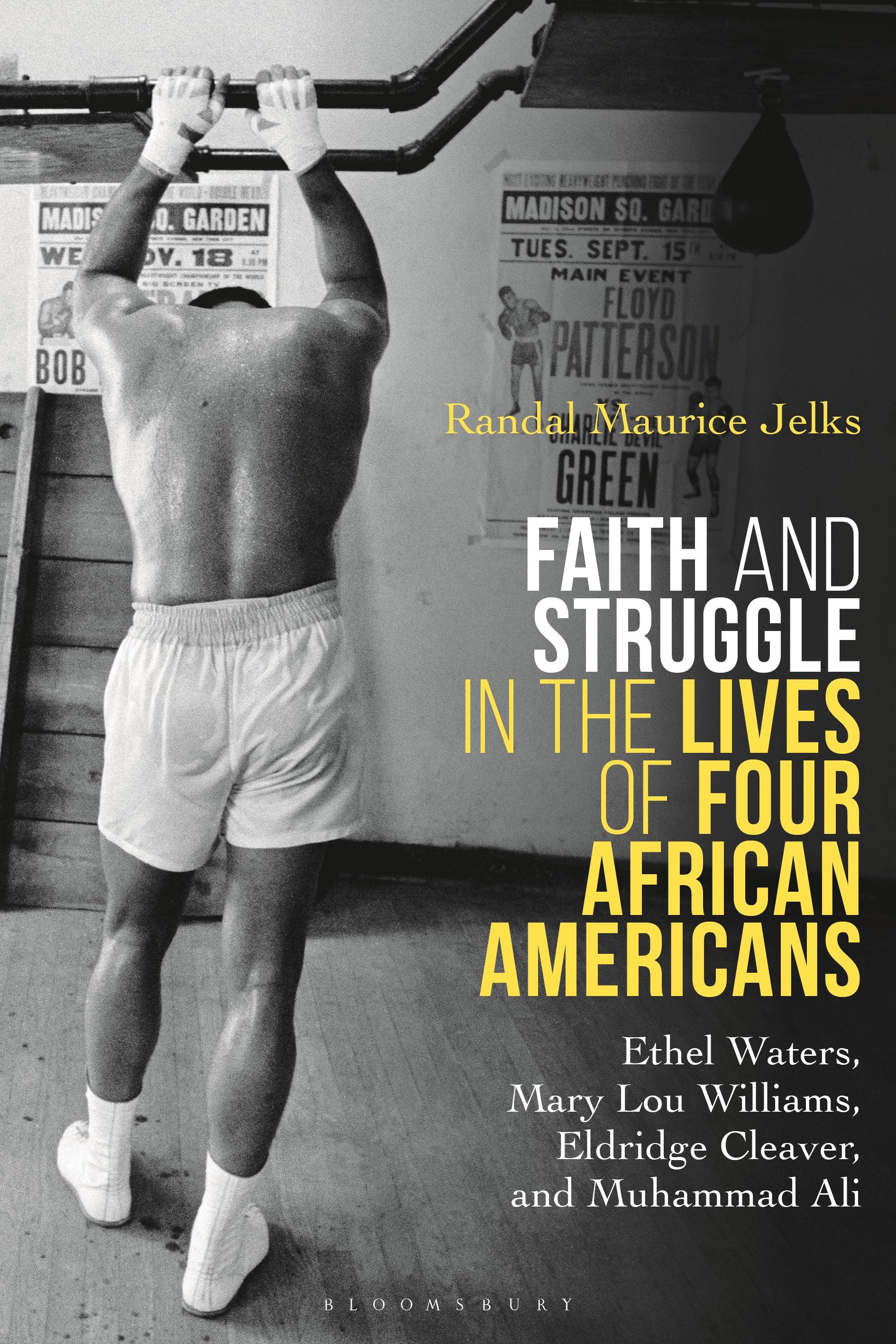
In 1964, Muhammad Ali said of his decision to join the Nation of Islam: “I know where I'm going and I know the truth and I don't have to be what you want me to be. I'm free to be what I want to be.”
This sentiment, the brash assertion of individual freedom, informs and empowers each of the four personalities profiled in this book. Randal Maurice Jelks shows that to understand the Black American experience beyond the larger narratives of enslavement, emancipation, and Black Lives Matter, we need to hear the individual stories. Drawing on his own experiences growing up as a religious African American, he shows that the inner history of Black Americans in the 20th century is a story worthy of telling.
This book explores the faith stories of four African Americans: Ethel Waters, Mary Lou Williams, Eldridge Cleaver, and Muhammad Ali. It examines their autobiographical writings, interviews, speeches, letters, and memorable performances to understand how each of these figures used religious faith publicly to reconcile deep personal struggles, voice their concerns for human dignity, and reinvent their public image. For them, liberation was not simply defined by material or legal wellbeing, but by a spiritual search for community and personal wholeness.
This sentiment, the brash assertion of individual freedom, informs and empowers each of the four personalities profiled in this book. Randal Maurice Jelks shows that to understand the Black American experience beyond the larger narratives of enslavement, emancipation, and Black Lives Matter, we need to hear the individual stories. Drawing on his own experiences growing up as a religious African American, he shows that the inner history of Black Americans in the 20th century is a story worthy of telling.
This book explores the faith stories of four African Americans: Ethel Waters, Mary Lou Williams, Eldridge Cleaver, and Muhammad Ali. It examines their autobiographical writings, interviews, speeches, letters, and memorable performances to understand how each of these figures used religious faith publicly to reconcile deep personal struggles, voice their concerns for human dignity, and reinvent their public image. For them, liberation was not simply defined by material or legal wellbeing, but by a spiritual search for community and personal wholeness.
Pagina's: 208
Categorie: Religion & Teologi
e-ISBN: 9781350074637
Verzendgewicht: 1.2 kg
Verzending binnen: 1-2 dagen
Betaal eenvoudig met kaart, Klarna, Apple Pay of Google Pay. Niet tevreden? Je hebt altijd 14 dagen bedenktijd. Lees meer in onze voorwaarden. Heb je vragen, mail ons dan via hello@memmo.org.
Memmo maakt studeren makkelijker – waar je ook bent ter wereld. Wij brengen je cursusboeken en slimme studietools samen op één plek: samenvattingen, quizzen, podcasts en flashcards. En Ted, je studievriend die antwoord geeft op alles wat je je afvraagt. Meer dan 50.000 studenten studeren hier al – gebouwd om je sneller te laten leren en minder stress te geven.