
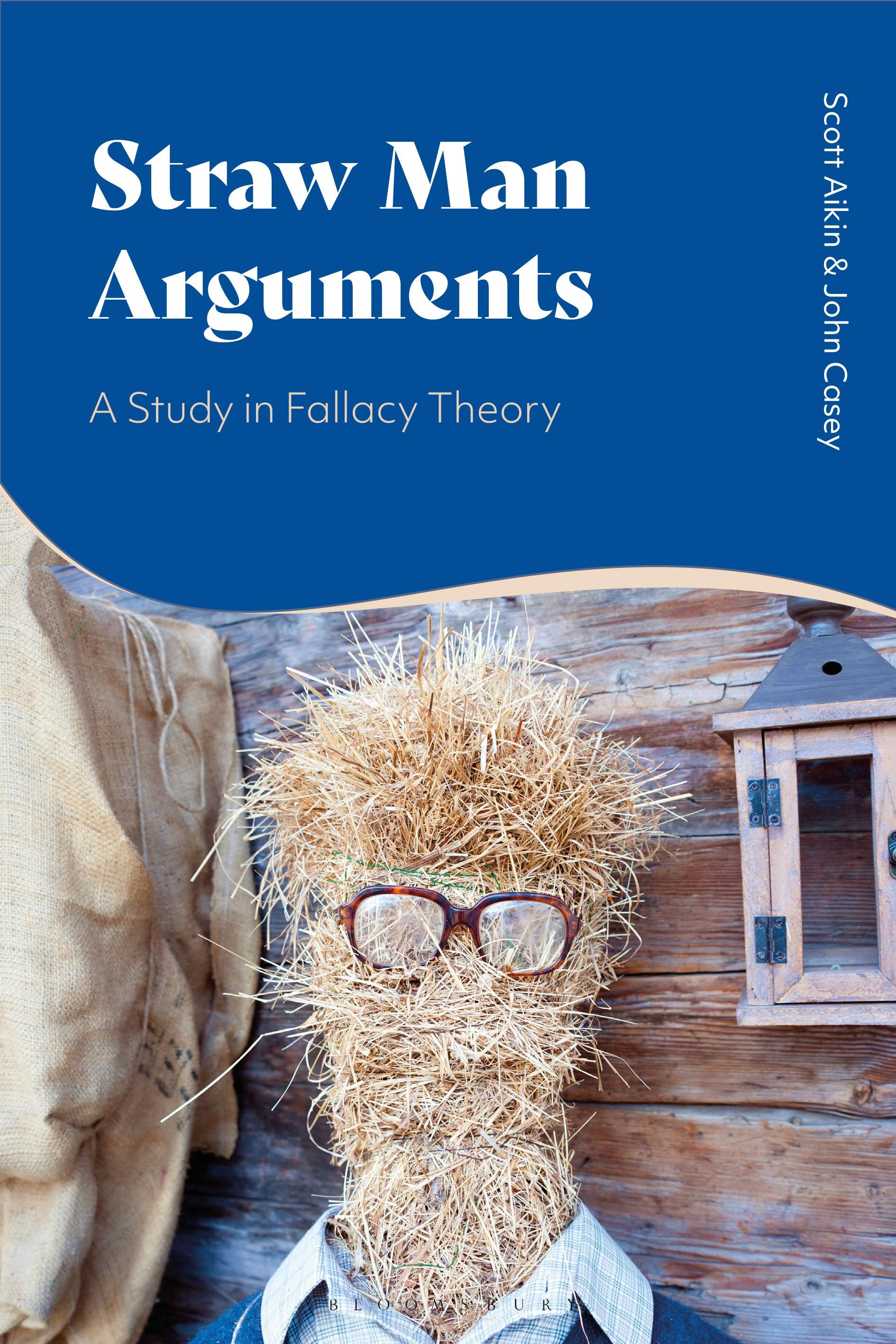
This book analyses the straw man fallacy and its deployment in philosophical reasoning. While commonly invoked in both academic dialogue and public discourse, it has not until now received the attention it deserves as a rhetorical device.
Scott Aikin and John Casey propose that straw manning essentially consists in expressing distorted representations of one's critical interlocutor. To this end, the straw man comprises three dialectical forms, and not only the one that is usually suggested: the straw man, the weak man and the hollow man. Moreover, they demonstrate that straw manning is unique among fallacies as it has no particular logical form in itself, because it is an instance of inappropriate meta-argument, or argument about arguments. They discuss the importance of the onlooking audience to the successful deployment of the straw man, reasoning that the existence of an audience complicates the dialectical boundaries of argument.
Providing a lively, provocative and thorough analysis of the straw man fallacy, this book will appeal to postgraduates and researchers alike, working in a range of fields including fallacies, rhetoric, argumentation theory and informal logic.
Scott Aikin and John Casey propose that straw manning essentially consists in expressing distorted representations of one's critical interlocutor. To this end, the straw man comprises three dialectical forms, and not only the one that is usually suggested: the straw man, the weak man and the hollow man. Moreover, they demonstrate that straw manning is unique among fallacies as it has no particular logical form in itself, because it is an instance of inappropriate meta-argument, or argument about arguments. They discuss the importance of the onlooking audience to the successful deployment of the straw man, reasoning that the existence of an audience complicates the dialectical boundaries of argument.
Providing a lively, provocative and thorough analysis of the straw man fallacy, this book will appeal to postgraduates and researchers alike, working in a range of fields including fallacies, rhetoric, argumentation theory and informal logic.
Betaal eenvoudig met kaart, Klarna, Apple Pay of Google Pay. Niet tevreden? Je hebt altijd 14 dagen bedenktijd. Lees meer in onze voorwaarden. Heb je vragen, mail ons dan via hello@memmo.org.
Memmo maakt studeren makkelijker – waar je ook bent ter wereld. Wij brengen je cursusboeken en slimme studietools samen op één plek: samenvattingen, quizzen, podcasts en flashcards. En Ted, je studievriend die antwoord geeft op alles wat je je afvraagt. Meer dan 50.000 studenten studeren hier al – gebouwd om je sneller te laten leren en minder stress te geven.