
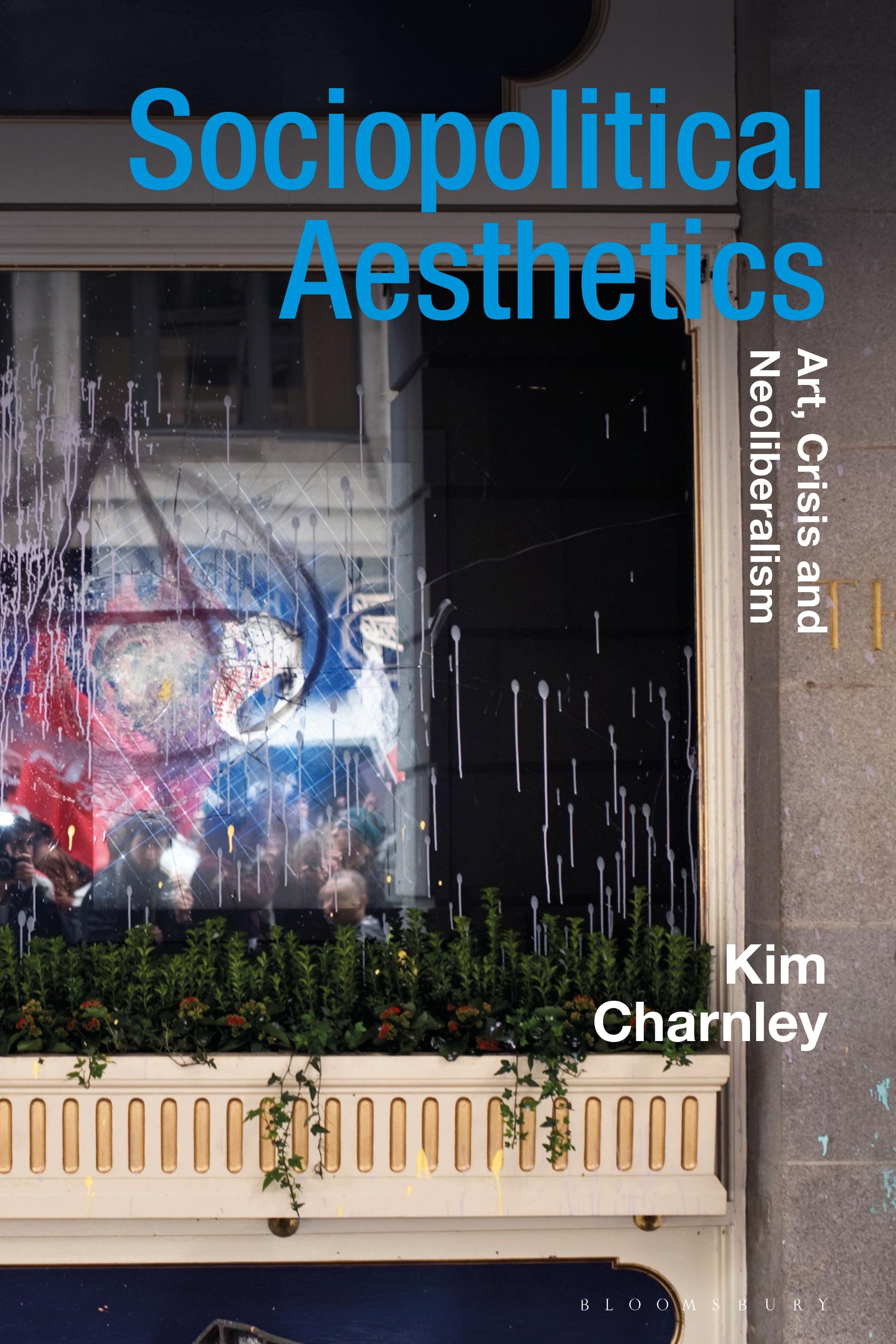
Since the turn of the millennium, protests, meetings, schoolrooms, reading groups and many other social forms have been proposed as artworks or, more ambiguously, as interventions that are somewhere between art and politics. This book surveys the resurgence of politicized art, tracing key currents of theory and practice, and mapping them against the dominant experience of the last decade: crisis.
Drawing upon leading artists and theorists within this field – including Hito Steyerl, Marina Vishmidt, Art & Language, Gregory Sholette, John Roberts and Dave Beech – this book argues for a new interpretation of the relationship between socially-engaged art and neoliberalism. Kim Charnley explores the possibility that neoliberalism has destabilized the art system so that it is no longer able to absorb and neutralize dissent. As a result, the relationship between aesthetics and politics is experienced with fresh urgency and militancy.
Drawing upon leading artists and theorists within this field – including Hito Steyerl, Marina Vishmidt, Art & Language, Gregory Sholette, John Roberts and Dave Beech – this book argues for a new interpretation of the relationship between socially-engaged art and neoliberalism. Kim Charnley explores the possibility that neoliberalism has destabilized the art system so that it is no longer able to absorb and neutralize dissent. As a result, the relationship between aesthetics and politics is experienced with fresh urgency and militancy.
Betaal eenvoudig met kaart, Klarna, Apple Pay of Google Pay. Niet tevreden? Je hebt altijd 14 dagen bedenktijd. Lees meer in onze voorwaarden. Heb je vragen, mail ons dan via hello@memmo.org.
Memmo maakt studeren makkelijker – waar je ook bent ter wereld. Wij brengen je cursusboeken en slimme studietools samen op één plek: samenvattingen, quizzen, podcasts en flashcards. En Ted, je studievriend die antwoord geeft op alles wat je je afvraagt. Meer dan 50.000 studenten studeren hier al – gebouwd om je sneller te laten leren en minder stress te geven.