
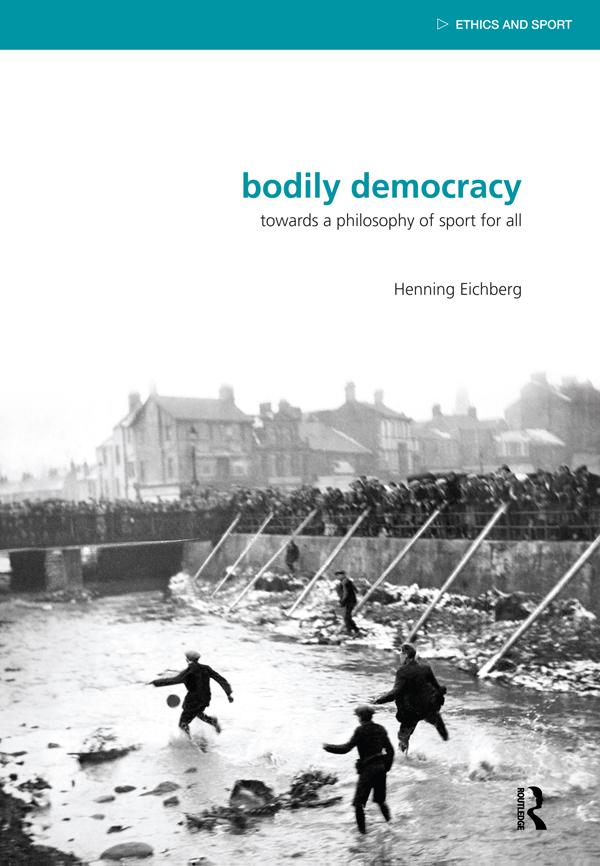
Sport has gained increasing importance for welfare society. In this process, however, the term of ‘sport’ has become less and less clear. Larger parts of what nowadays is called ‘sport for all’ are non-competitive and derived from traditions of gymnastics, dance, festivity, games, outdoor activities, and physical training rather than from classical modern elite sports. This requires new philosophical approaches, as the philosophy of sport, so far, has been dominated by topics of elite sports.
Based on Scandinavian experiences, the book presents studies about festivities of sport, outdoor activities, song and movement, and play and game. The engagement of elderly people challenges sports. Games get political significance in international cooperation, for peace culture and as means against poverty (in Africa). The empirical studies result in philosophical analyses on the recognition of folk practice in education and on relations between identity and recognition.
The study of ‘sport for all’ opens up for new ways of phenomenological knowledge, moving bottom-up from sport to the philosophy of "the individual", of event, of nature, and of human energy. Popular sports give inspiration to a philosophy of practice as well as to a phenomenological understanding of ‘the people’, of civil society and the ‘demos’ of democracy – as folk in movement.
This book was published as a special issue in Sport, Ethics and Philosophy.
Betaal eenvoudig met kaart, Klarna, Apple Pay of Google Pay. Niet tevreden? Je hebt altijd 14 dagen bedenktijd. Lees meer in onze voorwaarden. Heb je vragen, mail ons dan via hello@memmo.org.
Memmo maakt studeren makkelijker – waar je ook bent ter wereld. Wij brengen je cursusboeken en slimme studietools samen op één plek: samenvattingen, quizzen, podcasts en flashcards. En Ted, je studievriend die antwoord geeft op alles wat je je afvraagt. Meer dan 50.000 studenten studeren hier al – gebouwd om je sneller te laten leren en minder stress te geven.