
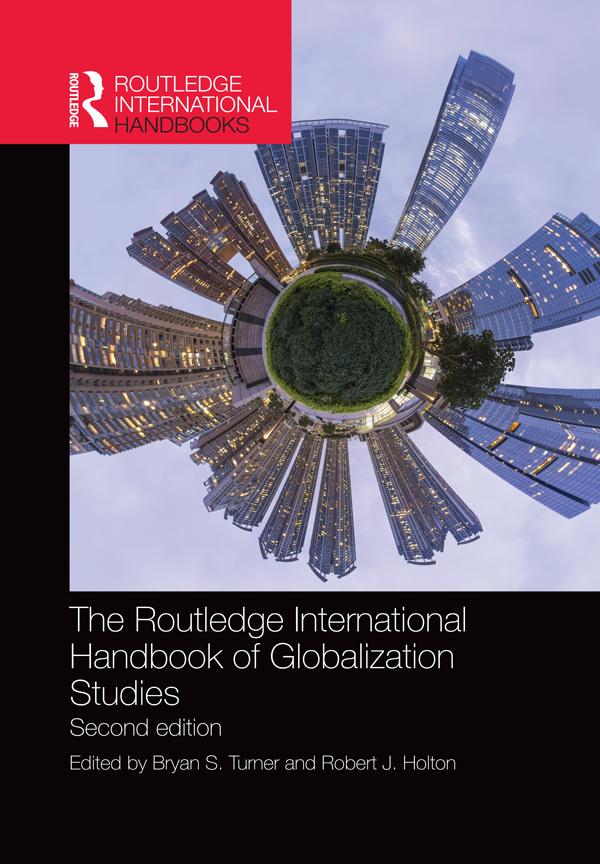
The second edition of the Routledge International Handbook of Globalization Studies offers students clear and informed chapters on the history of globalization and key theories that have considered the causes and consequences of the globalization process. There are substantive sections looking at demographic, economic, technological, social and cultural changes in globalization. The handbook examines many negative aspects – new wars, slavery, illegal migration, pollution and inequality – but concludes with an examination of responses to these problems through human rights organizations, international labour law and the growth of cosmopolitanism. There is a strong emphasis on interdisciplinary approaches with essays covering sociology, demography, economics, politics, anthropology and history.
The second edition has been completely revised and features important new thinking on themes such as Islamophobia and the globalization of religious conflict, shifts in global energy production such as fracking, global inequalities, fiscal transformations of the state and problems of taxation, globalization and higher education, and an analysis of the general sense of catastrophe that surrounds contemporary understandings of the consequences of a global world.
Betaal eenvoudig met kaart, Klarna, Apple Pay of Google Pay. Niet tevreden? Je hebt altijd 14 dagen bedenktijd. Lees meer in onze voorwaarden. Heb je vragen, mail ons dan via hello@memmo.org.
Memmo maakt studeren makkelijker – waar je ook bent ter wereld. Wij brengen je cursusboeken en slimme studietools samen op één plek: samenvattingen, quizzen, podcasts en flashcards. En Ted, je studievriend die antwoord geeft op alles wat je je afvraagt. Meer dan 50.000 studenten studeren hier al – gebouwd om je sneller te laten leren en minder stress te geven.