
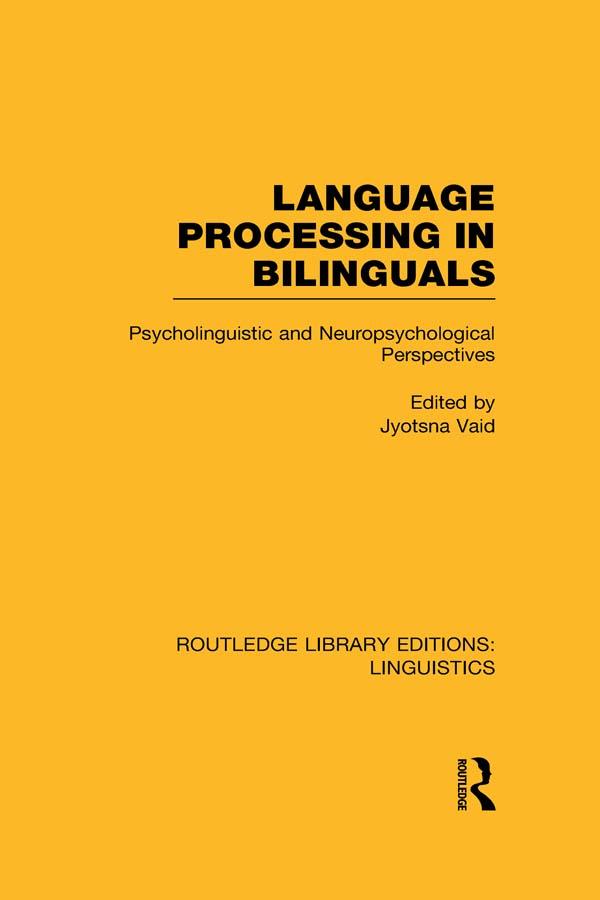
For decades, bilingualism has resisted definition. If bilingualism is defined as habitual, fluent, correct and accent-free use of two languages, few individuals would qualify as bilinguals. A more viable approach may be to concede that ‘bilingual’ can be seen instead as a range of points on a continuum that allows for differences. The psychological study of bilingualism encompasses a wide range of phenomena including the organization and representation of the grammar, the perception and production of language mixing, cerebral lateralization of language functions, and patterns of recovery of aphasic patients. This book collects together an international array of researchers in experimental psychology, linguistics and neuropsychology, who bring their expertise to bear on the critical issues that are raised by the bilingual phenomena.
Betaal eenvoudig met kaart, Klarna, Apple Pay of Google Pay. Niet tevreden? Je hebt altijd 14 dagen bedenktijd. Lees meer in onze voorwaarden. Heb je vragen, mail ons dan via hello@memmo.org.
Memmo maakt studeren makkelijker – waar je ook bent ter wereld. Wij brengen je cursusboeken en slimme studietools samen op één plek: samenvattingen, quizzen, podcasts en flashcards. En Ted, je studievriend die antwoord geeft op alles wat je je afvraagt. Meer dan 50.000 studenten studeren hier al – gebouwd om je sneller te laten leren en minder stress te geven.