
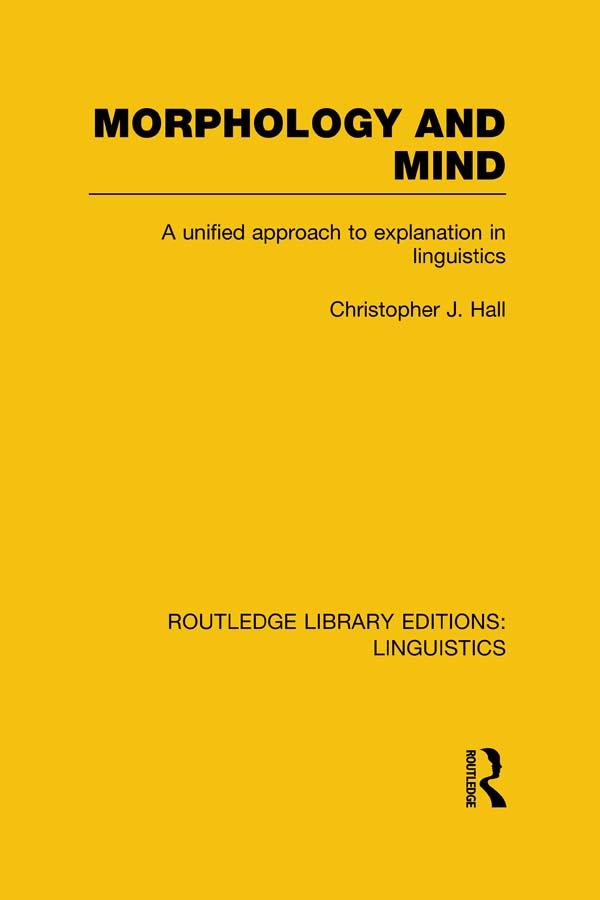
The central concern of this book is the explanation of linguistic form. It examines in detail certain cross-linguistic patterns in morphological systems, providing unified explanations of the observation that suffixes predominate over prefixes and the correlation between affix position and syntactic head position. The explanation of the suffixing preference is one which appeals to principles of language processing, tempered by cognitive constraints underlying language change. These factors, coupled with generative morphological analysis, also provide an explanation for the head/affix correlation.
The extended case-study illustrates a unified, integrative approach to explanation in linguistics which stresses two major features: the search for cognitive or other functional principles that could potentially underlie formally specified regularities; and the need for a micro-analysis of the mechanisms of ‘linkage’ between regularity and explanation. The natural methodological consequence of such an approach is a move towards greater cooperation between the various subdisciplines of linguistics, as well as a greatly needed expansion of cross-disciplinary research. The author’s broad training in theoretical morphology, formal and typological universals, and language processing, allows him to cross traditional boundaries and view the complex interactions between theoretical linguistic principles and cognitive mechanisms with considerable clarity of vision.
Betaal eenvoudig met kaart, Klarna, Apple Pay of Google Pay. Niet tevreden? Je hebt altijd 14 dagen bedenktijd. Lees meer in onze voorwaarden. Heb je vragen, mail ons dan via hello@memmo.org.
Memmo maakt studeren makkelijker – waar je ook bent ter wereld. Wij brengen je cursusboeken en slimme studietools samen op één plek: samenvattingen, quizzen, podcasts en flashcards. En Ted, je studievriend die antwoord geeft op alles wat je je afvraagt. Meer dan 50.000 studenten studeren hier al – gebouwd om je sneller te laten leren en minder stress te geven.