
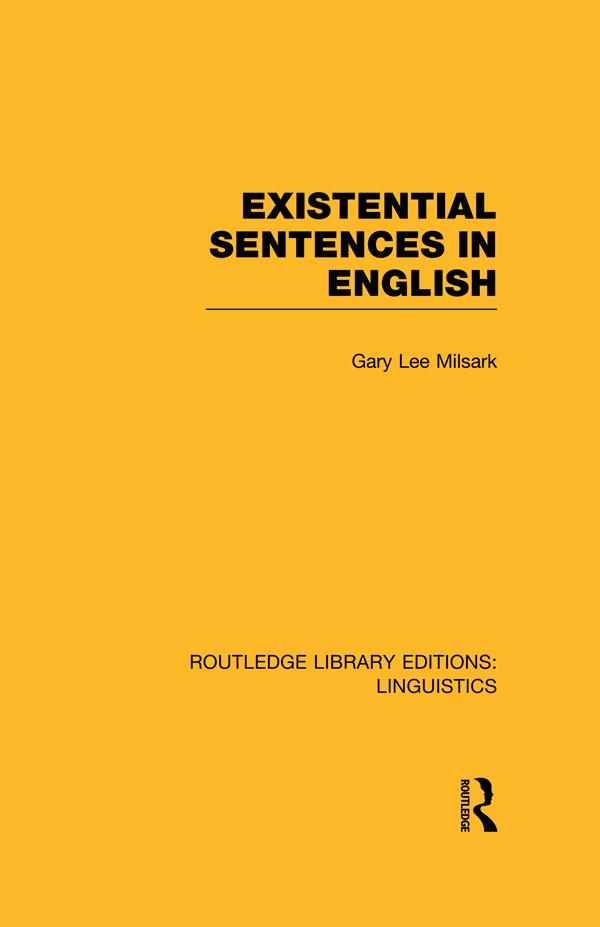
In order to bring some minimal amount of order to the chaos that almost inevitably attends the use of the word ‘existential’ in a linguistic investigation, the author reserved the term existential sentence (ES) to designate all and only those English sentences in which there appears an occurrence of the unstressed, non-deictic, ‘existential’ there. Thus the term will be used as a characterisation of a class of syntactic objects, not as a semantic description. With ES sentences including formations such as ‘There were several people talking’ and ‘There ensued a riot’, perhaps nowhere else do we find so clearly displayed the complexity and subtlety of the syntactic and semantic interactions which determine the nature of human language.
Betaal eenvoudig met kaart, Klarna, Apple Pay of Google Pay. Niet tevreden? Je hebt altijd 14 dagen bedenktijd. Lees meer in onze voorwaarden. Heb je vragen, mail ons dan via hello@memmo.org.
Memmo maakt studeren makkelijker – waar je ook bent ter wereld. Wij brengen je cursusboeken en slimme studietools samen op één plek: samenvattingen, quizzen, podcasts en flashcards. En Ted, je studievriend die antwoord geeft op alles wat je je afvraagt. Meer dan 50.000 studenten studeren hier al – gebouwd om je sneller te laten leren en minder stress te geven.