
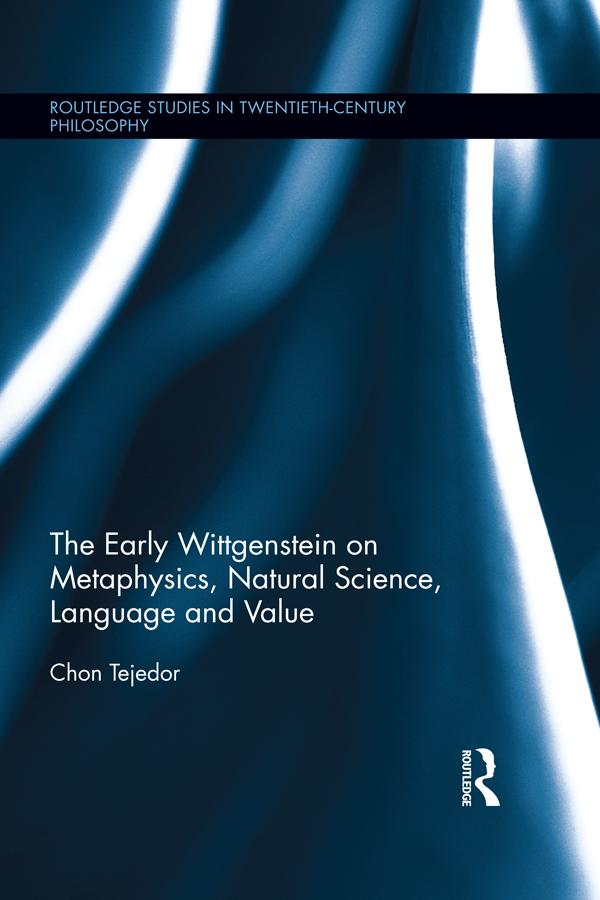
This book advances a reading of Wittgenstein’s Tractatus that moves beyond the main interpretative options of the New Wittgenstein debate. It covers Wittgenstein’s approach to language and logic, as well as other areas unduly neglected in the literature, such as his treatment of metaphysics, the natural sciences and value. Tejedor re-contextualises Wittgenstein’s thinking in these areas, plotting its evolution in his diaries, correspondence and pre-Tractatus texts, and developing a fuller picture of its intellectual background. This broadening of the angle of view is central to the interpretative strategy of her book: only by looking at the Tractatus in this richer light can we address the fundamental questions posed by the New Wittgenstein debate – questions concerning the method of the Tractatus, its approach to nonsense and the continuity in Wittgenstein’s philosophy. Wittgenstein’s early work remains insightful, thought-inspiring and relevant to contemporary philosophy of language and science, metaphysics and ethics. Tejedor’s ground-breaking work ultimately conveys a surprisingly positive message concerning the power for ethical transformation that philosophy can have, when it is understood as an activity aimed at increasing conceptual clarification and awareness.
Betaal eenvoudig met kaart, Klarna, Apple Pay of Google Pay. Niet tevreden? Je hebt altijd 14 dagen bedenktijd. Lees meer in onze voorwaarden. Heb je vragen, mail ons dan via hello@memmo.org.
Memmo maakt studeren makkelijker – waar je ook bent ter wereld. Wij brengen je cursusboeken en slimme studietools samen op één plek: samenvattingen, quizzen, podcasts en flashcards. En Ted, je studievriend die antwoord geeft op alles wat je je afvraagt. Meer dan 50.000 studenten studeren hier al – gebouwd om je sneller te laten leren en minder stress te geven.