
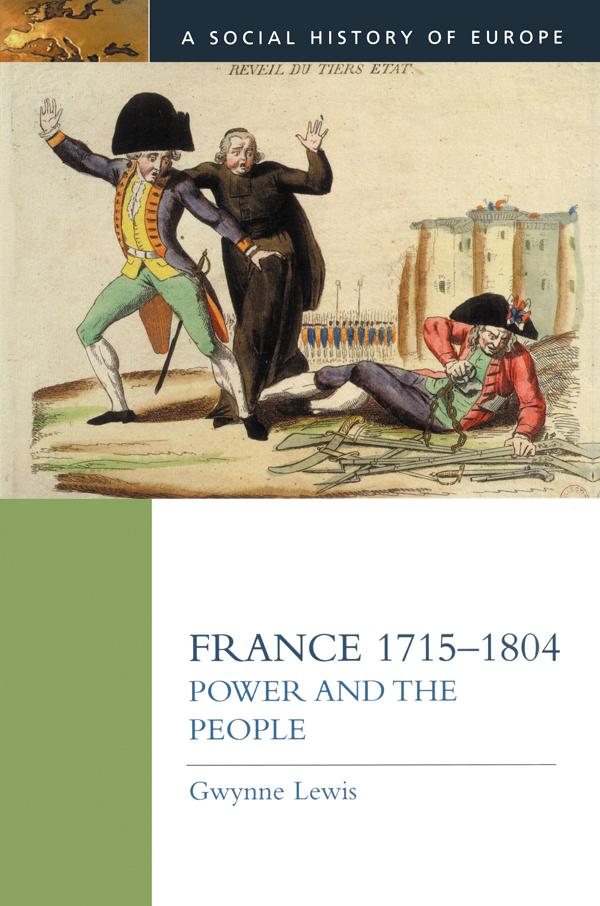
Gwynne Lewis’ history opens with a full analysis of all the components of traditional France, including political and religious structures, the seigneurial system, the bourgeoisie and the poor. Part two examines the meaning and challenge of the Enlightenment, with particular reference to women and the mass of the poor. Part three concentrates upon the relationship between the shift to laissez-faire economics, popular revolts and government repression, providing the essential background to the Revolutionary decade of the 1790s. The Revolution witnessed the rise of a politicised ‘Popular Movement’ that achieved, briefly, a measure of popular democracy. War and counter-revolution blocked the move towards real democracy, strengthened the authority of the centralised state, and enhanced the credibility of bourgeois political and economic power.
One of the main contentions of this work is that the failure of both monarchical and Revolutionary regimes to deal with the massive social problem of poverty played a far larger part in explaining the collapse of the Bourbons in 1789, and the failure of democracy during the 1790s, than most historians have allowed. Likewise, the importance of religion in directing the momentous events of this period has also been under-estimated.
Betaal eenvoudig met kaart, Klarna, Apple Pay of Google Pay. Niet tevreden? Je hebt altijd 14 dagen bedenktijd. Lees meer in onze voorwaarden. Heb je vragen, mail ons dan via hello@memmo.org.
Memmo maakt studeren makkelijker – waar je ook bent ter wereld. Wij brengen je cursusboeken en slimme studietools samen op één plek: samenvattingen, quizzen, podcasts en flashcards. En Ted, je studievriend die antwoord geeft op alles wat je je afvraagt. Meer dan 50.000 studenten studeren hier al – gebouwd om je sneller te laten leren en minder stress te geven.