
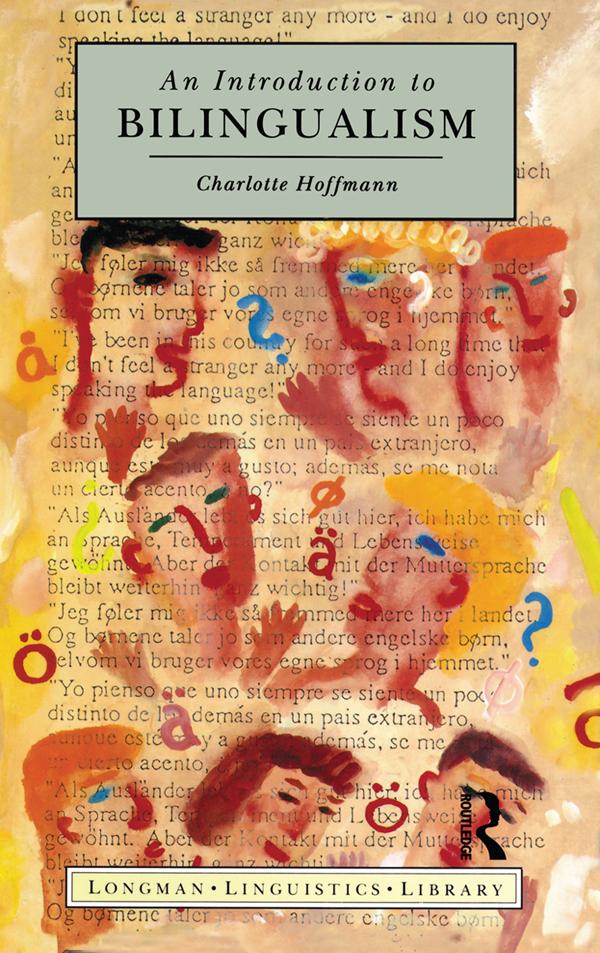
An Introduction to Bilingualism provides a comprehensive review of the most important aspects of individual and societal bilingualism, examining both theoretcial and practical issues.
At the level of the individual, it addresses such questios as: What is involved in the study of bilingual children? What are the patterns of bilingual language acquisition? In which ways do the language competence and the speech of bilinguals differ from those of monolinguals? Topics that sometimes arouse controversy are explored - such as the question of whether there is a relationship between bilingualsim and a child's cognitive, psychological and social development.
The book is also concerned with multilingualism, that is, bilingualsim as a societal phenomenon. It focuses on such issues as language choice in bilingual and multilingual communities, national identity and the education of bilinguals. The inclusion of several case studies of European linguistic minorities serves to exemplify the topics dealt with at the theoretical level and to illustrate the linguistic complexities found in contemporary Europe.
Betaal eenvoudig met kaart, Klarna, Apple Pay of Google Pay. Niet tevreden? Je hebt altijd 14 dagen bedenktijd. Lees meer in onze voorwaarden. Heb je vragen, mail ons dan via hello@memmo.org.
Memmo maakt studeren makkelijker – waar je ook bent ter wereld. Wij brengen je cursusboeken en slimme studietools samen op één plek: samenvattingen, quizzen, podcasts en flashcards. En Ted, je studievriend die antwoord geeft op alles wat je je afvraagt. Meer dan 50.000 studenten studeren hier al – gebouwd om je sneller te laten leren en minder stress te geven.