
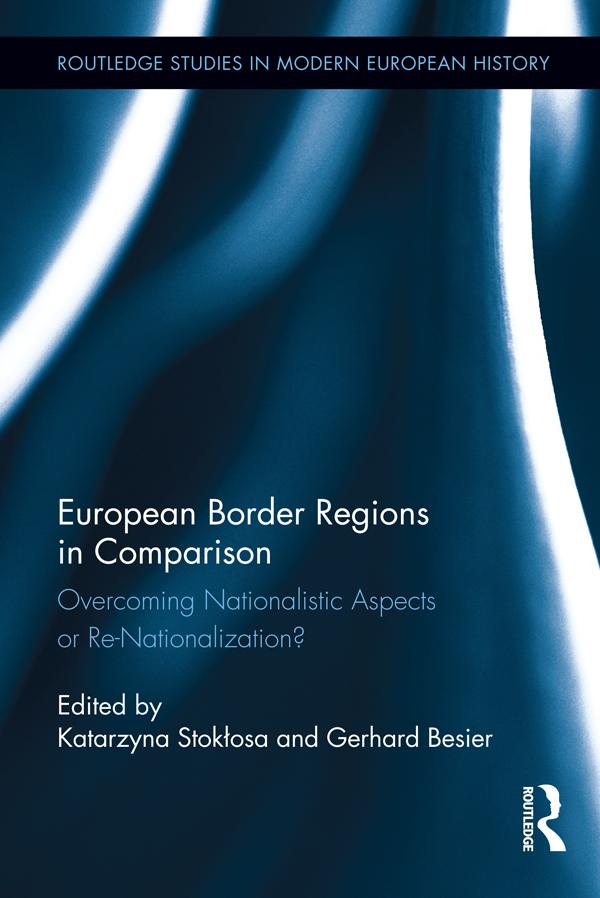
Borders exist in almost every sphere of life. Initially, borders were established in connection with kingdoms, regions, towns, villages and cities. With nation-building, they became important as a line separating two national states with different “national characteristics,” narratives and myths. The term “border” has a negative connotation for being a separating line, a warning signal not to cross a line between the allowed and the forbidden. The awareness of both mental and factual borders in manifold spheres of our life has made them a topic of consideration in almost all scholarly disciplines – history, geography, political science and many others. This book primarily incorporates an interdisciplinary and comparative approach. Historians, sociologists, anthropologists and political science scholars from a diverse range of European universities analyze historical as well as contemporary perceptions and perspectives concerning border regions – inside the EU, between EU and non-EU European countries, and between European and non-European countries.
Betaal eenvoudig met kaart, Klarna, Apple Pay of Google Pay. Niet tevreden? Je hebt altijd 14 dagen bedenktijd. Lees meer in onze voorwaarden. Heb je vragen, mail ons dan via hello@memmo.org.
Memmo maakt studeren makkelijker – waar je ook bent ter wereld. Wij brengen je cursusboeken en slimme studietools samen op één plek: samenvattingen, quizzen, podcasts en flashcards. En Ted, je studievriend die antwoord geeft op alles wat je je afvraagt. Meer dan 50.000 studenten studeren hier al – gebouwd om je sneller te laten leren en minder stress te geven.