
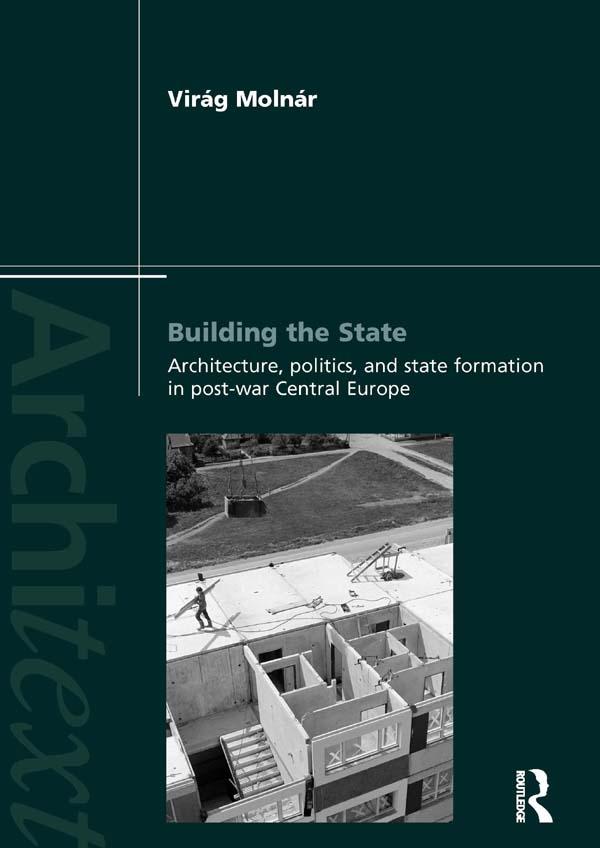
The built environment of former socialist countries is often deemed uniform and drab, an apt reflection of a repressive regime. Building the State peeks behind the grey façade to reveal a colourful struggle over competing meanings of the nation, Europe, modernity and the past in a divided continent.
Examining how social change is closely intertwined with transformations of the built environment, this volume focuses on the relationship between architecture and state politics in postwar Central Europe using examples from Hungary and Germany. Built around four case studies, the book traces how architecture was politically mobilized in the service of social change, first in socialist modernization programs and then in the postsocialist transition.
Building the State does not only offer a comprehensive survey of the diverse political uses of architecture in postwar Central Europe but is the first book to explore how transformations of the built environment can offer a lens into broader processes of state formation and social change.
Betaal eenvoudig met kaart, Klarna, Apple Pay of Google Pay. Niet tevreden? Je hebt altijd 14 dagen bedenktijd. Lees meer in onze voorwaarden. Heb je vragen, mail ons dan via hello@memmo.org.
Memmo maakt studeren makkelijker – waar je ook bent ter wereld. Wij brengen je cursusboeken en slimme studietools samen op één plek: samenvattingen, quizzen, podcasts en flashcards. En Ted, je studievriend die antwoord geeft op alles wat je je afvraagt. Meer dan 50.000 studenten studeren hier al – gebouwd om je sneller te laten leren en minder stress te geven.