
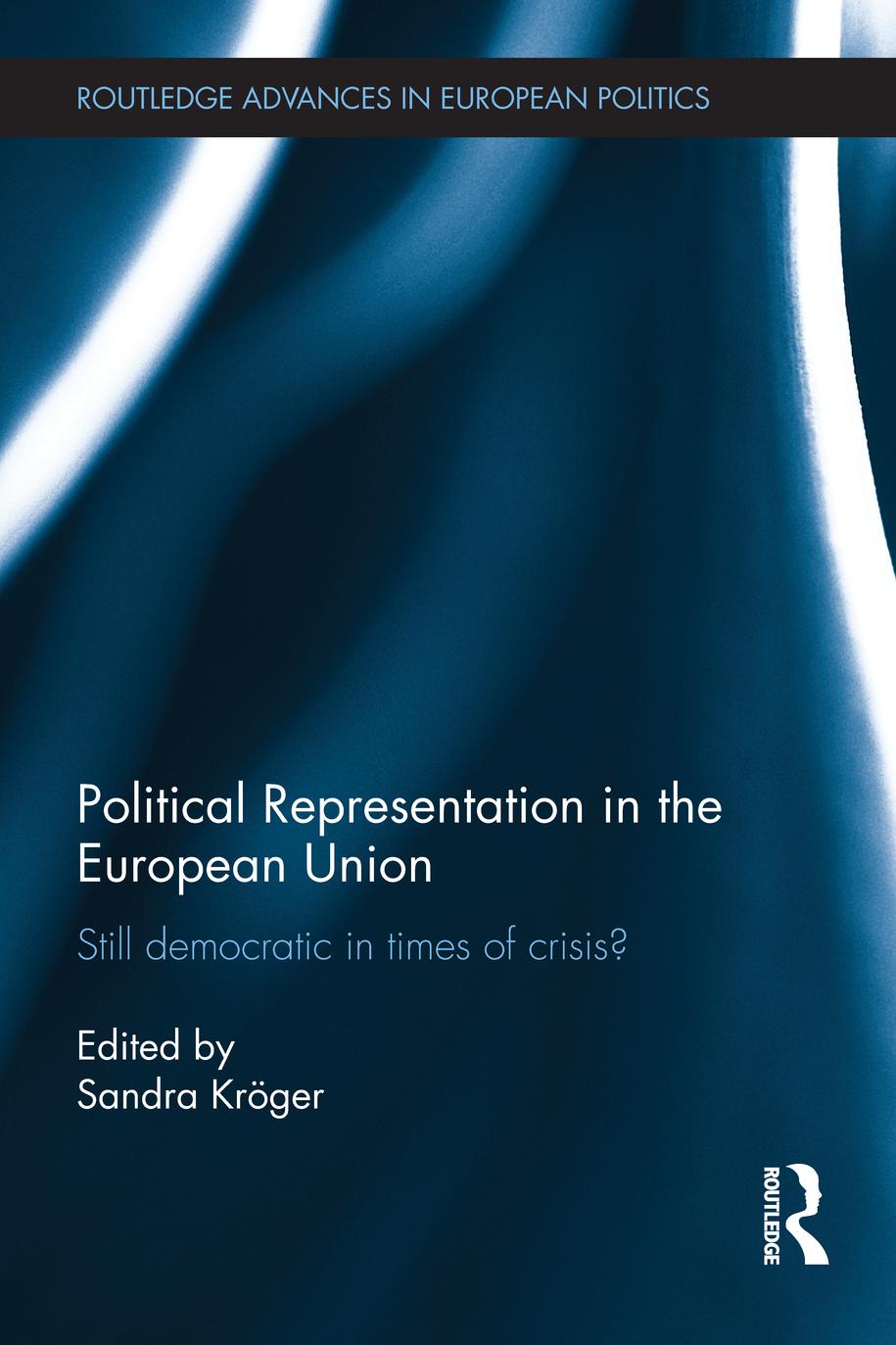
In recent years the financial and economic crisis of 2008–9 has progressed into an equally important political and democratic crisis of the EU. These troubled times have set the framework to re-assess a number of important questions in regard to representative democracy in the EU, such as the normative foundation of political representation, the institutional relationship between representatives and represented, the link between democracy and representation and new arenas and actors.
This book examines the diverse avenues through which different sorts of actors have expressed their voices during the Euro crisis and how their various interests are translated into the decision-making process. It offers a state-of- the-art assessment of what political representation means in this context as well as a contribution to the ‘representative turn’ in democratic theory. The authors address three key themes:
• The main actors and channels of political representation in the EU.
• Interlocking levels of representation in the EU and the way in which national and supranational representation works.
• How the European institutional system represents EU citizens through law and administration.
Focusing on the importance of representation in the legitimation of democracy, this book will be of interest to students and scholars of European Union politics, European studies, democratic theory, representation studies, civil society and transnational democracy.
Betaal eenvoudig met kaart, Klarna, Apple Pay of Google Pay. Niet tevreden? Je hebt altijd 14 dagen bedenktijd. Lees meer in onze voorwaarden. Heb je vragen, mail ons dan via hello@memmo.org.
Memmo maakt studeren makkelijker – waar je ook bent ter wereld. Wij brengen je cursusboeken en slimme studietools samen op één plek: samenvattingen, quizzen, podcasts en flashcards. En Ted, je studievriend die antwoord geeft op alles wat je je afvraagt. Meer dan 50.000 studenten studeren hier al – gebouwd om je sneller te laten leren en minder stress te geven.