
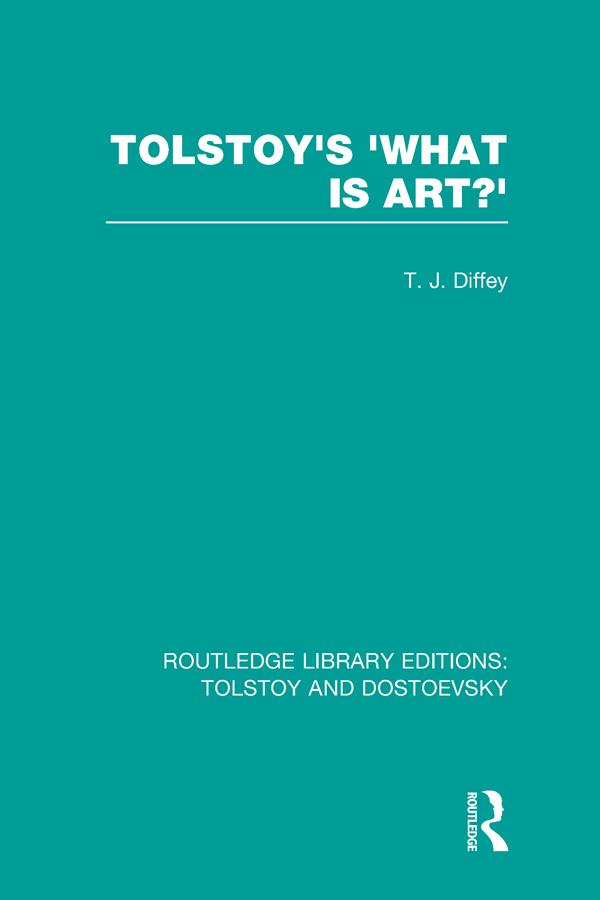
With its demand that works of art be judged according to the their morally didactic content, Tolstoy’s reviled aesthetics has seemed to exclude from the canon far too many works widely accepted as masterpieces, including Shakespeare and Beethoven.
This book, first published in 1985, argues that these are not mere oversights on the part of Tolstoy: he knew full well the consequences of his line of reasoning. The author contends that, even if we disagree with and eventually reject much of what Tolstoy concludes, his account of the nature and purpose of art is nevertheless worth consideration.
Diffey’s argument by no means accepts all of ‘What is Art?’, but by suggesting that the work is best interpreted as a counterpoint to the amoral aestheticism prevalent in Russia at the time, he does much to restore it to a status deserving attention, particularly in today’s climate of extreme relativism.
Betaal eenvoudig met kaart, Klarna, Apple Pay of Google Pay. Niet tevreden? Je hebt altijd 14 dagen bedenktijd. Lees meer in onze voorwaarden. Heb je vragen, mail ons dan via hello@memmo.org.
Memmo maakt studeren makkelijker – waar je ook bent ter wereld. Wij brengen je cursusboeken en slimme studietools samen op één plek: samenvattingen, quizzen, podcasts en flashcards. En Ted, je studievriend die antwoord geeft op alles wat je je afvraagt. Meer dan 50.000 studenten studeren hier al – gebouwd om je sneller te laten leren en minder stress te geven.