
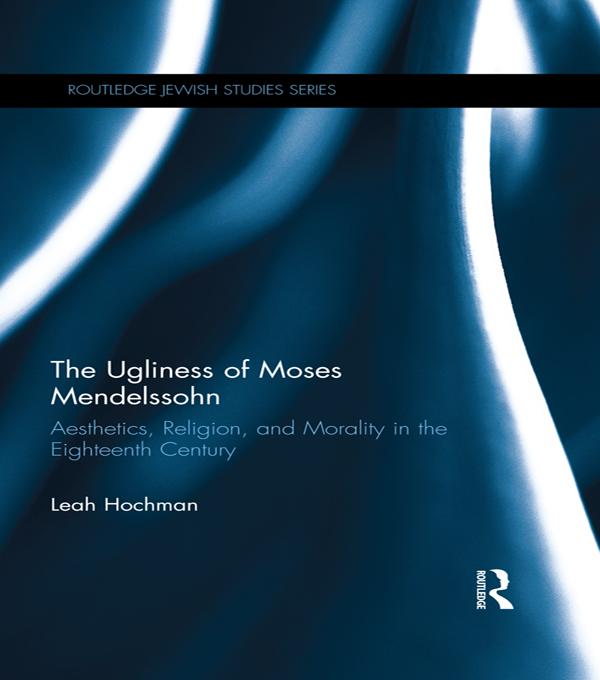
The Ugliness of Moses Mendelssohn examines the idea of ugliness through four angles: philosophical aesthetics, early anthropology, physiognomy and portraiture in the eighteenth-century.
Highlighting a theory that describes the benefit of encountering ugly objects in art and nature, eighteenth-century German Jewish philosopher Moses Mendelssohn recasts ugliness as a positive force for moral education and social progress. According to his theory, ugly objects cause us to think more and thus exercise—and expand—our mental abilities. Known as ugly himself, he was nevertheless portrayed in portraits and in physiognomy as an image of wisdom, gentility, and tolerance. That seeming contradiction—an ugly object (Mendelssohn) made beautiful—illustrates his theory’s possibility: ugliness itself is a positive, even redeeming characteristic of great opportunity.
Presenting a novel approach to eighteenth century aesthetics, this book will be of interest to students and scholars in the fields of Jewish Studies, Philosophy and History.
Betaal eenvoudig met kaart, Klarna, Apple Pay of Google Pay. Niet tevreden? Je hebt altijd 14 dagen bedenktijd. Lees meer in onze voorwaarden. Heb je vragen, mail ons dan via hello@memmo.org.
Memmo maakt studeren makkelijker – waar je ook bent ter wereld. Wij brengen je cursusboeken en slimme studietools samen op één plek: samenvattingen, quizzen, podcasts en flashcards. En Ted, je studievriend die antwoord geeft op alles wat je je afvraagt. Meer dan 50.000 studenten studeren hier al – gebouwd om je sneller te laten leren en minder stress te geven.