
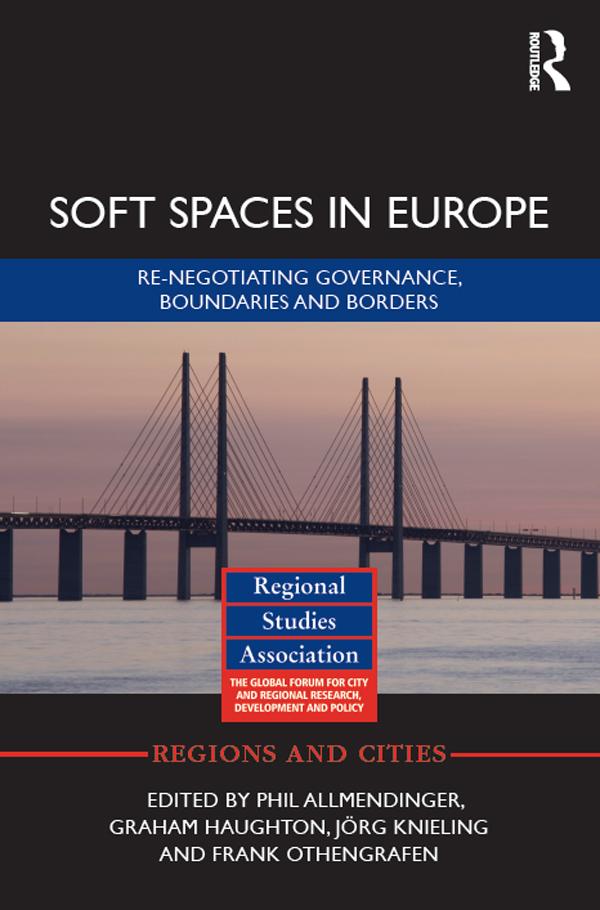
The past thirty years have seen a proliferation of new forms of territorial governance that have come to co-exist with, and complement, formal territorial spaces of government. These governance experiments have resulted in the creation of soft spaces, new geographies with blurred boundaries that eschew existing political-territorial boundaries of elected tiers of government. The emergence of new, non-statutory or informal spaces can be found at multiple levels across Europe, in a variety of circumstances, and with diverse aims and rationales.
This book moves beyond theory to examine the practice of soft spaces. It employs an empirical approach to better understand the various practices and rationalities of soft spaces and how they manifest themselves in different planning contexts. By looking at the effects of new forms of spatial governance and the role of spatial planning in North-western Europe, this book analyses discursive changes in planning policies in selected metropolitan areas and cross-border regions. The result is an exploration of how these processes influence the emergence of soft spaces, governance arrangements and the role of statutory planning in different contexts.
This book provides a deeper understanding of space and place, territorial governance and network governance.
Betaal eenvoudig met kaart, Klarna, Apple Pay of Google Pay. Niet tevreden? Je hebt altijd 14 dagen bedenktijd. Lees meer in onze voorwaarden. Heb je vragen, mail ons dan via hello@memmo.org.
Memmo maakt studeren makkelijker – waar je ook bent ter wereld. Wij brengen je cursusboeken en slimme studietools samen op één plek: samenvattingen, quizzen, podcasts en flashcards. En Ted, je studievriend die antwoord geeft op alles wat je je afvraagt. Meer dan 50.000 studenten studeren hier al – gebouwd om je sneller te laten leren en minder stress te geven.