
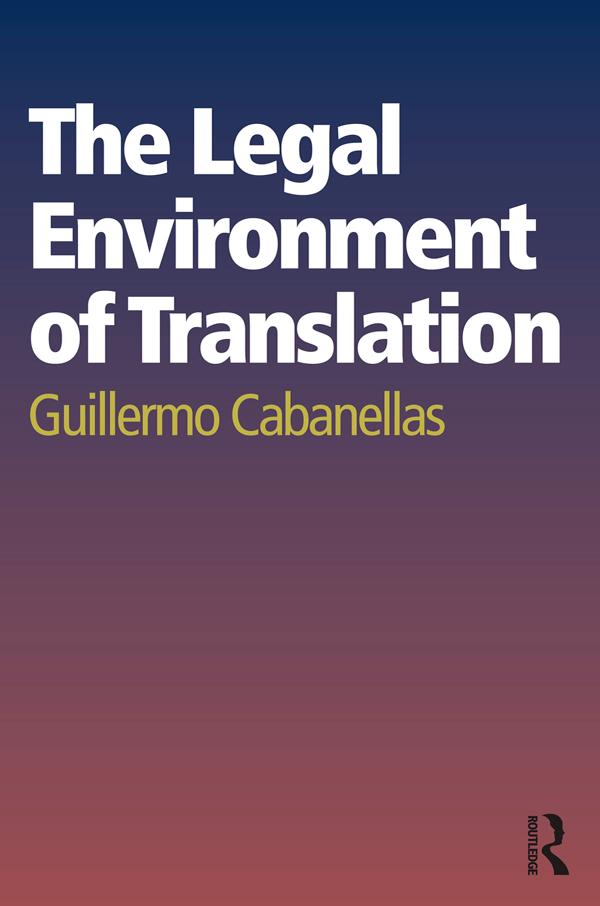
Translation is subject to a complex and unique set of legal rules that govern its various practical and intellectual aspects. These rules derive from very different legal areas, such as intellectual property and labour law. While useful from a strictly legal point of view, the heterogeneity of sources operates as a major hurdle in terms of understanding the overall legal framework within which translation operates.
This book offers a general overview of the legal rules applicable to different aspects of translation, allowing translators and other interested parties to form a broad and coherent picture of the rules applicable in this area. It draws on the provisions of the main legal systems of the world, as well as the basic international agreements relevant in this area, thus offering both a comparative perspective of the legal issues involved and a guide to relevant national legal rules. In addition to a description and analysis of the legal issues and rules involved, the book also presents hypothetical cases, with a discussion of the problems they pose and possible solutions. It explains the theoretical structure of the rules under discussion as well as their practical implications.
The language and methodology of the book are sufficiently accessible to allow lawyers, translators and those who require translation work but do not have a formal legal background to follow the arguments presented.
Betaal eenvoudig met kaart, Klarna, Apple Pay of Google Pay. Niet tevreden? Je hebt altijd 14 dagen bedenktijd. Lees meer in onze voorwaarden. Heb je vragen, mail ons dan via hello@memmo.org.
Memmo maakt studeren makkelijker – waar je ook bent ter wereld. Wij brengen je cursusboeken en slimme studietools samen op één plek: samenvattingen, quizzen, podcasts en flashcards. En Ted, je studievriend die antwoord geeft op alles wat je je afvraagt. Meer dan 50.000 studenten studeren hier al – gebouwd om je sneller te laten leren en minder stress te geven.