
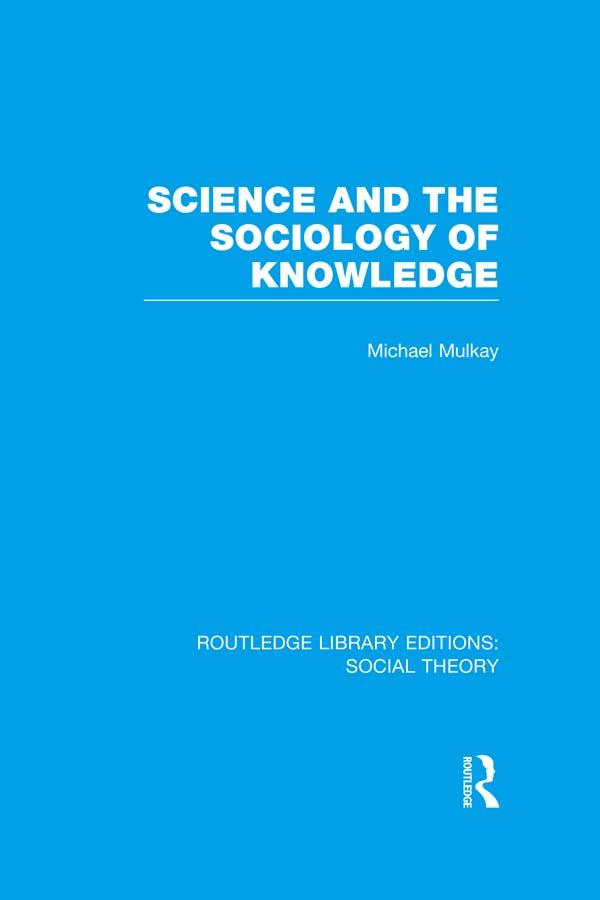
How far is scientific knowledge a product of social life? In addressing this question, the major contributors to the sociology of knowledge have agreed that the conclusions of science are dependent on social action only in a very special and limited sense. In Science and the Sociology of Knowledge Michael Mulkay's first aim is to identify the philosophical assumptions which have led to this view of science as special; and to present a systematic critique of the standard philosophical account of science, showing that there are no valid epistemological grounds for excluding scientific knowledge from the scope of sociological analysis.
The rest of the book is devoted to developing a preliminary interpretation of the social creation of scientific knowledge. The processes of knowledge-creation are delineated through a close examination of recent case studies of scientific developments. Dr Mulkay argues that knowledge is produced by means of negotiation, the outcome of which depends on the participants' use of social as well as technical resources. The analysis also shows how cultural resources are taken over from the broader social milieu and incorporated into the body of certified knowledge; and how, in the political context of society at large, scientists' technical as well as social claims are conditioned and affected by their social position.
Betaal eenvoudig met kaart, Klarna, Apple Pay of Google Pay. Niet tevreden? Je hebt altijd 14 dagen bedenktijd. Lees meer in onze voorwaarden. Heb je vragen, mail ons dan via hello@memmo.org.
Memmo maakt studeren makkelijker – waar je ook bent ter wereld. Wij brengen je cursusboeken en slimme studietools samen op één plek: samenvattingen, quizzen, podcasts en flashcards. En Ted, je studievriend die antwoord geeft op alles wat je je afvraagt. Meer dan 50.000 studenten studeren hier al – gebouwd om je sneller te laten leren en minder stress te geven.