
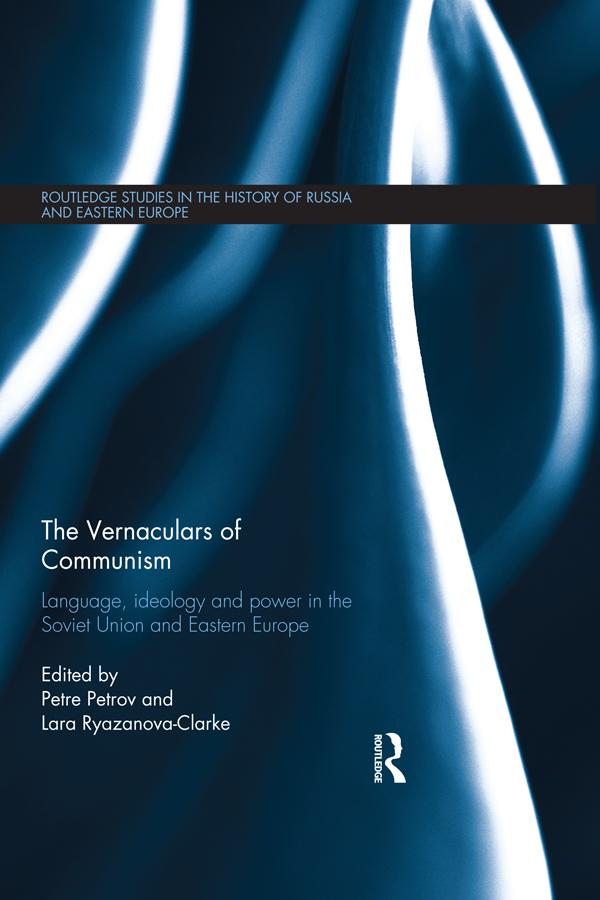
The political revolutions which established state socialism in the Soviet Union and Eastern Europe were accompanied by revolutions in the word, as the communist project implied not only remaking the world but also renaming it. As new institutions, social roles, rituals and behaviours emerged, so did language practices that designated, articulated and performed these phenomena. This book examines the use of communist language in the Stalinist and post-Stalinist periods. It goes beyond characterising this linguistic variety as crude "newspeak", showing how official language was much more complex – the medium through which important political-ideological messages were elaborated, transmitted and also contested, revealing contradictions, discursive cleavages and performative variations. The book examines the subject comparatively across a range of East European countries besides the Soviet Union, and draws on perspectives from a range of scholarly disciplines – sociolinguistics, anthropology, literary and cultural studies, historiography, and translation studies.
Petre Petrov is an Assistant Professor in the Department of Slavic Languages and Literatures at the University of Texas at Austin.
Lara Ryazanova-Clarke is Head of Russian and Academic Director of the Princess Dashkova Russia Centre in the School of Literatures, Languages and Cultures at the University of Edinburgh.
Betaal eenvoudig met kaart, Klarna, Apple Pay of Google Pay. Niet tevreden? Je hebt altijd 14 dagen bedenktijd. Lees meer in onze voorwaarden. Heb je vragen, mail ons dan via hello@memmo.org.
Memmo maakt studeren makkelijker – waar je ook bent ter wereld. Wij brengen je cursusboeken en slimme studietools samen op één plek: samenvattingen, quizzen, podcasts en flashcards. En Ted, je studievriend die antwoord geeft op alles wat je je afvraagt. Meer dan 50.000 studenten studeren hier al – gebouwd om je sneller te laten leren en minder stress te geven.