
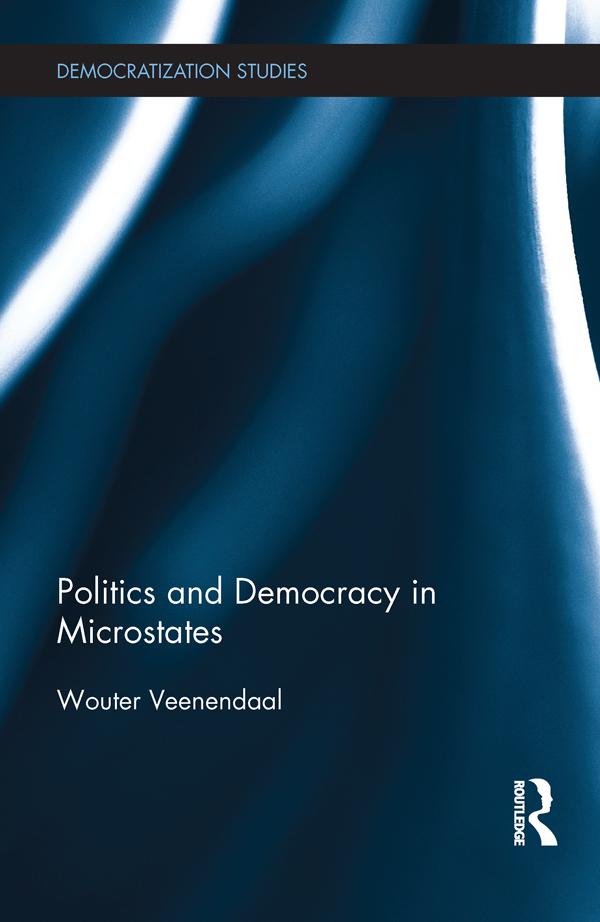
Why are small states statistically more likely to have a democratic political system? By addressing this question from a qualitative and comparative methodological angle, this book analyses the effects of a small population size on political competition and participation. By comparing the four microstates of San Marino (Europe), St. Kitts and Nevis (Caribbean), Seychelles (Africa), and Palau (Oceania), it provides fresh and stimulating insight, concluding that the political dynamics of microstates are not as democratic as commonly believed. Instead, it is found in all four cases that smallness results in personalistic politics, dominance of the political executive, patron-client relations between citizens and politicians, and the circumvention of formal political institutions. In addition, the book suggests that the study of formal institutions provides an incomplete image of microstate democracy and that informal characteristics of politics in microstates also need to be explored in order to better explain the influence of smallness on democracy.
This book will be of key interest to scholars and students of democracy, democratization, regional and decentralization studies and comparative politics.
Betaal eenvoudig met kaart, Klarna, Apple Pay of Google Pay. Niet tevreden? Je hebt altijd 14 dagen bedenktijd. Lees meer in onze voorwaarden. Heb je vragen, mail ons dan via hello@memmo.org.
Memmo maakt studeren makkelijker – waar je ook bent ter wereld. Wij brengen je cursusboeken en slimme studietools samen op één plek: samenvattingen, quizzen, podcasts en flashcards. En Ted, je studievriend die antwoord geeft op alles wat je je afvraagt. Meer dan 50.000 studenten studeren hier al – gebouwd om je sneller te laten leren en minder stress te geven.