
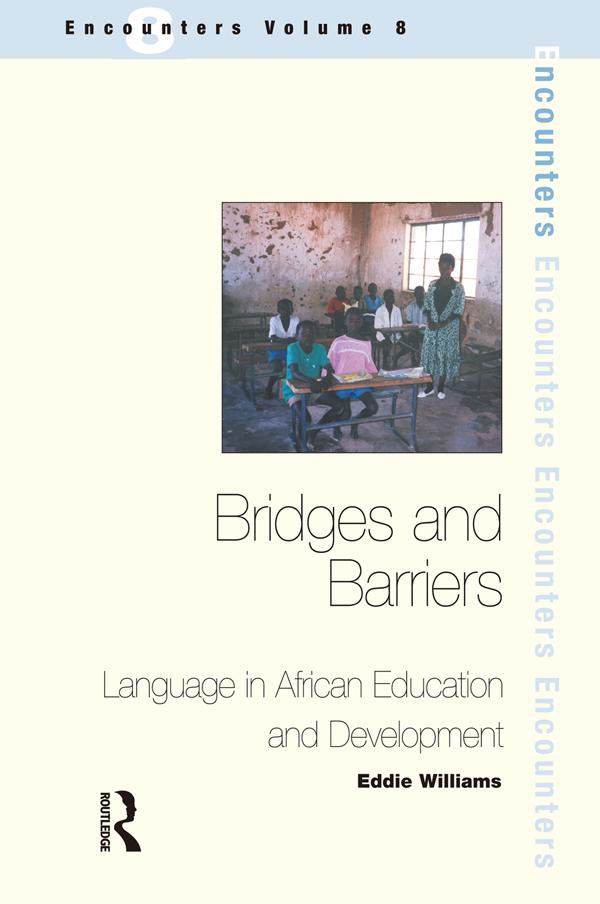
Recent decades have seen sub-Saharan Africa decline in both economic and human terms. The rich North has responded with a barrage of well-publicized initiatives, from pop concerts to international commitments on debt relief, aid, trade and good governance. Among the complex of factors necessary to sustain economic and human development, education receives little media coverage, although it is crucial. However, education must be effective.
This book argues that in 'Anglophone' Africa, education is not effective because of the use of English, rather than children's first languages, both as the medium of instruction, and also as the language in which children are first taught to read. Research is presented from Malawi and Zambia, countries with contrasting language policies, using evidence from tests in English and African languages, small-group discussions and classroom observation. The findings show that English-medium policies in Africa do not give students any advantage in English over first-language policies, while the use of English discriminates against girls and rural children.
The book concludes that much education in Africa is a barrier rather than a bridge to learning because of the prevailing language ideology, which has resulted in massive over-estimation of the value of English. While appropriate language policies alone will not solve education and development difficulties in Africa, they do have a positive contribution to make. The evidence presented here suggests they are failing to make that contribution.
Betaal eenvoudig met kaart, Klarna, Apple Pay of Google Pay. Niet tevreden? Je hebt altijd 14 dagen bedenktijd. Lees meer in onze voorwaarden. Heb je vragen, mail ons dan via hello@memmo.org.
Memmo maakt studeren makkelijker – waar je ook bent ter wereld. Wij brengen je cursusboeken en slimme studietools samen op één plek: samenvattingen, quizzen, podcasts en flashcards. En Ted, je studievriend die antwoord geeft op alles wat je je afvraagt. Meer dan 50.000 studenten studeren hier al – gebouwd om je sneller te laten leren en minder stress te geven.