
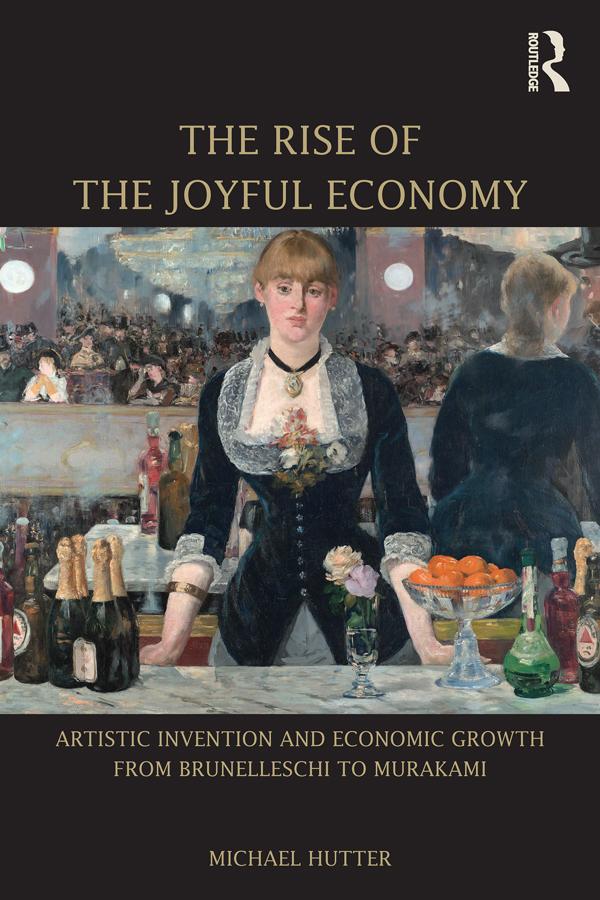
This book argues for the increasing importance of the arts as a major resource in fuelling growth through the experiential dimension of today’s economy. As we move from the knowledge economy to a new stage called the joyful economy, consumers shift their spending from physical objects and technical know-how to experiences of joy and disappointment.
This book investigates how artistic ideas are translated into successful commercial production, and how economic growth impacts artistic invention. It examines cases of successful innovation in the creative industries ranging from the Italian Renaissance to the present. The book suggests a framework where social players move in diverse worlds of value, which leads to a stream of controversies and manias that result in the establishment of new joy products. Studies include the effect of linear perspective, as pioneered by Filippo Brunelleschi, the discovery of taste as an argument for consumption, the serial production of Pop Art and the self-commercialization of contemporary works by artists like Takashi Murakami .
This theoretical and empirical study brings together the fields of cultural economics, economic sociology, management studies and cultural history. In doing so, it offers a fascinating study of how creativity has shaped and fuelled commerce.
Betaal eenvoudig met kaart, Klarna, Apple Pay of Google Pay. Niet tevreden? Je hebt altijd 14 dagen bedenktijd. Lees meer in onze voorwaarden. Heb je vragen, mail ons dan via hello@memmo.org.
Memmo maakt studeren makkelijker – waar je ook bent ter wereld. Wij brengen je cursusboeken en slimme studietools samen op één plek: samenvattingen, quizzen, podcasts en flashcards. En Ted, je studievriend die antwoord geeft op alles wat je je afvraagt. Meer dan 50.000 studenten studeren hier al – gebouwd om je sneller te laten leren en minder stress te geven.