
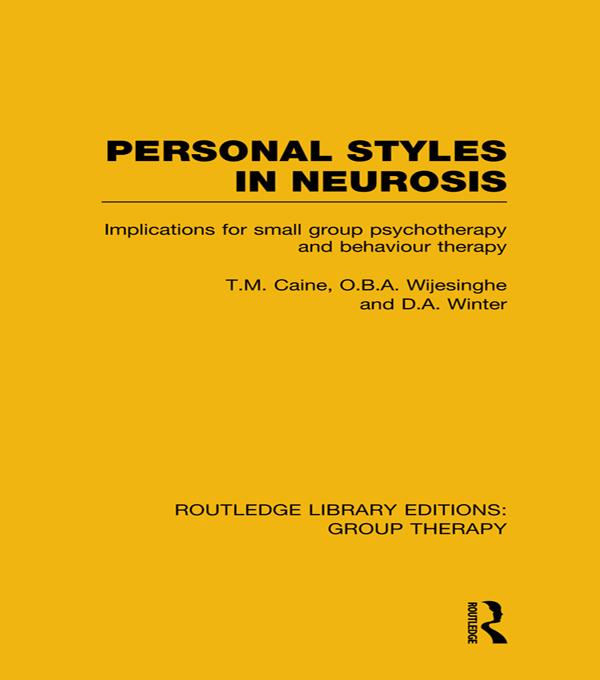
Originally published in 1981, the inadequacies of the ‘medical model’ for the understanding and psychological treatment of neuroses were widely recognized. A number of alternative approaches had arisen in response, but most of the models were theoretical, and little experimental support was documented.
One of the most pressing needs at the time was for a system of classification which could predict the behaviour of different types of neurotic patient under different treatments, and thus provide a framework for the selection of patients for small group psychotherapy and for behaviour therapy. The authors of this title develop such a framework, involving the matching of patient, therapist and treatment according to certain adjustment strategies such as ‘direction of interest’, ‘conservatism’, ‘convergent-divergent thinking’, ‘openness to inner experience’ and ‘control’. The ‘personal style’ of an individual is defined by these strategies, and by the patient’s expectations from treatment.
The authors collected a considerable amount of original research material over many years, and their evidence demonstrates the fundamental importance of ‘personal style’ in treatment allocation and response. The new approach which they propose will be of interest not only to academic psychologists but to those in the mental health professions actively engaged in psychotherapy and behaviour therapy.
Betaal eenvoudig met kaart, Klarna, Apple Pay of Google Pay. Niet tevreden? Je hebt altijd 14 dagen bedenktijd. Lees meer in onze voorwaarden. Heb je vragen, mail ons dan via hello@memmo.org.
Memmo maakt studeren makkelijker – waar je ook bent ter wereld. Wij brengen je cursusboeken en slimme studietools samen op één plek: samenvattingen, quizzen, podcasts en flashcards. En Ted, je studievriend die antwoord geeft op alles wat je je afvraagt. Meer dan 50.000 studenten studeren hier al – gebouwd om je sneller te laten leren en minder stress te geven.