
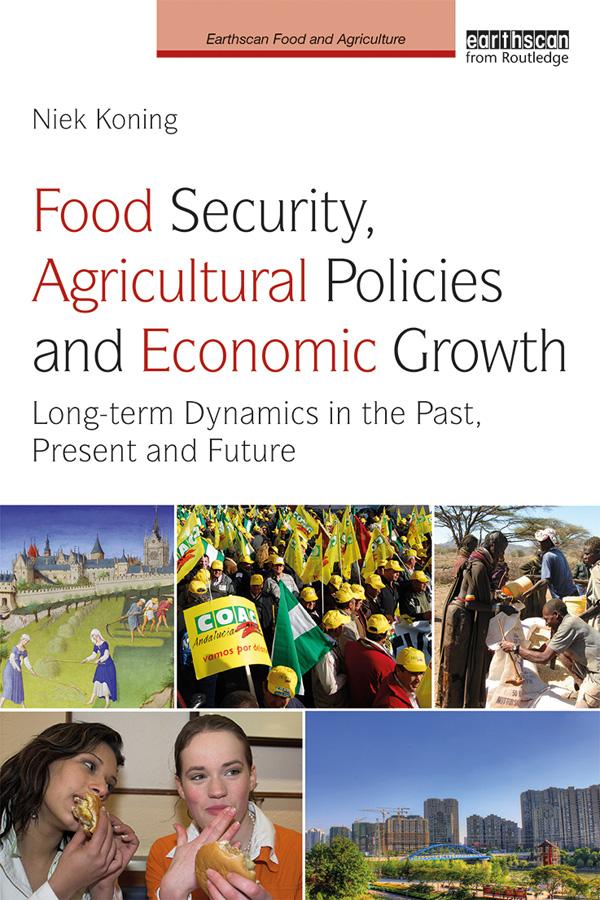
Using a political-economic approach supplemented with insights from human ecology, this volume analyzes the long-term dynamics of food security and economic growth. The book begins by discussing the nature of preindustrial food crises and the changes that have occurred since the 19th century with the ascent of technical science and the fossil fuel revolution. It explains how these changes improved living standards but that the realization of this improvement was usually dependent on government support for smallholder modernization.
The author sets out how the evolution of food security in different regions has been influenced by farm policy choices and how these choices were shaped by local societal characteristics, international relations and changing configurations in metropolitan countries. Separate chapters are devoted to the interaction of this evolution with debates on food security and economic growth and with international economic policies. The final chapters highlight the new challenges for global food security that will arise as traditional sources of biomass production and the more easily extractable reserves of fossil biomass become depleted or can no longer be used. Overall, the book emphasizes the inadequacy of current explanations with regard to these challenges. It explores what is needed to ensure a sustainable future and calls for a rethinking of these issues; a necessary reflection in today's unstable global political situation.
Betaal eenvoudig met kaart, Klarna, Apple Pay of Google Pay. Niet tevreden? Je hebt altijd 14 dagen bedenktijd. Lees meer in onze voorwaarden. Heb je vragen, mail ons dan via hello@memmo.org.
Memmo maakt studeren makkelijker – waar je ook bent ter wereld. Wij brengen je cursusboeken en slimme studietools samen op één plek: samenvattingen, quizzen, podcasts en flashcards. En Ted, je studievriend die antwoord geeft op alles wat je je afvraagt. Meer dan 50.000 studenten studeren hier al – gebouwd om je sneller te laten leren en minder stress te geven.