
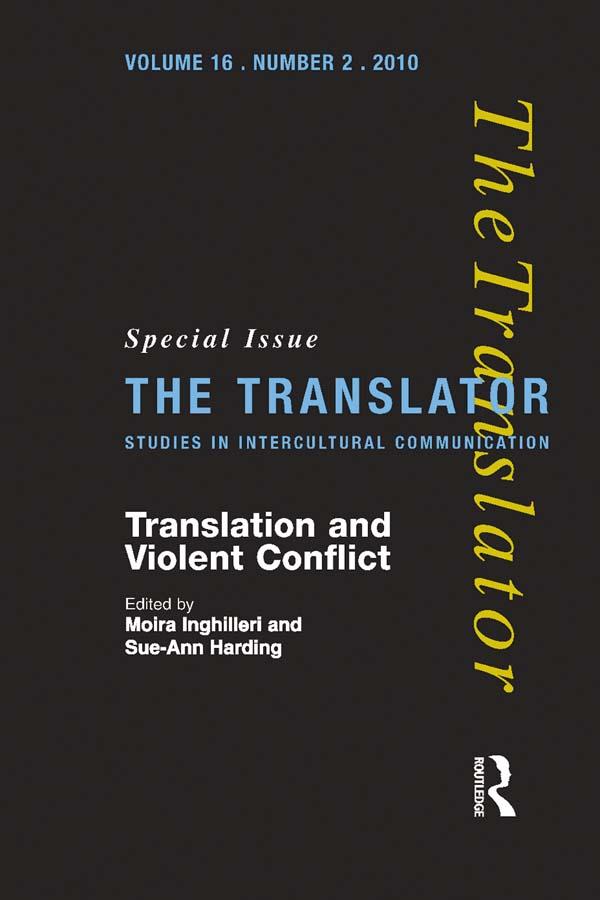
First Published in 2010. Translators and interpreters are frequently found at the centre of attempts to wage war or negotiate peace between opposing factions. Translation and interpreting also serve a vital function in communicating a conflict locally and globally, as interested parties attempt to legitimize their actions, appeal for assistance, and enlist support for their cause and the condemnation of their stated enemy. The unavoidable independent exercises of judgement that interpreters and translators make through their participation in or re-narration of a conflict, and the decisions that go with them, provide clear and strong evidence for the lead role in the construction of meanings and identities that interpreters and translators assume in situations of conflict, irrespective of their historical or geopolitical setting. This special issue of The Translator explores the role of translators and interpreters in a number of conflicts from the 20th century to the present. Drawing on fictional and non-fictional texts, legal and peacekeeping settings and reports from war zones, contributors to this volume explore the overlapping themes of mediation, agency and ethics in relation to translators and interpreters as they negotiate the political, social, cultural, linguistic and ethical factors that converge, often dangerously, in situations of armed conflict
Betaal eenvoudig met kaart, Klarna, Apple Pay of Google Pay. Niet tevreden? Je hebt altijd 14 dagen bedenktijd. Lees meer in onze voorwaarden. Heb je vragen, mail ons dan via hello@memmo.org.
Memmo maakt studeren makkelijker – waar je ook bent ter wereld. Wij brengen je cursusboeken en slimme studietools samen op één plek: samenvattingen, quizzen, podcasts en flashcards. En Ted, je studievriend die antwoord geeft op alles wat je je afvraagt. Meer dan 50.000 studenten studeren hier al – gebouwd om je sneller te laten leren en minder stress te geven.
Misschien vind je dit ook leuk
Koop het boek0