
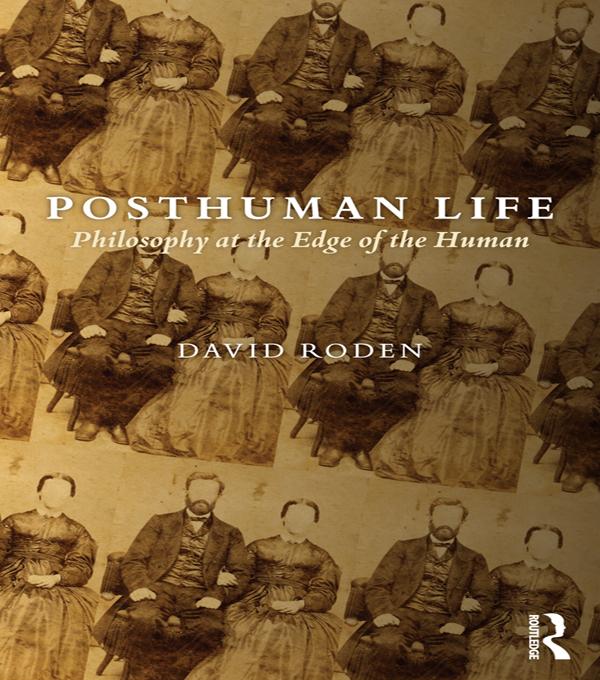
We imagine posthumans as humans made superhumanly intelligent or resilient by future advances in nanotechnology, biotechnology, information technology and cognitive science. Many argue that these enhanced people might live better lives; others fear that tinkering with our nature will undermine our sense of our own humanity. Whoever is right, it is assumed that our technological successor will be an upgraded or degraded version of us: Human 2.0.
Posthuman Life argues that the enhancement debate projects a human face onto an empty screen. We do not know what will happen and, not being posthuman, cannot anticipate how posthumans will assess the world. If a posthuman future will not necessarily be informed by our kind of subjectivity or morality the limits of our current knowledge must inform any ethical or political assessment of that future. Posthuman Life develops a critical metaphysics of posthuman succession and argues that only a truly speculative posthumanism can support an ethics that meets the challenge of the transformative potential of technology.
Betaal eenvoudig met kaart, Klarna, Apple Pay of Google Pay. Niet tevreden? Je hebt altijd 14 dagen bedenktijd. Lees meer in onze voorwaarden. Heb je vragen, mail ons dan via hello@memmo.org.
Memmo maakt studeren makkelijker – waar je ook bent ter wereld. Wij brengen je cursusboeken en slimme studietools samen op één plek: samenvattingen, quizzen, podcasts en flashcards. En Ted, je studievriend die antwoord geeft op alles wat je je afvraagt. Meer dan 50.000 studenten studeren hier al – gebouwd om je sneller te laten leren en minder stress te geven.