
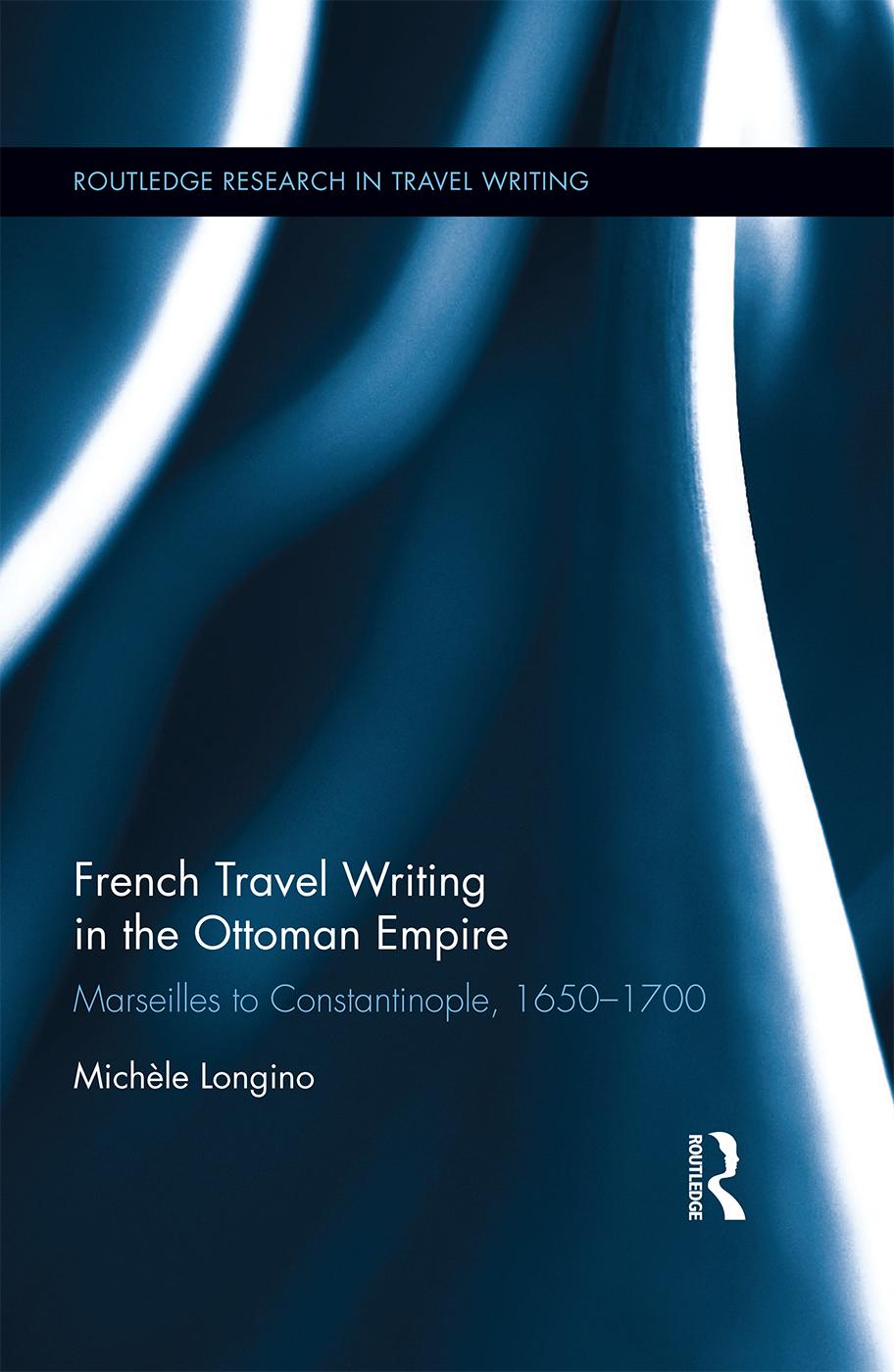
Examining the history of the French experience of the Ottoman world and Turkey, this comparative study visits the accounts of early modern travelers for the insights they bring to the field of travel writing. The journals of contemporaries Jean-Baptiste Tavernier, Jean Thévenot, Laurent D’Arvieux, Guillaume-Joseph Grelot, Jean Chardin, and Antoine Galland reveal a rich corpus of political, social, and cultural elements relating to the Ottoman Empire at the time, enabling an appreciation of the diverse shapes that travel narratives can take at a distinct historical juncture. Longino examines how these writers construct themselves as authors, characters, and individuals in keeping with the central human project of individuation in the early modern era, also marking the differences that define each of these travelers – the shopper, the envoy, the voyeur, the arriviste, the ethnographer, the merchant. She shows how these narratives complicate and alter political and cultural paradigms in the fields of Mediterranean studies, 17th-century French studies, and cultural studies, arguing for their importance in the canon of early modern narrative forms, and specifically travel writing. The first study to examine these travel journals and writers together, this book will be of interest to a range of scholars covering travel writing, French literature, and history.
Betaal eenvoudig met kaart, Klarna, Apple Pay of Google Pay. Niet tevreden? Je hebt altijd 14 dagen bedenktijd. Lees meer in onze voorwaarden. Heb je vragen, mail ons dan via hello@memmo.org.
Memmo maakt studeren makkelijker – waar je ook bent ter wereld. Wij brengen je cursusboeken en slimme studietools samen op één plek: samenvattingen, quizzen, podcasts en flashcards. En Ted, je studievriend die antwoord geeft op alles wat je je afvraagt. Meer dan 50.000 studenten studeren hier al – gebouwd om je sneller te laten leren en minder stress te geven.