
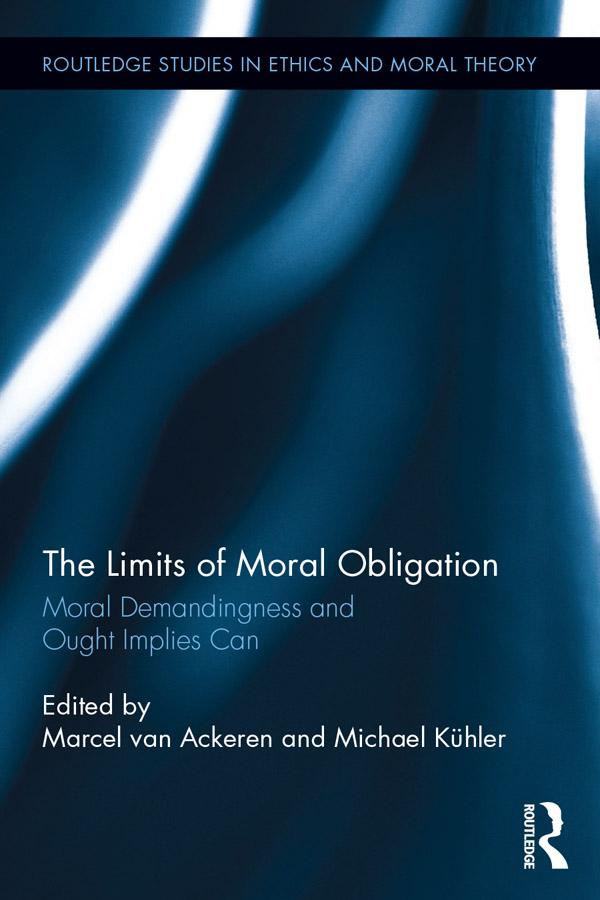
This volume responds to the growing interest in finding explanations for why moral claims may lose their validity based on what they ask of their addressees. Two main ideas relate to that question: the moral demandingness objection and the principle "ought implies can." Though both of these ideas can be understood to provide an answer to the same question, they have usually been discussed separately in the philosophical literature. The aim of this collection is to provide a focused and comprehensive discussion of these two ideas and the ways in which they relate to one another, and to take a closer look at the consequences for the limits of moral normativity in general. Chapters engage with contemporary discussions surrounding "ought implies can" as well as current debates on moral demandingness, and argue that applying the moral demandingness objection to the entire range of normative ethical theories also calls for an analysis of its (metaethical) presuppositions. The contributions to this volume are at the leading edge of ethical theory, and have implications for moral theorists, philosophers of action, and those working in metaethics, theoretical ethics and applied ethics.
Betaal eenvoudig met kaart, Klarna, Apple Pay of Google Pay. Niet tevreden? Je hebt altijd 14 dagen bedenktijd. Lees meer in onze voorwaarden. Heb je vragen, mail ons dan via hello@memmo.org.
Memmo maakt studeren makkelijker – waar je ook bent ter wereld. Wij brengen je cursusboeken en slimme studietools samen op één plek: samenvattingen, quizzen, podcasts en flashcards. En Ted, je studievriend die antwoord geeft op alles wat je je afvraagt. Meer dan 50.000 studenten studeren hier al – gebouwd om je sneller te laten leren en minder stress te geven.