
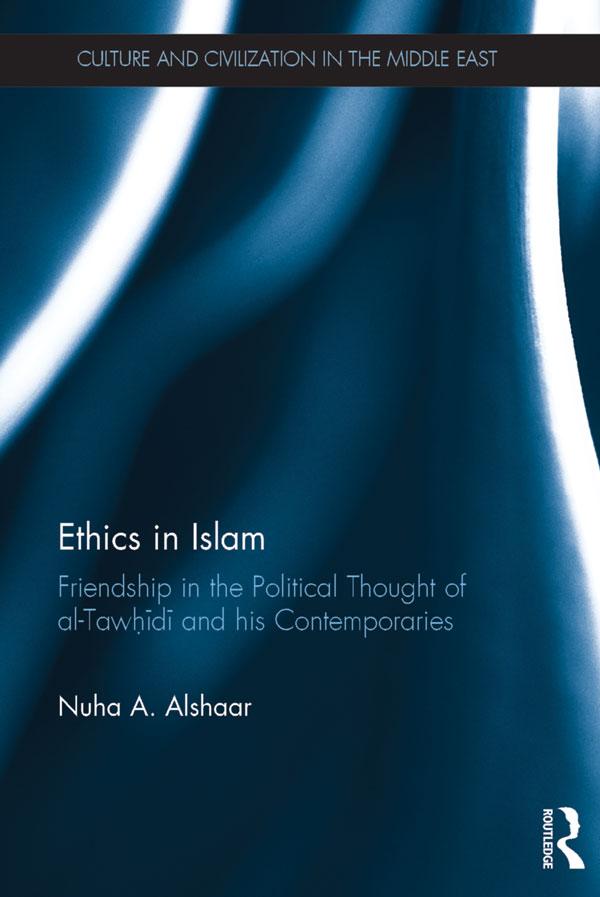
Offering a new reading of Islamic ethical and political thought in the Būyid period (334-440/946-1048), this book focuses particularly on the philosopher Abū Hayyān al-Tawhīdī who lived in Baghdad and what is now western Iran.
Ethics in Islam provides the first major treatment of al-Tawhīdī's ethics, political thought, and social idealism, investigating the complex influences that shaped this thought and especially his concept of friendship, which is analysed in the unique context of Būyid society. Al-Tawhīdī revives the value of friendship in politics. He introduces it as the best way to reform social and political order and as a means to the good life, to restrain passion and self-interest, to bring about cooperation and promote reason, and for action in opposition to religious zeal. Instead of seeing him as alienated from society, supposedly rejecting traditional Muslim beliefs, this book places him in his historical and intellectual contexts, and shows that while he was original in many ways, his outlook was firmly rooted in the Islamic culture in which he was educated.
Contributing to modern discussions of Islam and political ethics, this book is of interest to scholars and researchers of political philosophy, comparative ethical thought and Islamic studies.
Betaal eenvoudig met kaart, Klarna, Apple Pay of Google Pay. Niet tevreden? Je hebt altijd 14 dagen bedenktijd. Lees meer in onze voorwaarden. Heb je vragen, mail ons dan via hello@memmo.org.
Memmo maakt studeren makkelijker – waar je ook bent ter wereld. Wij brengen je cursusboeken en slimme studietools samen op één plek: samenvattingen, quizzen, podcasts en flashcards. En Ted, je studievriend die antwoord geeft op alles wat je je afvraagt. Meer dan 50.000 studenten studeren hier al – gebouwd om je sneller te laten leren en minder stress te geven.