
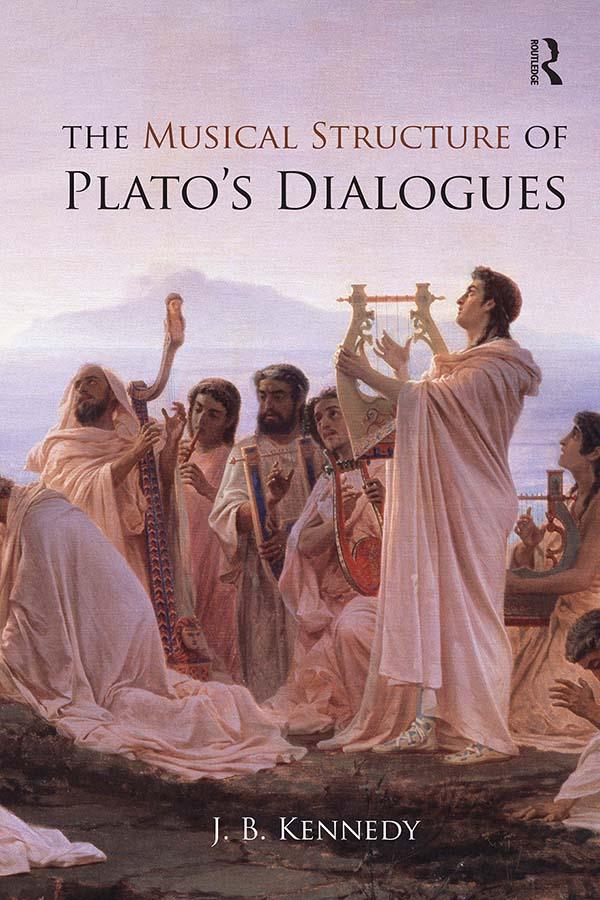
J. B. Kennedy argues that Plato's dialogues have an unsuspected musical structure and use symbols to encode Pythagorean doctrines. The followers of Pythagoras famously thought that the cosmos had a hidden musical structure and that wise philosophers would be able to hear this harmony of the spheres. Kennedy shows that Plato gave his dialogues a similar, hidden musical structure. He divided each dialogue into twelve parts and inserted symbols at each twelfth to mark a musical note. These passages are relatively harmonious or dissonant, and so traverse the ups and downs of a known musical scale. Many of Plato's ancient followers insisted that Plato used symbols to conceal his own views within the dialogues, but modern scholars have denied this. Kennedy, an expert in Pythagorean mathematics and music theory, now shows that Plato's dialogues do contain a system of symbols. Scholars in the humanities, without knowledge of obsolete Greek mathematics, would not have been able to detect these musical patterns. This book begins with a concise and accessible introduction to Plato's symbolic schemes and the role of allegory in ancient times. The following chapters then annotate the musical symbols in two of Plato's most popular dialogues, the Symposium and Euthyphro, and show that Plato used the musical scale as an outline for structuring his narratives.
Betaal eenvoudig met kaart, Klarna, Apple Pay of Google Pay. Niet tevreden? Je hebt altijd 14 dagen bedenktijd. Lees meer in onze voorwaarden. Heb je vragen, mail ons dan via hello@memmo.org.
Memmo maakt studeren makkelijker – waar je ook bent ter wereld. Wij brengen je cursusboeken en slimme studietools samen op één plek: samenvattingen, quizzen, podcasts en flashcards. En Ted, je studievriend die antwoord geeft op alles wat je je afvraagt. Meer dan 50.000 studenten studeren hier al – gebouwd om je sneller te laten leren en minder stress te geven.
Misschien vind je dit ook leuk
Koop het boek0