
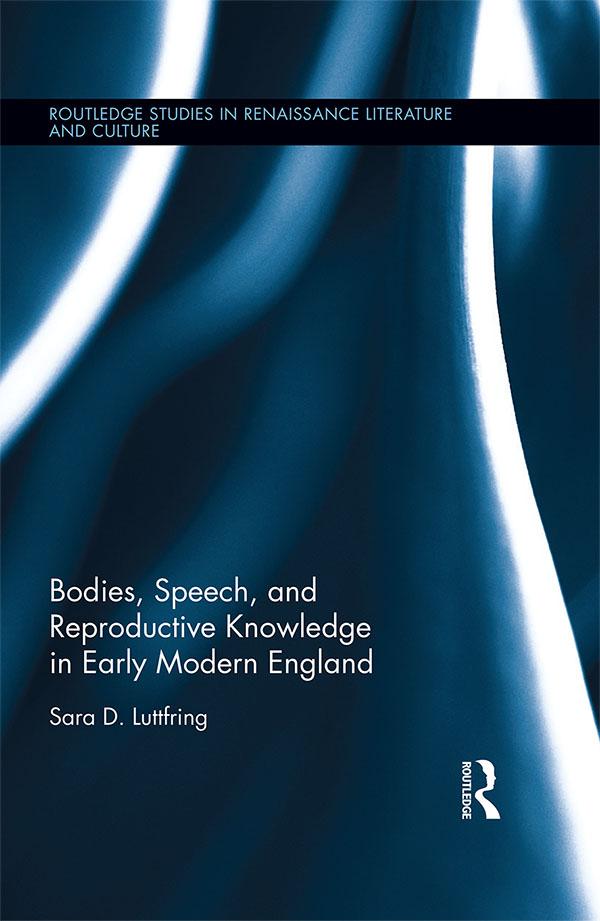
This volume examines early modern representations of women’s reproductive knowledge through new readings of plays, monstrous birth pamphlets, medical treatises, court records, histories, and more, which are often interpreted as depicting female reproductive bodies as passive, silenced objects of male control and critique. Luttfring argues instead that these texts represent women exercising epistemological control over reproduction through the stories they tell about their bodies and the ways they act these stories out, combining speech and physical performance into what Luttfring calls 'bodily narratives.' The power of these bodily narratives extends beyond knowledge of individual bodies to include the ways that women’s stories about reproduction shape the patriarchal identities of fathers, husbands, and kings. In the popular print and theater of early modern England, women’s bodies, women’s speech, and in particular women’s speech about their bodies perform socially constitutive work: constructing legible narratives of lineage and inheritance; making and unmaking political alliances; shaping local economies; and defining/delimiting male socio-political authority in medical, royal, familial, judicial, and economic contexts. This book joins growing critical discussion of how female reproductive bodies were used to represent socio-political concerns and will be of interest to students and scholars working in early modern literature and culture, women’s history, and the history of medicine.
Betaal eenvoudig met kaart, Klarna, Apple Pay of Google Pay. Niet tevreden? Je hebt altijd 14 dagen bedenktijd. Lees meer in onze voorwaarden. Heb je vragen, mail ons dan via hello@memmo.org.
Memmo maakt studeren makkelijker – waar je ook bent ter wereld. Wij brengen je cursusboeken en slimme studietools samen op één plek: samenvattingen, quizzen, podcasts en flashcards. En Ted, je studievriend die antwoord geeft op alles wat je je afvraagt. Meer dan 50.000 studenten studeren hier al – gebouwd om je sneller te laten leren en minder stress te geven.